SSI Traffic Solutions: Traffic Safety Products in USA and Canada
Traffic Safety Products in USA and Canada

Cargo Straps are a practical part of securing freight, but choosing the right type takes more than matching a strap to a load. A flatbed carrying lumber has different needs from a van transporting furniture or a trailer holding a small machine. Load weight, shape, contact surfaces, and tie-down points all affect the choice. Small details matter.
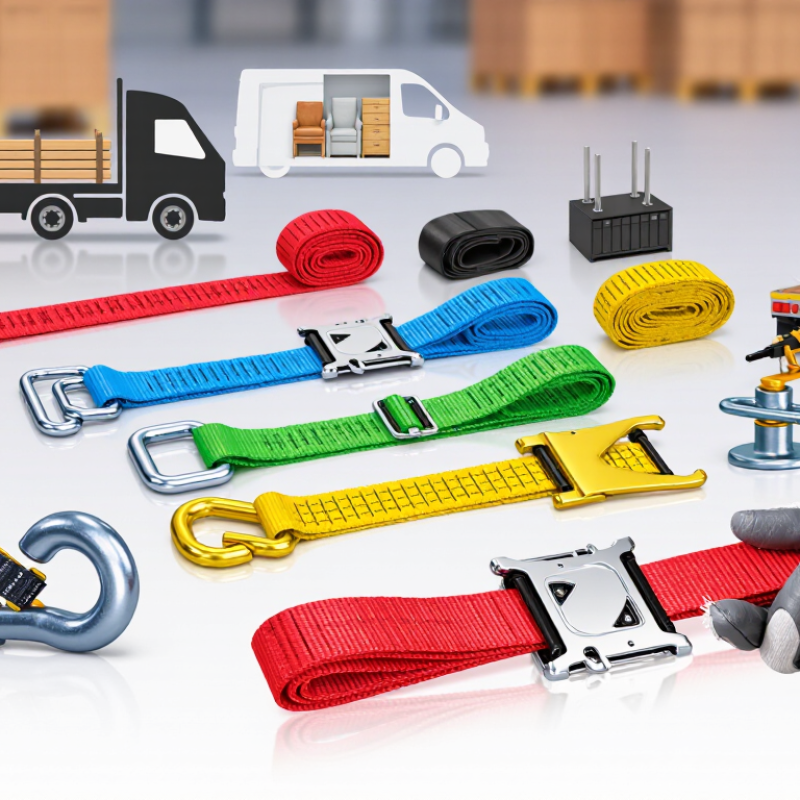
This guide introduces ten common types of cargo straps, including ratchet straps, cam buckle straps, and specialty options for particular loads. Each type works differently. Ratchets can create strong tension, while cam buckles offer simpler adjustment for lighter-duty tasks. Webbing material, strap width, hardware, and working load limits also deserve attention. Check the product label and manufacturer’s instructions rather than judging strength by appearance alone.
Good equipment helps, but it cannot make every setup safe. Straps should be inspected for cuts, fraying, damaged stitching, corrosion, or faulty buckles before use. They should sit flat, avoid sharp edges unless protected, and connect to suitable anchor points. Tension should be firm without damaging the cargo. Even experienced handlers can miss a twisted strap or a weak attachment point. I have to admit, a tidy-looking load can still be poorly secured. The sections ahead explain where each strap type may fit, what to check, and where its limitations matter. Use them as a starting point, then follow the equipment guidance and load-specific requirements for your situation.
A strap’s working load limit (WLL) is the maximum load it is rated to secure under specified conditions. It is not the same as breaking strength, which describes the force at which a strap may fail during testing. Never treat breaking strength as usable capacity. A strap can be damaged by sharp edges, abrasion, poor routing, or a worn ratchet. Check the label on the complete assembly, not just the webbing. The hook and tensioning device matter too.
WSTDA T-1 is an industry standard for web tie-down assemblies. It covers design, testing, and marking practices. Look for clear capacity information and inspect straps before each use. A frayed edge, cut, melted patch, or bent fitting is a reason to remove the assembly from service. Even a strap that looks mostly fine can hide damage. I have seen people focus on the number on the label and overlook how the strap runs across a load. That detail matters.
Cargo straps differ by webbing, hardware, and the job they perform. Polyester webbing is common because it stretches less than nylon under load and resists moisture well. Ratchet straps use a geared handle to create firm tension; cam-buckle straps tighten by hand and suit lighter, delicate cargo. Keep the buckle away from sharp edges. A small cut can weaken a strap.
Hardware changes how each type connects. Flat hooks fit many anchor points, while wire hooks can suit narrower attachment openings. E-track straps connect to track fittings inside trailers; winch straps are tightened with a mounted winch. For lifting, use purpose-made lifting slings, not ordinary cargo tie-downs. FMCSA cargo-securement rules state that aggregate working load limits must equal at least half the cargo’s weight (49 CFR § 393.106). That figure is a baseline, not a reason to ignore strap condition, anchor strength, or load movement. Inspect stitching, labels, and hardware before each trip. Replace damaged gear. It is easy to miss fraying near a buckle, especially in poor light.
Ratchet straps use a handle and toothed mechanism to tighten webbing firmly around a load. They suit heavy items that need steady tension, such as machinery on a flatbed. Pull the strap snug before ratcheting; forcing the handle can damage the webbing or cargo. More tension is not always safer.
Cam-buckle straps tighten by pulling the free end through a spring-loaded buckle. They are useful for lighter loads, boxes, and gear that could be crushed by a ratchet. They are quick to release, too. Check that the webbing lies flat and the buckle teeth grip securely. A loose tail can flap in the wind.
Winch straps are tightened with a separate winch, often along a trailer’s side rail. They work well when several straps need consistent tension, but the winch and attachment points must be suitable for the load. E-track straps connect to rail-mounted fittings and can be repositioned along the track. Their convenience depends on correctly installed, undamaged rails and fittings. I have seen people focus on the strap and overlook the anchor. That small oversight matters. Check the working-load information, inspect for cuts or fraying, and reassess tension after the load settles.
A strap’s rating matters more than its color or width. Under FMCSA’s general cargo-securement rule, the aggregate working load limit of the tiedowns must be at least half the cargo’s weight. For a 2,000-pound load, that means at least 1,000 pounds of combined WLL. WLL is the permitted working capacity, not the strap’s breaking strength. Check the label, and count only the capacity that applies to the actual attachment method.
Add the WLL of each tiedown used to secure the load. A 500-pound-rated strap and a 600-pound-rated strap provide 1,100 pounds combined, if both are properly attached and in sound condition. But the number alone is not the whole story. Strap angle, edge damage, loose hardware, and shifting cargo can weaken a setup. Inspect the webbing for cuts, fraying, and melted spots. Check hooks and anchor points, too. Small defects matter.
Some cargo types have more specific securement rules, so the general half-weight threshold may not settle every case. Consult applicable FMCSA requirements for the commodity and vehicle. Then recheck the load after driving a short distance. A strap can loosen. I’ve seen careful arithmetic undone by one awkward anchor point; it’s easy to miss.
Example working load limits (WLL) for common cargo tie-down assemblies
Ratings vary by strap width, hardware, and assembly; check the WLL marked on each tie-down. Under FMCSA rules, the aggregate WLL of tie-downs used to secure an article must be at least half the article’s weight. These example ratings are not a load-specific recommendation.
A cargo strap can look usable from a distance and still be unsafe up close. Lay it flat in good light before each trip, then run your fingers along both edges. Look for cuts, snagged yarns, and fraying near stitched loops, where wear can hide under a load. A small nick matters. Do not trim damaged fibers or cover them with tape; either action can conceal weakening. If the damage reaches load-bearing webbing, retire the strap. When the extent is unclear, set it aside and check the maker’s inspection guidance.
Heat damage may appear as melted, glazed, stiff, or discolored fibers. Keep straps away from hot exhausts and sharp edges during use. Check hardware, too: bent hooks, cracked welds, distorted ratchets, and deep corrosion can prevent secure engagement. Move the mechanism through its full range; it should operate without sticking or slipping. I once thought a rough ratchet merely needed cleaning. That was a poor assumption—the moving parts also need careful inspection. Remove suspect equipment from service rather than testing it on a valuable load. Record the damage and date, so a questionable strap does not quietly return to the truck.