SSI Traffic Solutions: Traffic Safety Products in USA and Canada
Traffic Safety Products in USA and Canada

Conveyor belt components depend on accurate cutting, consistent pressure, and reliable material handling. Beam cutting presses can process rubber, fabric-reinforced sheets, and other layered materials used in belt production and maintenance. Yet press capacity alone does not guarantee clean edges or repeatable parts. Die design, working area, operator access, and after-sales support matter on the factory floor.
Automation is also reshaping manufacturing. The International Federation of Robotics reported 541,302 industrial robot installations worldwide in 2023, a 4% increase from 2022. This figure describes industrial robots, not conveyor-belt cutting presses. It does, however, show why buyers increasingly assess how machines fit into broader production lines. Conveyor Belt Beam Cutting Press Factories should therefore be compared by practical evidence: machine specifications, documented testing, safety features, and service capability—not promotional claims alone.
This 2026 overview examines manufacturers through those decision points. Look for clear information on cutting force, usable table size, cycle controls, and the materials each model is designed to process. Ask how suppliers verify cutting accuracy and train operators. Small details count. A poorly supported die, for example, can affect edge quality and slow changeovers. Some factory information may remain difficult to verify publicly; that limitation deserves attention, not guesswork. A careful shortlist helps manufacturers balance output, maintenance needs, and the realities of their own production runs.
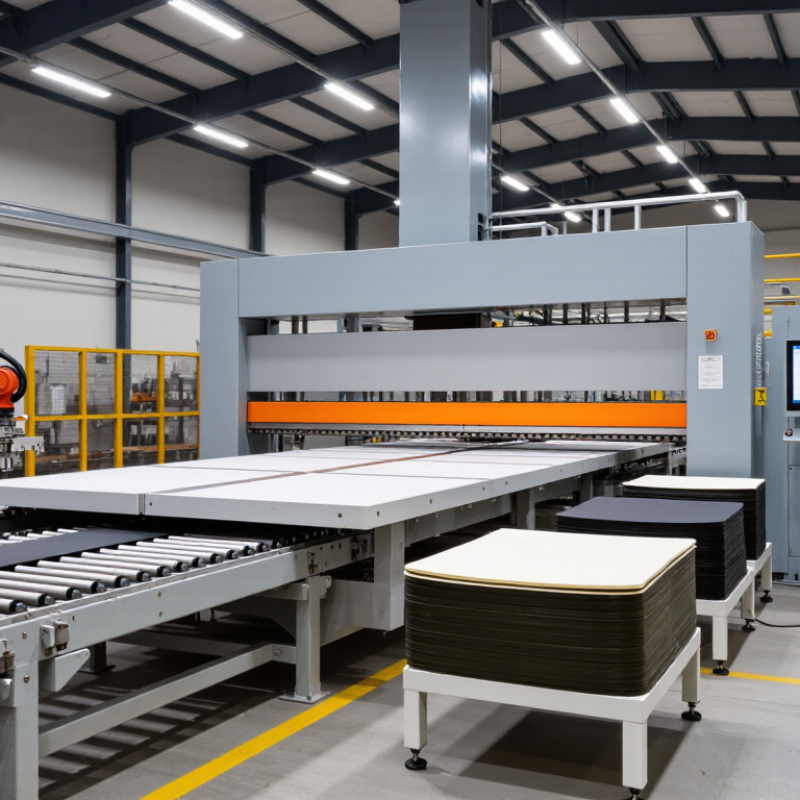
2026 Top Conveyor Belt Beam Cutting Press Factories
What Is a Conveyor Belt Beam Cutting Press?
A conveyor belt beam cutting press is an industrial machine that cuts shaped parts from sheet or roll materials. It uses a cutting die and a broad pressure beam to press through the material. The term “beam” describes the press head, which applies force across the cutting area. On a factory floor, operators may use one to produce belt components, liners, gaskets, or other repeatable shapes. A clean cut matters.
The operator places the material and die on the cutting bed, then sets the stroke and pressure for the job. Some presses use hydraulic systems; others use mechanical drive mechanisms. Material thickness, hardness, and die condition all affect the result. Too little pressure can leave fibers attached, while excessive force may shorten die life or mark the bed. Setup is rarely perfect on the first try. Small test cuts help reveal uneven edges or shifting material before a full run. A press is not a cure-all: feeding, alignment, and regular inspection still require attention. When comparing machines, buyers should check usable cutting area, force control, safety features, and how easily the press handles their actual material. I would not judge one by capacity alone.
A beam cutting press uses a shaped steel die to punch conveyor belt material into defined parts. The press head applies force across the die, driving its cutting edge through rubber, fabric, or layered belt stock. The operator positions the material on a firm cutting board and checks that the die sits flat. A clean strike matters.
Belt construction changes the cutting process. A fabric-reinforced sheet may compress before the die passes through, while a thicker rubber cover can need more pressure or a slower cycle. Steel-cord belts require different tooling and handling than textile-reinforced stock, so a standard die setup may not suit every job. That assumption can be wrong. Test cuts help reveal frayed edges, incomplete penetration, or distortion near the cut line.
Experienced operators watch the result, not only the press settings. They inspect die sharpness, material alignment, and the board beneath the workpiece. If parts vary in size, pressure, belt thickness, or material tension may be responsible. Even a small shift can affect fit. Keeping a record of successful settings can reduce repeat adjustments, though it will not replace checking each new material batch. Sometimes the first sample needs another pass through the inspection process.
2026 Top Conveyor Belt Beam Cutting Press Factories
Key Technologies Used in Press Design and Production
Factories designing conveyor belt beam cutting presses must balance cutting force, working width, and repeatable accuracy. A rigid frame helps limit deflection when the press handles dense rubber sheets. Engineers may use finite element analysis to identify stress points before production, then verify those predictions with physical load tests. It is a useful check, not a substitute for testing. Wide platens also need even pressure distribution, or the blade may cut cleanly at one edge and leave fibers at the other.
Modern systems often combine servo-hydraulic control with pressure sensors and programmable cutting cycles. Operators can adjust stroke depth for different belt thicknesses, while position sensors monitor the moving beam. In production, machined guide surfaces and careful assembly reduce unwanted play. Small alignment errors matter. No setup is perfect. Dust, temperature changes, and worn tooling can still affect results, so routine calibration should be part of the operating plan. Safety interlocks and two-hand controls help reduce exposure to the cutting zone, but training and clear maintenance procedures remain essential. A factory’s real capability shows in consistent test cuts, documented checks, and honest handling of process limits.
Technology and production benchmarks for evaluating beam cutting presses used to process conveyor-belt materials. Entries describe general engineering practices, not a ranking of named manufacturers.
| Technology Area | Design or Production Method | How It Is Verified | Relevance to Conveyor-Belt Cutting |
|---|---|---|---|
| Hydraulic drive and pressure control | Hydraulic power unit with pressure regulation and monitoring. A variable-speed or servo-driven pump can reduce unnecessary pump operation when the production cycle permits. | Review the hydraulic schematic, pressure settings, temperature behavior, leakage checks, and cycle performance under the intended load. | Provides the force needed to press a cutting die through belt materials while allowing pressure to be managed for different jobs. |
| Beam and frame construction | Rigid welded or fabricated structure designed to resist deflection under the press load. Stress-relief processes may be used where appropriate to the material and manufacturing route. | Inspect fabrication records and confirm frame and platen geometry through dimensional measurement and loaded testing. | Structural stiffness helps maintain consistent cutting conditions across the working area. |
| Platen parallelism and alignment | Machined and aligned press surfaces, with adjustment provisions where required by the machine design. | Measure platen parallelism and check pressure or cut results at multiple positions across the usable area. | Helps reduce uneven die engagement and inconsistent cuts, especially when cutting large or layered belt sections. |
| Stroke and cutting-depth control | Adjustable stroke or cutting-height settings, supported by position sensing or controlled mechanical limits according to the machine configuration. | Check repeatability of the selected settings and perform trial cuts using the specified die, cutting board, and material stack. | Supports repeatable cutting while helping prevent excessive impact on the cutting board or tooling. |
| Programmable control system | PLC-based control for operating sequences, interlocks, fault indication, and adjustable process settings. Some designs also record cycle or alarm data. | Test operating modes, emergency-stop response, interlocks, fault messages, and documented control settings. | Improves process consistency and makes operating faults easier to identify during production. |
| Operator safety systems | Risk-assessed safeguards such as fixed or interlocked guards, emergency stops, and appropriately designed presence-sensing or two-hand controls. | Review the machine risk assessment and validate safety functions and control-system design against applicable requirements, such as ISO 12100 and ISO 13849-1 where relevant. | Reduces exposure to crushing and cutting hazards around the press and its operating zone. |
| Die and cutting-board setup | Work surface and tooling arrangements designed for secure positioning of cutting dies and suitable cutting boards, with clear setup and replacement procedures. | Confirm die retention, work-surface condition, setup instructions, and cut quality using representative production tooling. | Correct setup supports stable cutting and helps protect both the die and the press surface. |
| Electrical and hydraulic system integration | Coordinated electrical controls, hydraulic components, sensors, cabling, and service access, with component documentation and circuit identification. | Check wiring and hydraulic diagrams, component labels, protective devices, hose routing, and maintenance access. | Well-documented integration simplifies troubleshooting and routine service in a production environment. |
| Manufacturing quality control | Documented inspection of incoming components, fabricated structures, machined surfaces, assemblies, and completed machines. | Review inspection records, calibration status of measurement equipment, assembly checks, and corrective-action records. | Provides evidence that the press has been built and inspected against its specified design requirements. |
| Factory acceptance and commissioning | Functional testing of operating modes, safety devices, pressure controls, stroke settings, and representative cutting tasks before handover. | Use a recorded acceptance checklist and confirm the results with the agreed material, die, operating conditions, and machine specification. | Helps confirm that the press is ready for its intended cutting application and that operators receive relevant setup information. |
Leading conveyor belt beam cutting press factories in 2026 stand out through practical engineering, consistent production, and clear technical support. Their teams understand how belt thickness, reinforcement, and beam dimensions affect cutting pressure. They can explain those choices without relying on vague performance claims.
Experienced factories should demonstrate how a press handles real materials. Ask for a test using your belt samples, then inspect the cut edges for fraying, compression, and dimensional variation.
Small details matter. Check the bed’s usable area, blade adjustment method, safety controls, and time needed for routine maintenance. A polished demonstration is useful, but production conditions can be less tidy.
Reliable suppliers also provide installation guidance, operator training, and accessible replacement parts. Request drawings, operating instructions, and a maintenance schedule before placing an order. Compare quoted cycle rates with your own production needs; faster is not automatically better if cuts become inconsistent.
One limitation is easy to overlook: factory tests may not reflect worn tooling or varied material batches. Ask how performance is monitored after delivery, and whether technicians can help diagnose uneven cuts.
2026 Top Conveyor Belt Beam Cutting Press Factories
How to Compare Factories by Quality, Capacity, and Service
Comparing factories takes more than reading machine specifications. Ask how each press controls cutting depth across different belt thicknesses. Request sample cuts using your material, then inspect the edges for fraying, unevenness, or heat marks. Small defects matter. Review inspection records and ask how often key components are checked. A polished demonstration is useful, but it may not reflect a full production shift.
Capacity should match your actual workload, not an optimistic sales estimate. Compare cutting speed, setup time, supported belt widths, and planned maintenance hours. Ask the factory to explain its daily output assumptions, including operator breaks and material changes. If possible, observe a test run with several belt sizes. The numbers can still feel uncertain; production conditions rarely stay perfectly consistent.
Tips: Request a written service plan covering installation, operator training, spare-part availability, and response times. Check whether troubleshooting support is available across your working hours. Ask for references from buyers with similar materials and output needs. One useful question: what happens when a cut fails? A clear answer can reveal more than a brochure. Also compare warranty exclusions carefully, since they are easy to overlook.
How to Compare Factories by Quality, Capacity, and Service
Suggested evaluation weights: quality 40%, production capacity 35%, and service 25%. These are a comparison framework, not measured results for specific factories. Score each supplier using verified documents, production records, and service commitments.