SSI Traffic Solutions: Traffic Safety Products in USA and Canada
Traffic Safety Products in USA and Canada

Choosing a reliable supplier for a Welding Leather Cape takes more than comparing prices. The right cape should cover the shoulders and upper chest, sit comfortably over workwear, and allow enough movement for practical welding tasks. Leather thickness, seam construction, closures, and edge finishing all affect how a cape performs over time. Small details matter.
China has a broad range of manufacturers and suppliers, from specialized protective-clothing producers to larger workwear factories. Their product photos may look similar, but materials, sizing, and quality checks can differ. A catalog photo is not proof. Buyers should review clear specifications, request close-up images of seams and fasteners, and ask how products are inspected between production runs. Samples can reveal stiffness, fit, and finishing issues that a product sheet may not show.
This guide looks at ways to compare Chinese suppliers, assess product information, and ask useful questions before placing an order. It also considers communication, customization, lead times, and after-sales support. Ask for relevant test documentation where available, and confirm what it covers rather than relying on broad safety claims. These checks do not remove every risk. Supplier information can be incomplete, and even a well-made cape may not suit every task or wearer. Use the details here as a starting point, then verify the facts directly with each manufacturer.
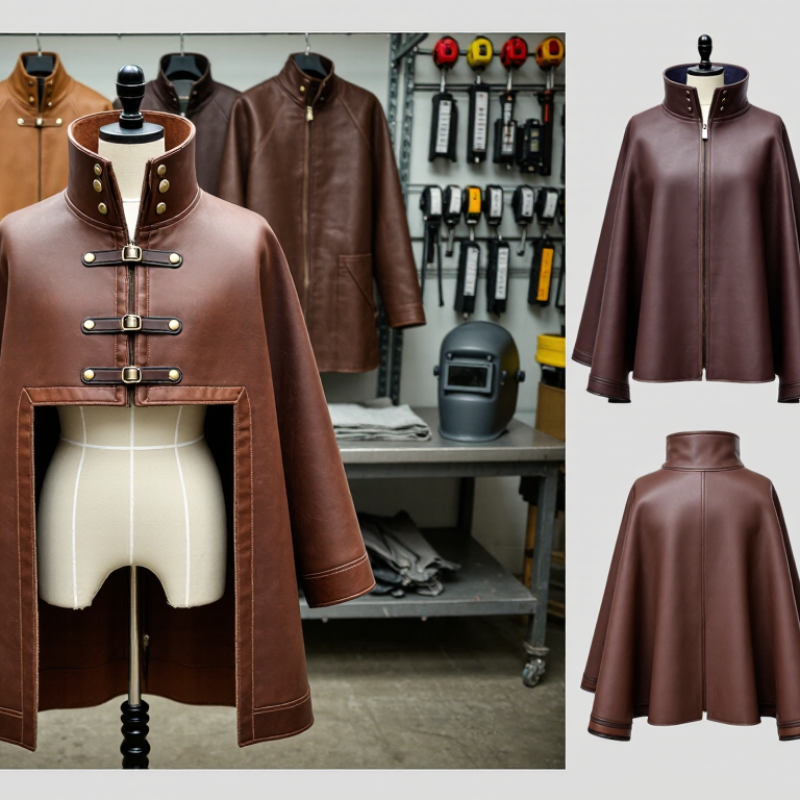
A welding leather cape is a protective shoulder-and-chest covering, usually made from heat-resistant leather. It helps shield areas that a standard jacket may leave exposed, especially during overhead welding. Sparks can land on the shoulders, collar, or upper arms. The cape forms a durable barrier against hot spatter and brief contact with sparks. It is not fireproof. Its protection depends on sound seams, adequate coverage, and correct use.
Wear the cape over suitable protective clothing, with its front closed and collar positioned to cover the neck. Check for cracks, thin spots, loose stitching, or burns before each shift. A damaged cape can expose skin, even if the defect looks small. Match it with gloves, eye protection, and other gear suited to the task.
Keep the leather dry and away from oils or flammable materials. Fit matters. If the cape catches on a fixture or restricts movement, adjust it before welding. A cape does not replace a complete protective setup, and it may feel cumbersome in warm workshops. That trade-off is easy to underestimate.
After use, let it cool and inspect it again; leather can hide damage beneath soot.
A welding leather cape is only as dependable as its hide, seams, and coverage. Split cowhide is commonly used for its abrasion resistance and protection from brief sparks, though thickness and flexibility vary. Grain leather may feel softer; appearance alone does not prove protection. Ask suppliers for material details and test documentation aligned with ISO 11611, which covers protective clothing for welding and allied processes. Check the stitching, closures, and care instructions. Leather is not fireproof. Heat and slag can damage worn, oily, or damp areas.
The U.S. Bureau of Labor Statistics reported 2.6 million nonfatal workplace injuries and illnesses in private industry in 2023. This broad figure is not welding-specific, but it underlines why protective equipment deserves careful selection. Look for reinforced seams and a collar that overlaps the jacket without restricting head movement. Covered fasteners can help reduce exposed surfaces where sparks may land. Test the fit. Raise both arms and lean forward; gaps at the shoulder or chest can leave skin exposed. A cape that feels heavy in the shop may also discourage regular use. That trade-off is easy to miss, so compare coverage with comfort, then inspect the leather regularly for cracks, burns, and loose stitching.
Chinese welding-cape production begins with leather inspection. Technicians check thickness, surface flaws, and consistency before cutting panels. A capable factory also records material lots, so defects can be traced back to their source. Sewing follows, with reinforced seams and overlapping closures designed to reduce exposed gaps. Small details matter: a rough edge near the shoulder can become a weak point after repeated movement.
Testing should cover both material performance and garment construction. ISO 11611:2015 classifies protective clothing for welding into two performance classes. Its molten-metal test uses at least 15 drops for Class 1 and 25 for Class 2. Manufacturers can also assess flame spread, seam strength, and cape coverage, then inspect samples after wear or cleaning. A passed sample is not the whole story. Production batches can vary, so repeat checks and clear test records help keep quality consistent.
Tips: Ask suppliers for test reports tied to the exact leather and cape design. Check seams, neck coverage, and closure overlap—not just the fabric swatch. Even careful testing cannot reproduce every workshop condition.
Evaluating Chinese Welding Cape manufacturers starts with the material, not the catalogue photo. Ask for the leather type, thickness range, and how each batch is checked. The cape should cover the shoulders and upper chest without restricting arm movement. Check whether the edges feel smooth and the seams stay even where panels meet. Small details matter.
Request a sample before discussing a large order. Inspect it under bright light, flex the seams, and check the fit over typical work clothing. Ask how the supplier controls variation between samples and production runs. A neat sample is useful, but it does not prove that every shipment will match. That distinction is easy to miss.
Review written specifications, inspection records, lead times, and responses to practical questions. Ask who checks finished capes and what happens when a seam or fastener fails inspection. Clear, specific answers are more reassuring than broad quality claims. Compare the same details across several suppliers, and keep notes on gaps or unclear terms. No checklist catches everything. A careful evaluation still leaves some uncertainty, so confirm key requirements in writing before placing an order.
| Evaluation area | What to check | Evidence to request | Practical evaluation guide |
|---|---|---|---|
| Product standards | Whether the cape is designed and assessed as protective clothing for welding and allied processes. | A current test report or certificate identifying the exact product, applicable standard, model, and tested configuration. | Check the scope and validity of any claim against the relevant edition of EN ISO 11611. Do not assume a certificate for one garment covers every model or material combination. |
| Flame and heat performance | Resistance to limited flame spread and relevant heat exposures for the intended welding hazards. | Test results from a competent laboratory, with methods and sample details stated. EN ISO 15025, EN ISO 9151, or EN ISO 6942 may be relevant test methods within a protective-clothing assessment. | Compare results with the garment’s declared standard, class, and intended use. A test method alone is not proof that the product meets a complete product standard. |
| Leather material | Leather type, thickness, finish, flexibility, and consistency between production lots. | Material specification, incoming inspection records, and a representative pre-production sample. | Set thickness and appearance requirements for your application; there is no single thickness that suits every cape. Check for weak areas, cracks, stiff patches, and inconsistent coverage. |
| Construction and coverage | Cape dimensions, shoulder and neck coverage, closures, seams, and compatibility with other PPE. | Dimensioned drawings, size chart, finished-product samples, and inspection results for seam and closure quality. | Confirm fit over the wearer’s intended clothing and helmet setup. Check that closures stay secured and that there are no exposed gaps in the areas the design is meant to protect. |
| Traceability | Ability to link finished goods to material batches, production dates, and inspection records. | Sample labels, batch records, material purchase records, and a written process for handling nonconforming products. | Ask the supplier to demonstrate traceability using a sample batch record rather than relying only on a verbal assurance. |
| Quality control | Inspection of incoming materials, in-process sewing, and final products. | Quality-control plan, inspection checklist, defect classifications, and recent anonymized inspection records. | Agree in writing on measurable checks, sampling rules, and corrective-action timelines before placing a bulk order. |
| Production capability | Whether the production process can consistently meet the required specifications and order schedule. | A production process overview, stated capacity, lead-time assumptions, and a production sample made to the proposed specification. | Verify capacity against the actual order quantity and seasonal schedule. Treat quoted capacity as a claim to validate, not a guarantee. |
| Sampling and change control | How samples are approved and how changes to leather, design, or production are managed. | Written sample approval, revision records, and a procedure requiring buyer notification of material or construction changes. | Keep an approved reference sample and specification. Require re-approval when a change could affect fit, coverage, or protective performance. |
| Packaging and shipment | Protection from moisture, contamination, and damage during storage and transport. | Packaging specification, carton markings, packing list, and pre-shipment inspection photographs or report. | Define packaging, labeling, quantity per carton, and shipping terms in the purchase order; check that markings match the approved product details. |
| Commercial terms and after-sales support | Clarity of quotation, minimum order quantity, lead time, payment terms, warranty, and complaint handling. | Itemized quotation, written order terms, warranty conditions, and a documented process for defects or returns. | Compare total landed cost and contractual terms, not unit price alone. Confirm remedies and response times before ordering. |
Note: Protective performance depends on the exact garment design, materials, construction, and intended hazards. Verify product claims and applicable requirements for the destination market before purchase.
When sourcing welding leather capes from China, compare more than the unit price. Ask suppliers about leather thickness, seam construction, cape dimensions, and closure strength. Request clear product photos and a sample you can inspect under normal workshop conditions. Check whether the cape covers the shoulders and upper chest without restricting arm movement. Fit matters.
Customization may include sizing, sleeve coverage, stitching, or packaging. Share a measurement sheet and confirm each change in writing before production. Ask how the supplier checks finished goods and handles defects. A sample helps, but it cannot guarantee every batch will match. That uncertainty is worth discussing early.
For imports, confirm the product description, carton count, gross weight, and shipping terms before booking freight. Check required documents with your customs broker for the destination market; requirements can vary. Tips: Compare samples, not claims. Keep written approval records, and leave time for inspection. A low quote can look attractive, yet unclear material details may cost more later.
The chart counts practical checks in a buyer’s sourcing checklist; it does not represent market statistics or rank suppliers. Confirm product specifications and applicable protective-equipment requirements for the destination market, and verify tariff classification and import charges with a customs broker.