SSI Traffic Solutions: Traffic Safety Products in USA and Canada
Traffic Safety Products in USA and Canada

A Dashboard Instrument is the driver’s quick-read interface: it shows speed, fuel or battery level, engine status, and warning signals. In many vehicles, the instrument cluster also displays navigation prompts and driver-assistance alerts. Its purpose is practical. A driver should be able to spot a critical change without searching through menus or taking a long look away from the road.
The stakes are real, though statistics need careful interpretation. NHTSA’s Traffic Safety Facts: Distracted Driving 2022 reported 3,308 deaths in distraction-affected crashes that year. That figure does not show that dashboard design caused those crashes. It does, however, underline why clear, glanceable information matters. AAA Foundation research also found that drivers took their eyes off the road for an average of 40 seconds while completing certain in-vehicle infotainment tasks. Those tasks involved infotainment systems, not instrument clusters—a useful distinction.
Human-centered design expert Don Norman wrote, “Good design is actually a lot harder to notice than poor design, in part because good designs fit our needs so well that the design is invisible.” That idea applies to a well-designed cluster: essential readings should feel easy to find, even in bright sunlight or at night. But no display can replace attention or sound vehicle maintenance. A warning light may be easy to see and still be misunderstood. This guide explores what dashboard instruments communicate, how drivers use them, and where their limits begin.
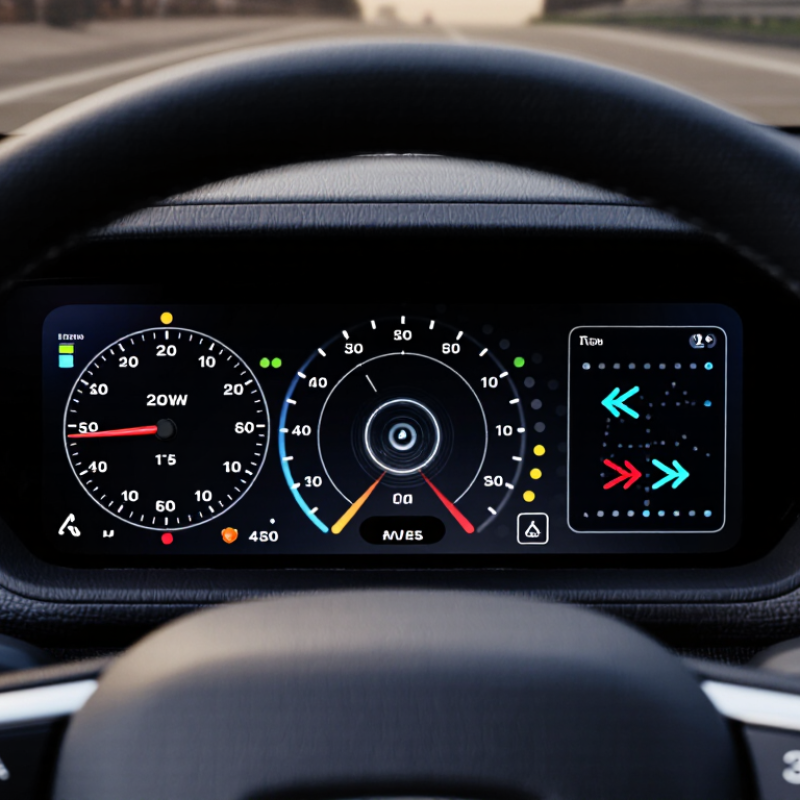
A dashboard instrument is a gauge, display, or warning indicator fitted within a vehicle’s dashboard. It gives the driver information about the vehicle’s operation without requiring them to inspect components directly. Common examples include a speedometer, fuel gauge, engine-temperature display, and warning lights. Their design and placement help keep important information within the driver’s field of view.
The instrument’s main role is to support timely decisions. A low fuel reading can prompt a refueling stop, while an illuminated warning light may signal that a system needs attention. Small changes matter. A temperature gauge moving beyond its normal range, for instance, can alert a driver to stop safely and check the vehicle’s guidance. Exact readings and symbols vary by vehicle, so the owner’s manual remains a reliable reference.
A dashboard instrument offers clues, not a complete diagnosis. Not a repair plan. A warning light may point to a problem without identifying its cause, and a gauge can be difficult to interpret if its markings are unfamiliar. Drivers should consider the vehicle’s manual and seek qualified inspection when a warning persists. Even a familiar display deserves a second look when its reading seems unusual.
A dashboard instrument cluster turns vehicle signals into information a driver can scan quickly. Its central reading is usually road speed, shown with a needle or digital number. The tachometer reports engine speed, while fuel or battery gauges show remaining energy. Coolant-temperature and oil-pressure indicators can flag conditions that need attention. Small details matter. A warning icon may be harder to see in bright sunlight, so drivers should learn the symbols before setting off.
Many clusters also show odometer readings, trip distance, gear selection, outside temperature, and estimated driving range. Treat that range as a guide: steep climbs, cold starts, and heavy loads can change energy use. Tire-pressure and brake warnings signal possible issues, but they do not explain the cause. Check the vehicle manual and stop somewhere safe if a warning suggests an urgent fault. NHTSA’s 2022 Traffic Safety Facts: Distracted Driving reports 3,308 people were killed in distraction-affected crashes in the United States. NHTSA’s voluntary Driver Distraction Guidelines advise limiting individual visual-manual task glances to two seconds. A clear display may make key readings easier to find, but it cannot prevent every lapse. Even a well-designed cluster can feel confusing to a new driver; that detail is easy to underestimate.
Dashboard instruments help drivers monitor key vehicle information. This illustrative chart shows how vehicle speed and engine speed (RPM) might change during a short drive. Dashboards may also display fuel level, engine temperature, and warning lights.
Illustrative readings only; actual values vary by vehicle and driving conditions.
What Is a Dashboard Instrument Used For?
Common Types of Dashboard Instruments
Dashboard instruments help drivers monitor vehicle speed, operating conditions, and potential problems. The speedometer shows how fast the vehicle is moving, while the odometer records distance traveled. A tachometer displays engine speed in revolutions per minute. Not every vehicle has one, and many drivers rarely need to watch it closely.
Fuel gauges estimate how much fuel remains. Temperature gauges track engine coolant temperature, and oil pressure gauges indicate whether lubrication pressure is within a normal range. Some dashboards use warning lights instead of detailed gauges. A battery or charging-system light, for example, may signal an electrical issue. These indicators are useful, but they do not always identify the exact cause. A flashing light and a steady light can also mean different things, so check the vehicle manual rather than guessing.
Tips: Learn what your own dashboard’s symbols mean before a trip. If a temperature reading rises sharply or a warning light stays on, find a safe place to stop and consult the manual. Small details matter. I sometimes find the symbols less intuitive than they should be, which is a good reason to review them when the vehicle is parked.
| Instrument | What It Measures or Indicates | Typical Use | Common Units or Display |
|---|---|---|---|
| Speedometer | The vehicle’s current road speed | Helps the driver monitor speed and follow posted limits | Miles per hour (mph) or kilometers per hour (km/h) |
| Tachometer | Engine rotational speed | Shows engine speed and can help drivers select suitable gears | Revolutions per minute (rpm), often shown in thousands |
| Fuel Gauge | The approximate amount of fuel in the tank | Helps estimate remaining fuel and plan refueling | Graduated scale, fractional marks, or a digital bar |
| Engine Coolant Temperature Gauge | Engine coolant temperature | Helps identify when the engine is operating outside its normal temperature range | Temperature scale or cool-to-hot indicator |
| Oil Pressure Gauge | Oil pressure in the engine lubrication system | Alerts the driver to unusually low or high oil pressure | Kilopascals (kPa), pounds per square inch (psi), or a warning range |
| Voltmeter or Charging-System Indicator | Electrical system voltage or charging-system status | Helps indicate whether the vehicle’s electrical system is charging normally | Volts (V) or a warning light |
| Odometer | Total distance traveled by the vehicle | Supports maintenance records and tracking vehicle mileage | Miles or kilometers |
| Trip Meter | Distance traveled since the meter was last reset | Useful for tracking individual journeys or distance between refueling stops | Miles or kilometers |
| Warning Lights | The status of monitored vehicle systems or conditions | Notifies the driver when a system needs attention or a safety condition is active | Illuminated symbols or text messages |
Drivers use dashboard readings to make small decisions before a problem becomes urgent. The speedometer helps them match road conditions and posted limits. The fuel gauge signals when to plan a stop, while the temperature gauge can reveal overheating. Warning lights need prompt attention, but their meaning varies by vehicle. Check the owner’s manual when a symbol is unfamiliar.
A useful habit is to glance at key readings on a straight, predictable stretch, then return attention to the road. Keep the glance brief. NHTSA’s 2022 Traffic Safety Facts report recorded 3,308 deaths in distraction-affected crashes; it does not attribute those deaths specifically to dashboard use, but it underlines the cost of diverted attention. At a red light or when safely parked, drivers can study less familiar readings in more detail. A dashboard is only one source of information: an unusual smell, a pull in the steering, or a sudden change in engine sound may matter too. The display can lag or be easy to misread. That part deserves a second thought.
A dashboard’s warning indicators help drivers notice conditions that may affect safe operation. A steady light can signal a problem needing prompt attention, while a flashing light may indicate a more urgent fault. Color conventions are common, but meanings differ between vehicles. Check the owner’s manual for the exact symbol and instructions.
A red oil-pressure or temperature warning usually calls for a safe stop as soon as possible. Ease off the accelerator, signal, and pull away from traffic before checking the manual or seeking assistance. Amber warnings often allow a cautious drive to a safe place, but not always. If the vehicle shakes, loses power, or makes a new noise, stop safely. It is easy to assume a familiar-looking icon means the same thing in every car; that assumption can be wrong.
Tips: Notice the symbol, color, and whether it is flashing. Don’t keep driving just to see if it disappears. Once parked, record what you observed and check the vehicle-specific guidance. A brief pause can prevent a small concern from becoming a roadside problem.