SSI Traffic Solutions: Traffic Safety Products in USA and Canada
Traffic Safety Products in USA and Canada

Effective traffic management is crucial for urban safety and efficiency. According to a report by the Federal Highway Administration, proper use of street cones can reduce traffic incidents by up to 30%. Street cones serve not only as physical barriers but also as visual cues for drivers. They signal changes in road conditions and guide traffic flow during construction or emergencies.
However, improper placement of street cones can lead to confusion. A study from the Institute of Transportation Engineers found that nearly 20% of crashes in work zones are due to inadequate cone placement. This implies that more training is needed for workers who deploy these cones. Streets should not resemble obstacle courses.
While street cones are essential, they are not foolproof. They require careful management to ensure effectiveness. Drivers often miss cases where cones are poorly positioned or insufficient. This highlights the importance of ongoing assessment and improvements in traffic management strategies involving street cones.
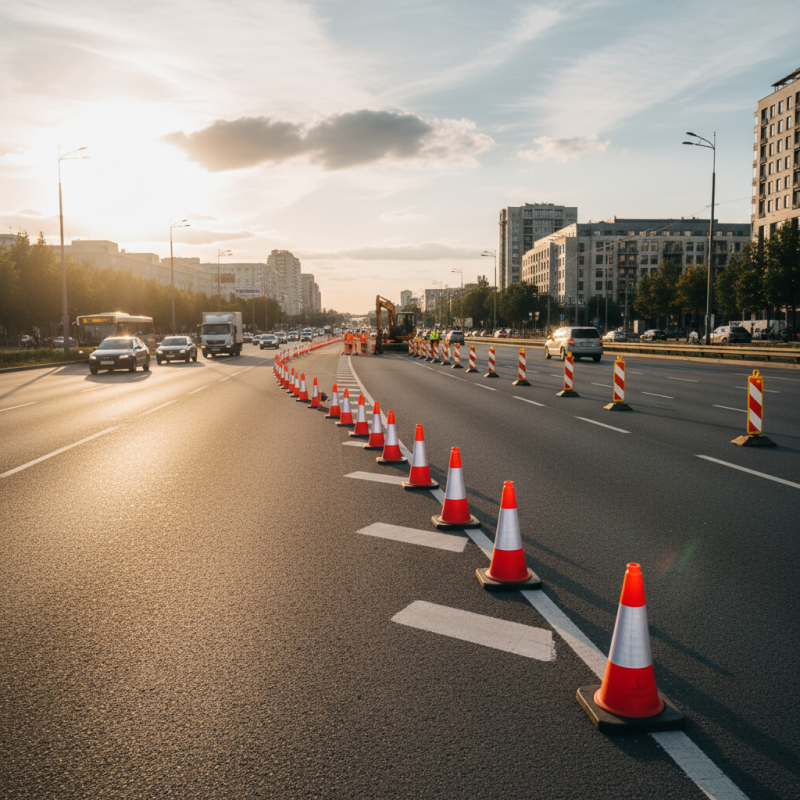
Street cones play a crucial role in traffic management. They are often used to direct vehicles, control pedestrian movement, and establish safety zones. These cones are typically bright orange or yellow, making them easily visible from a distance. Their vibrant colors grab the attention of drivers and pedestrians alike, which is essential for preventing accidents.
Understanding the purpose of street cones is vital for effective traffic management. These cones can indicate road closures or direct drivers around construction sites. However, their placement can sometimes be inconsistent. Drivers may overlook them or misinterpret their intentions. In some crowded areas, cones can create confusion rather than clarity. It’s essential to ensure that cones are placed strategically to provide clear guidance.
Proper use of street cones requires continuous evaluation. Are they positioned in a way that maximizes visibility? Are drivers following the intended paths? Feedback from users can highlight shortcomings in placement and design. Sometimes, cones may also get moved or knocked over, leading to ineffective traffic management. Therefore, regular checks and adjustments are needed to maintain order and safety on the roads.
Choosing the right type of street cones is vital for effective traffic management. According to a recent industry report, over 20% of traffic disruptions occur due to improper use of traffic cones. Different scenarios require different types of cones to maximize safety and efficiency.
For construction zones, heavy-duty cones made of durable PVC are essential. These cones should be visible from a distance, ideally in bright colors. Studies show that high visibility reduces accident rates by 30%. For temporary events, lightweight cones with collapsible features may be more suitable. However, they often lack the sturdiness needed for longer-term applications.
Reflective cones add an extra layer of safety, particularly at night. A survey indicated that 60% of drivers feel more secure when driving past reflective markers. It's important to assess the environment before deploying cones. This includes considering weather conditions and traffic patterns. Misplaced cones can lead to confusion and accidents. Each choice impacts overall safety and traffic flow, making it crucial to reflect on your selections.
Strategic placement of street cones can significantly improve traffic management. Positioning them at intersections ensures drivers are alerted to changes ahead. Place cones in a way that guides vehicles smoothly through construction zones. Use bright colors to enhance visibility, especially at night or during inclement weather.
Consider the height and weight of the cones. Taller cones can stand out better, while heavier cones prevent tipping in windy conditions. Regularly check their placement. Misplaced cones can confuse drivers. Sometimes, cones gather dust in storage and don’t get used as intended. Reflect on past experiences where poor placement led to traffic jams or accidents.
Think about your local environment. Street cones may be ineffective on busy streets without proper signage. Observing traffic patterns can lead to better placements. Engage with local residents for their input. Their feedback can unveil blind spots in your current strategy. The goal is to ensure safety and promote smooth traffic flow. Every small adjustment counts in effective traffic management.
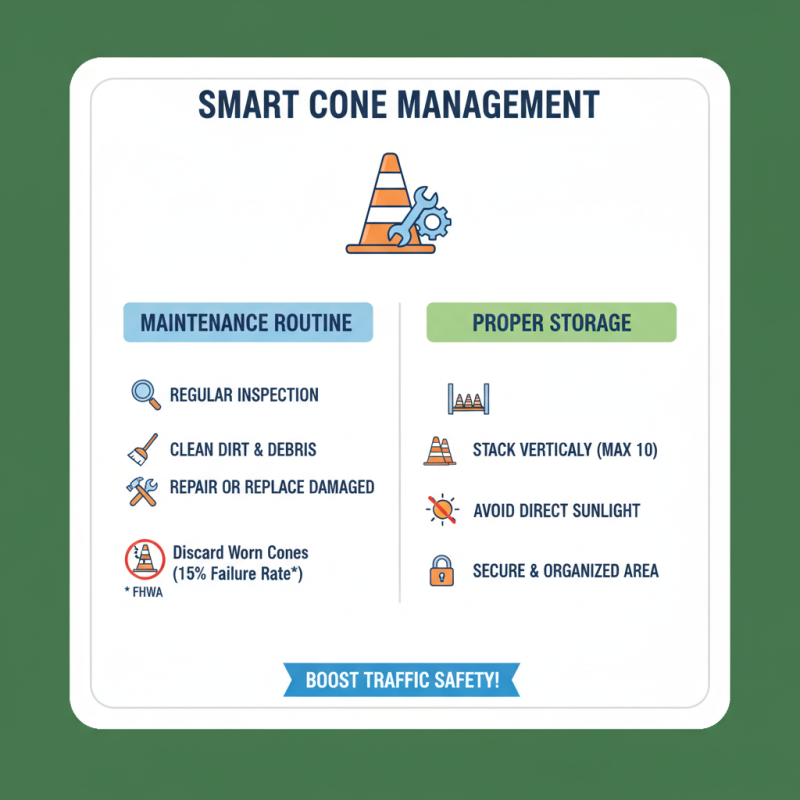
Maintaining and storing street cones requires careful consideration to ensure they remain effective for traffic management. Cones should be inspected regularly for signs of wear or damage. According to the Federal Highway Administration, about 15% of traffic cones fail in performance due to neglect. This highlights the need for proper maintenance routines.
Tips: Store cones in a clean, dry area. This prevents exposure to moisture and extends their life. It’s beneficial to organize them by size and type to facilitate easy access.
When it comes to storage, stacking cones can save space, but ensure that they don't become warped. A report from the National Institute for Occupational Safety and Health indicates that roughly 10% of accidents involve improperly stored traffic materials. Using designated storage bins can mitigate this risk.
Tips: Regularly clean your cones. A simple soap and water solution can remove dirt and grime. Dirty cones can be less visible and hinder their effectiveness in directing traffic.
Effective traffic management often relies on strategic street cone placement. These bright, reflective cones can significantly influence traffic flow and safety. When positioned correctly, they guide drivers, prevent hazardous situations, and control lane usage. For example, during roadwork, cones can redirect vehicles, ensuring smoother movements and reducing congestion.
However, the effectiveness of street cones is not always guaranteed. Sometimes, cones may be misaligned or inadequate in number, resulting in confusing traffic patterns. In certain cases, drivers might ignore them, leading to potential accidents. Additionally, weather conditions like heavy rain or fog can obscure visibility, impacting their effectiveness. Community feedback is essential to improve strategies for cone placement. Gathering data on traffic flow can lead to better decision-making. Regular assessments allow for adjustments based on real-world conditions. This iterative approach ensures street cones achieve their intended purpose more reliably.