SSI Traffic Solutions: Traffic Safety Products in USA and Canada
Traffic Safety Products in USA and Canada

Buying a Medical Syringe for global distribution is not simply a price comparison. The wrong choice may create leakage, unclear measurements, damaged packaging, or delivery delays. Small details matter. A 1 mL syringe with 0.01 mL graduations serves a different purpose from a 20 mL model. Luer lock and slip-tip fittings also affect compatibility, handling, and user confidence.
Infection-prevention specialist Dr. William A. Rutala has stated, “The single most important factor in preventing the spread of infection is hand hygiene.” His point reaches beyond clinical practice. Buyers must examine sterile packaging, single-use labeling, needle security, and supplier quality controls. Ask for ISO 13485 certification, relevant ISO 7886-1 test evidence, batch records, and independent inspection results. Confirm whether sterilization uses ethylene oxide or radiation. Then check residue limits, seal integrity, and shelf-life documentation.
Global purchasing adds more uncertainty. Import rules, language requirements, labeling formats, and registration systems differ between markets. A certificate accepted in one country may not satisfy another authority. That assumption causes expensive mistakes. Supplier audits, sample testing, and traceable lot numbers provide practical protection. Still, documents alone are not enough. A syringe can pass paperwork and disappoint during real use. Test the plunger movement, barrel clarity, connector fit, and carton strength before committing to volume.
This guide presents ten buying tips for global buyers. It focuses on evidence, usability, and supply reliability. Some decisions remain imperfect. That is normal. Careful buyers identify the uncertainty before it becomes a clinical or commercial problem.
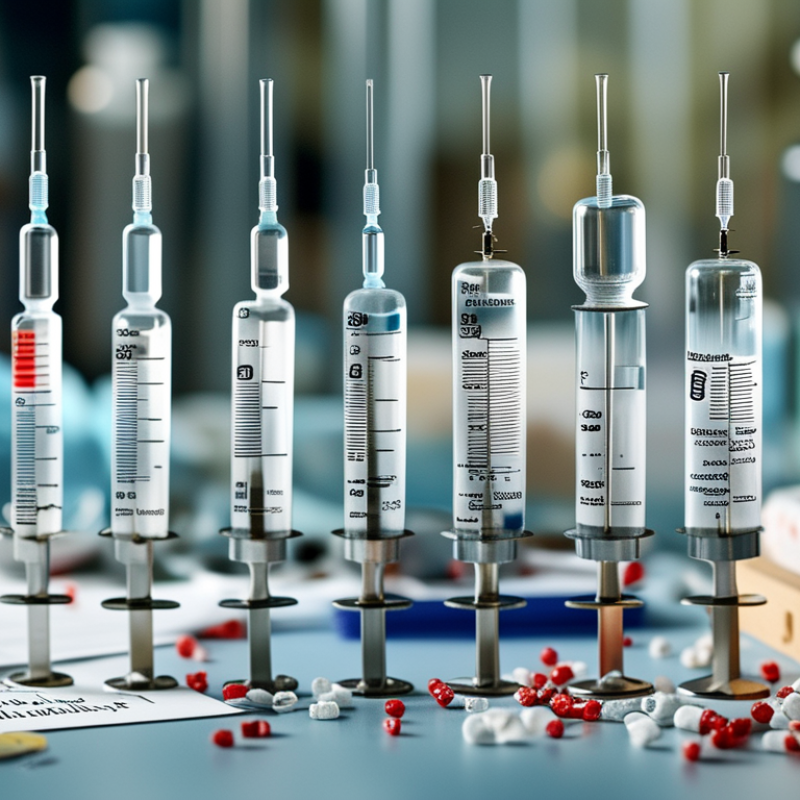
Global buyers should match a syringe to its intended use, not only its price. The World Health Organization estimates that about 16 billion injections occur worldwide each year. Around 90% deliver treatment, while approximately 5% support immunization. That scale makes small specification errors costly.
For insulin, choose a fine, fixed needle and a clearly graduated low-volume barrel. Tuberculin syringes suit small-dose testing and pediatric applications. Luer-lock models reduce needle separation during medication administration, while luer-slip versions support faster routine handling. Safety syringes can help reduce needlestick exposure when required by local procedures.
For vaccines, verify the correct capacity, dead-space design, and auto-disable function. WHO and UNICEF procurement guidance stresses compatibility with immunization programs and trained users. Never assume one type fits every setting.
Enteral syringes need dedicated connectors to prevent connection with intravenous equipment. Irrigation syringes require larger capacities and suitable tip geometry. Check ISO 7886-1 for manually operated syringes and ISO 8537 for insulin syringes. Confirm sterility, packaging integrity, graduation accuracy, needle gauge, and shelf life. The WHO guideline on injection safety also emphasizes single-use practice and reliable disposal systems. A lower unit cost may hide higher waste or dosing risk. I have seen buyers compare only barrel volume, then discover that needle length does not suit the procedure. That mistake is avoidable, but not always obvious. Request samples, review certificates, and test handling with actual clinical staff before placing a large order.
10 Medical Syringe Buying Tips for Global Buyers
Safety and sterility should guide every syringe purchase. Check whether each unit is individually sealed, tamper-evident, and labeled with a clear lot number. Confirm the sterilization method, expiry date, and sterility validation records. A certificate alone is not enough. Ask for batch-specific documentation and independent test results when risk is high. Tip: Inspect sample packaging under bright light. Tiny tears can compromise confidence.
Materials affect patient safety and handling. Verify the barrel composition, plunger material, gasket, and needle attachment. Medical-grade polypropylene is common, but formulations differ. Request evidence of biocompatibility, chemical resistance, and latex-free construction where required. Check whether the syringe suits the intended medication, temperature range, and storage conditions. It is easy to overlook lubricant compatibility. That mistake can affect movement or dosing.
Quality standards must match the destination market. Review applicable requirements, such as ISO 7886 for sterile, single-use syringes, and confirm the supplier’s quality system. Look for controlled manufacturing records, inspection procedures, and traceability from raw material to shipment. Tip: Compare printed graduations with measured volume during sample testing. They should remain clear and accurate. Regulatory documents may be valid, yet translations or local registrations can be incomplete. Recheck them. Product selection also deserves clinical input, because a technically compliant syringe may still feel unsuitable during real use.
Global syringe purchasing starts with clinical fit, not the lowest quotation. WHO’s Injection Safety Fact Sheet reports about 16 billion injections annually, with roughly 5% used for immunization. That scale makes small specification errors expensive.
Tip 1: Match volume to dosage accuracy.
Tip 2: Check dead space for low-volume injections.
Tip 3: Confirm needle gauge, length, bevel, and compatibility.
Tip 4: Request samples for plunger smoothness and barrel readability.
A 1 mL syringe can be unsuitable when graduations are difficult to read.
Packaging deserves equal attention.
Tip 5: Require sterile, intact primary packaging and visible lot identification.
Tip 6: Review carton strength for humid or long-distance routes.
Tip 7: Confirm expiry dating at shipment, not only at production.
WHO and UNICEF reported 14.5 million zero-dose children in 2023, showing continued pressure on reliable immunization supply chains.
In my procurement reviews, damaged cartons often create more waste than expected. That lesson is easy to underestimate.
Supplier reliability needs evidence.
Tip 8: Check ISO 7886-1 conformity for single-use syringes and request current test records.
Tip 9: Compare lead times, reserve capacity, and change-control procedures.
Tip 10: Audit complaint handling and recall communication before signing.
UNICEF supply practices emphasize documented quality assurance and predictable delivery.
A supplier may pass one inspection, yet still communicate poorly during shortages.
Buyers should score total cost, including inspection, storage, rejected units, and delays.
The cheapest offer is not always economical.
Sometimes, the spreadsheet hides the risk.
Global syringe buyers should compare landed cost, not only the factory price. WHO estimates that about 16 billion injections are administered worldwide each year, creating strong demand for predictable supply and safe specifications (WHO, Injection Safety Fact Sheet). Request prices by unit, carton, and pallet. A low unit price may hide higher costs for sterilization, packaging, inspection, or documentation.
Minimum order quantity also changes the real calculation. A supplier offering 50,000 units may seem attractive, but storage, insurance, financing, and expiry risk can reduce the benefit. Build a simple cost sheet: product value, inland transport, freight, customs duty, broker fees, testing, and delivery to the final warehouse. Use current tariff data from the importing country, because classifications and taxes vary. The World Bank’s Logistics Performance Index 2023 shows major differences in customs efficiency and shipment reliability across markets. Delays are not theoretical.
Check compliance before negotiating volume. Confirm needle size, barrel capacity, graduated markings, sterility, packaging integrity, and conformity with ISO 7886-1 where applicable. Verify the manufacturer’s quality records and request batch-specific documents. UNICEF procurement guidance emphasizes quality assurance, forecasting, and supply continuity for immunization products. That principle also matters for routine medical supply.
Do not trust the cheapest quote immediately. I have seen spreadsheets miss port storage charges. A 3% price saving can disappear after one delayed container. Recalculate using realistic lead times, inspection costs, and a small contingency. The “best” offer may be the one with clearer evidence, not the lowest number.
| Tip | Product Dimension to Compare | Typical Specification | Indicative Export Price (USD per 1,000 units) | Typical MOQ | Common Import-Cost Items | Buyer Action |
|---|---|---|---|---|---|---|
| 1 | Nominal capacity | 1 mL, 3 mL, 5 mL, 10 mL, or 20 mL; luer-slip or luer-lock connection | $25–$85 | 10,000–50,000 units | Product price, export packing, freight, insurance, customs duty, and import VAT/GST | Compare prices only when the capacity, connection type, graduation, and packaging quantity are identical. |
| 2 | Needle configuration | Needle-free syringe, fixed needle, or detachable needle; common gauges include 18G–30G | $30–$160 | 10,000–100,000 units | Needle assembly, protective cap, sharps-compliant packaging, and possible additional inspection charges | Request separate quotations for the syringe and needle when the needle specification is not yet finalized. |
| 3 | Sterility and packaging | Sterile, single-use product; individual blister or peel pouch; carton and master-carton packing | $35–$180 | 20,000–100,000 units | Sterilization validation, sterile barrier packaging, certificates, freight volume, and local disposal requirements | Confirm the sterilization method, expiry period, package integrity testing, and shelf-life evidence before ordering. |
| 4 | Material and component quality | Medical-grade polypropylene barrel, elastomer stopper, readable graduations, and low-dead-space option where required | $30–$125 | 10,000–50,000 units | Material declarations, extractables or leachables documentation where applicable, quality inspection, and testing samples | Compare the complete material specification rather than selecting the lowest price based only on unit count. |
| 5 | Quality and regulatory documentation | Lot traceability, certificate of analysis, conformity documentation, and quality-management records | $25–$150 | 10,000–100,000 units | Document review, third-party inspection, laboratory testing, registration fees, and customs-broker charges | Check the destination market’s requirements for medical-device registration, labeling, language, and importer responsibility. |
| 6 | Minimum order quantity and annual demand | Standard, unprinted packaging generally has a lower MOQ than custom printed or private-label packaging | Price may fall 5%–15% at higher volumes | 10,000–100,000 units | Inventory carrying cost, storage, cash tied up in stock, and risk of expiry or specification changes | Compare the total annual cost at several order quantities instead of comparing only the first shipment’s unit price. |
| 7 | Shipping mode and shipment size | Small urgent shipment by air; larger replenishment shipment by sea or consolidated freight | Freight allowance: $20–$220 per 1,000 units | Depends on carton volume | Freight, fuel or security surcharges, terminal handling, documentation, insurance, and destination delivery | Obtain a landed-cost quotation based on carton dimensions, gross weight, shipping terms, port, and delivery address. |
| 8 | Trade terms and payment conditions | EXW, FOB, CIF, or DAP quotation; deposit and balance payment structure | EXW/FOB is not the final import price | Often 20,000–50,000 units | Origin transport, export clearance, ocean or air freight, destination charges, duty, tax, and last-mile delivery | Convert every supplier quote to the same Incoterm and destination before making a price comparison. |
| 9 | Customs classification and tax treatment | Medical syringes are commonly classified under HS heading 9018, but the exact subheading and tax treatment vary by jurisdiction | Duty and tax: verify locally | Not applicable | Customs duty, import VAT/GST, brokerage, port fees, inspection fees, and possible tariff or permit charges | Ask a licensed customs broker or the destination customs authority to confirm the applicable tariff code and rate before shipment. |
| 10 | Total landed cost and quality risk | Total cost per usable unit after rejected units, shortages, testing, freight, duty, tax, and local delivery | Landed cost = product + logistics + import charges | Order quantity should match verified demand | Nonconformance, rework, destruction, product recall, delayed release, and replacement shipment costs | Use pre-shipment inspection, lot sampling, written specifications, and a quality agreement to protect the apparent unit-price saving. |
10 Medical Syringe Buying Tips for Global Buyers
Managing Regulations, Documentation, Shipping, and Global Delivery
Buying medical syringes internationally requires more than comparing unit prices. Confirm the product’s intended use, size, material, sterility, and packaging before requesting quotations. Requirements differ by destination, so check the importing authority’s current rules. A syringe accepted in one market may need additional registration elsewhere.
Ask suppliers for complete technical files. These may include quality certificates, product specifications, sterilization records, lot numbers, expiry dates, and certificates of conformity. Verify that all documents show matching product names, quantities, and batch details. Small inconsistencies can stop customs clearance. Keep everything organized.
Documentation matters greatly.
Your commercial invoice should state the correct description, quantity, value, origin, and HS code. Packing lists must match carton markings. If the destination requires import permits or local representatives, arrange them before shipment. Do not rely only on a supplier’s general statement that the goods are compliant. Request current evidence and review it with a qualified local specialist.
Shipping conditions also deserve close attention. Use protective cartons, moisture-resistant packaging, and clear labels for sterile products. Confirm whether temperature or humidity controls apply during transit. Choose an experienced freight partner and agree on insurance, delivery terms, customs responsibility, and inspection procedures. Track cartons by lot number when possible. Global delivery is rarely perfect. A missing document, delayed permit, or unclear label can create expensive storage charges. Review the process after every shipment.