SSI Traffic Solutions: Traffic Safety Products in USA and Canada
Traffic Safety Products in USA and Canada

A Road Marking Machine applies paint, thermoplastic, or other approved marking materials to roads, parking areas, airports, and industrial yards. It creates clearer lines than manual work and helps crews maintain consistent widths, edges, and spacing. Yet, machine choice is not simply a matter of buying the fastest model.
Different projects demand different equipment. Airless sprayers suit many road paints and can produce sharp lines with efficient material use. Thermoplastic machines heat solid material before application, creating durable markings for busy roads. Walk-behind units offer control in narrow spaces, while ride-on machines reduce fatigue across large sites. Small jobs may not justify a complex system. That detail is easy to overlook.
Real-world performance depends on surface condition, weather, marking material, line layout, and operator skill. A powerful machine may struggle on dusty asphalt. A compact machine may work better around tight corners and existing obstacles. Cleaning the nozzle, checking pressure, and testing a short line can prevent costly defects. Practical experience matters here. Specifications alone cannot predict every result.
This guide examines the main types of Road Marking Machine and explains where each performs best. It considers application method, productivity, maintenance, visibility, safety, and operating cost. Reliable recommendations should reflect manufacturer guidance and accepted road-marking practices. They should also acknowledge uncertainty. No machine is perfect. The best choice is the one that matches the surface, material, project scale, and crew capability.
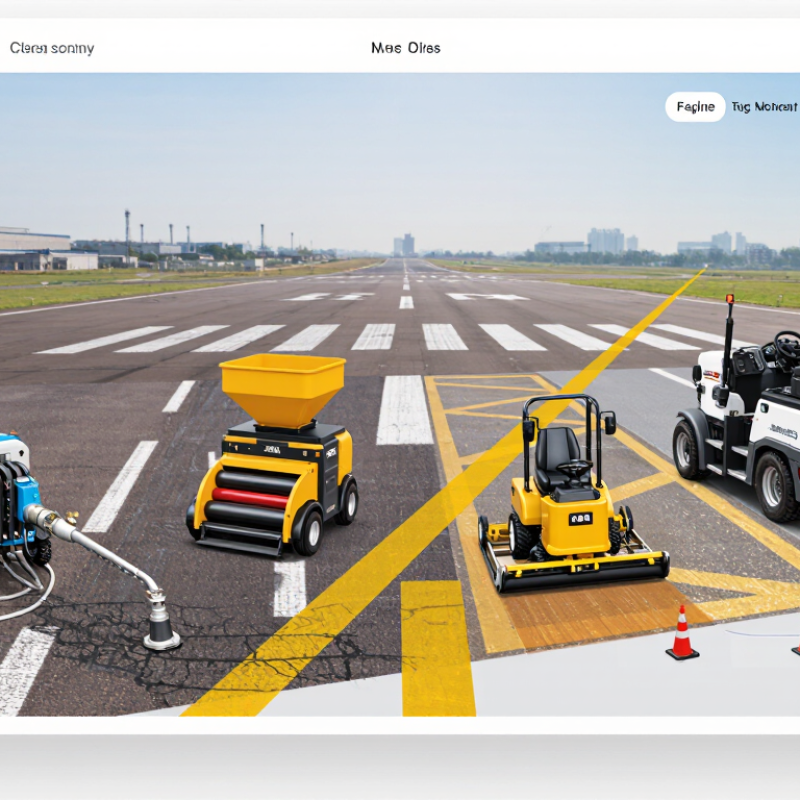
A road marking machine is a powered tool that applies lines, symbols, and directional patterns to paved surfaces. It helps create consistent markings on roads, parking areas, airports, and industrial yards. The machine usually includes a frame, material tank, pump, spray gun, control handle, and adjustable guide wheel. Some models also use bead dispensers for reflective glass beads.
The operator pushes or drives the unit at a controlled speed. Paint flow, nozzle height, and surface condition affect the final line. Dust, moisture, loose gravel, and uneven asphalt can cause poor adhesion. Small walk-behind machines suit short paths, narrow roads, and repair work. Ride-on machines cover larger areas with less physical effort. Airless systems often produce sharp lines, while thermoplastic equipment handles heated marking materials. Each type has limits.
There is no single best machine. A contractor should match the equipment to the material, road size, line width, and daily workload. Local road specifications also matter. In practical work, cleaning the surface may improve results more than buying a larger machine. A clean stripe is not proof of perfect application. I still see operators move too quickly, especially near curves. That small mistake can create uneven edges, weak visibility, and costly rework. Reliable results require trained handling, regular checks, and honest attention to site conditions.
Road marking machines apply traffic-line materials accurately and consistently. For a typical 100 mm-wide line over 1 km, airless spray systems using waterborne paint require the least material, while thermoplastic systems require more because they apply a thicker, durable layer. The best machine depends on the marking material, required durability, project size, and application speed. Values shown are indicative calculations based on common application thicknesses and material densities.
A road marking machine applies paint, thermoplastic, or cold plastic in controlled lines. Its basic system includes a material tank, pump, spray gun or extrusion box, bead dispenser, and engine. The operator sets line width, speed, pressure, and material flow before work begins.
The process starts with surface preparation. Dust, moisture, and loose stones can weaken adhesion. The machine then moves at a steady pace, often guided by a front wheel or digital alignment system. For spray paint, pressurized airless pumps atomize the material through a small nozzle. For thermoplastic, a heated tank keeps the material fluid, commonly near 400–450°F, before extrusion. FHWA’s Pavement Marking Handbook describes both spray and extrusion methods as standard application approaches.
Glass beads fall onto the wet surface immediately. They return light toward drivers at night. The FHWA handbook notes that bead placement, film thickness, and surface condition strongly affect retroreflectivity. This detail is easy to overlook. A bright stripe can still perform poorly after rain, dirt, or uneven application. The 11th edition of the Manual on Uniform Traffic Control Devices also emphasizes consistent dimensions and visibility for traffic markings.
Airless spray machines suit fast, long-distance work. Extrusion machines are better for thick, durable thermoplastic lines. Smaller walk-behind units help on crossings, parking areas, and narrow roads. The “best” type depends on material, road temperature, traffic exposure, and crew skill. Machine settings still need field checks. Real pavement is rarely as perfect as the specification.
What Is a Road Marking Machine and Which Type Is Best?
Road marking machines apply paint, thermoplastic, or reflective compounds to roads, parking areas, and runways. Their design affects line accuracy, drying time, worker exposure, and daily output. The FHWA’s 2022 Highway Statistics records about 4.2 million miles of public roads in the United States. That scale explains why contractors need more than one machine type.
Airless spray machines suit long straight lines and fast repainting. They atomize paint under high pressure, creating sharp edges with relatively low material use. Thermoplastic screed and extrusion machines apply heated material in thicker layers. These machines work well where durability and nighttime visibility matter. However, they require heating systems, careful temperature control, and trained operators. Cold paint machines are simpler and usually cost less. They fit smaller roads, warehouses, and maintenance projects. Their weakness is shorter service life in heavy traffic.
Two-component machines mix reactive materials shortly before application. They can produce durable markings, including textured or high-build patterns. Truck-mounted systems cover major highways efficiently, while walk-behind and ride-on units offer better control in tight spaces. The WHO’s Global Status Report on Road Safety 2023 estimates 1.19 million annual road deaths worldwide, so marking quality deserves serious attention. Still, speed alone is not a reliable buying criterion. Site width, surface condition, climate, material availability, and operator skill can change the best choice. I would test adhesion and line visibility on a small section first. Real projects often expose assumptions that brochures miss.
| Machine Type | Propulsion and Control | Common Marking Materials | Typical Line-Width Range | Typical Operating Output | Best Applications | Main Advantages | Key Limitations | Best Choice When |
|---|---|---|---|---|---|---|---|---|
| Hand-Push Manual Machine | Operator pushes and guides the unit manually; usually uses a small petrol engine or electric motor to power the spray pump. | Water-based paint Solvent-based paint Cold plastic | Approximately 5–20 cm | Approximately 300–1,000 linear metres per hour under suitable conditions | Small parking areas, private roads, warehouses, school zones, maintenance work, and short line sections. | Low purchase cost, easy transport, simple setup, and good visibility for small jobs. | Lower productivity, greater operator effort, limited paint capacity, and less consistent results on long lines. | The project is small, mobile, or budget-sensitive. |
| Self-Propelled Walk-Behind Machine | Powered wheels move the machine while the operator controls speed, line width, spray pressure, and line layout. | Water-based paint Solvent-based paint Cold plastic | Approximately 5–30 cm | Approximately 500–2,000 linear metres per hour | City streets, parking lots, bicycle lanes, pedestrian crossings, and routine municipal maintenance. | Higher consistency and productivity than manual machines while remaining compact and relatively easy to operate. | Not ideal for very large projects; material capacity and working speed are lower than ride-on or truck-mounted systems. | A contractor needs a versatile machine for regular small- to medium-sized projects. |
| Ride-On Machine | Operator sits on the machine; hydraulic or engine-powered drive systems support multiple spray guns and larger material tanks. | Water-based paint Solvent-based paint Cold plastic | Approximately 10–50 cm, depending on the spray configuration | Approximately 1,000–4,000 linear metres per hour | Large parking facilities, airports, road networks, industrial sites, and projects requiring repeated lines or symbols. | Good operator comfort, higher material capacity, improved productivity, and the ability to apply several lines or symbols in one pass. | Higher purchase and maintenance costs; larger dimensions can make tight or congested areas more difficult to access. | Productivity and operator comfort are more important than compact size. |
| Truck-Mounted Road Marking System | Marking equipment is installed on a truck or utility vehicle and operated from the vehicle or a dedicated control platform. | Water-based paint Solvent-based paint Thermoplastic Cold plastic | Approximately 10–60 cm or more with specialized equipment | Approximately 2,000–8,000 linear metres per hour on long, unobstructed sections | Highways, major roads, long center lines, edge lines, lane markings, and large-scale resurfacing projects. | Large material capacity, long operating range, high output, and efficient application of complex multi-line layouts. | High capital cost, substantial transport requirements, and reduced maneuverability in narrow streets or small sites. | The project involves long road sections and high daily production targets. |
| Thermoplastic Preheater and Applicator | Thermoplastic material is heated in a melting kettle and then applied by screed, extrusion, or spray equipment. | Hot-applied thermoplastic | Approximately 10–50 cm for lines; wider areas are possible with suitable applicators | Approximately 300–2,000 linear metres per hour, depending on melting capacity and application method | Highways, pedestrian crossings, stop lines, arrows, legends, and locations requiring durable high-build markings. | Excellent durability, strong retroreflective performance when glass beads are incorporated, and high film thickness. | Requires heating equipment, temperature control, trained operators, and suitable weather and pavement conditions. | Long service life and high wear resistance are the primary requirements. |
| Two-Component Plural-Component Machine | Two reactive components are metered and mixed immediately before application through specialized spray or extrusion equipment. | Two-component cold plastic Methyl methacrylate systems | Approximately 10–50 cm, depending on the application head | Approximately 500–2,500 linear metres per hour | High-wear intersections, urban lanes, symbols, raised-profile markings, and areas requiring rapid curing. | Fast curing, strong adhesion, high durability, and suitability for thick or structured markings. | More complex calibration and cleaning; material handling and component ratios must be carefully controlled. | Rapid return to traffic and long-term durability are critical. |
A road marking machine applies paint, thermoplastic, or other approved materials to create lane lines, arrows, crossings, and symbols. The best type depends on project scale, surface condition, traffic pressure, and marking material. FHWA’s 2023 Highway Statistics reports approximately 4.2 million miles of public roads in the United States. That range makes one universal machine unrealistic.
For short urban repairs, a walk-behind airless sprayer offers precise control around corners, drains, and parked vehicles. It also reduces setup time.
For highways, a ride-on airless machine is usually more productive. It can maintain steady speed and consistent line width over long distances.
Thermoplastic projects need screed or extrusion equipment, especially where markings face heavy traffic and repeated braking. Heated materials require trained operators and careful temperature control. Small contractors often choose cold-paint systems because cleaning is simpler and operating costs are easier to predict.
Reflective glass beads and accurate application matter at night. The World Health Organization’s Global Status Report on Road Safety 2023 estimates 1.19 million annual road traffic deaths worldwide, so visible markings support a wider safety system.
However, machine speed alone does not guarantee quality. Poor surface preparation can ruin an excellent application.
I have found that project teams sometimes oversize equipment, then lose money through difficult transport and unnecessary maintenance. The better choice may be less powerful, but more controllable. FHWA’s Manual on Uniform Traffic Control Devices also shows why line dimensions, colors, and placement must match the project standard. Context matters.
A road marking machine applies paint or thermoplastic material in controlled lines. Airless spray machines suit long roads because they create sharp edges quickly. Walk-behind models work well in car parks, crossings, and narrow paths. Ride-on machines reduce fatigue on large projects. Thermoplastic equipment uses heat, so operators need suitable training and steady temperature control. The right choice depends on line width, material, surface size, and daily workload. A cheaper machine may cost more when cleaning takes too long.
Before operation, inspect the nozzle, hose, pressure system, wheels, and emergency controls. Sweep dust, oil, and loose stones from the surface. Paint adheres poorly to damp concrete. Mark a short test line on cardboard or an unused area. Check its width, color, and edge sharpness. Small adjustments matter. Keep the machine moving at a steady speed, and avoid sudden turns. Wear eye protection, gloves, suitable footwear, and hearing protection when required. Follow the material safety sheet and the equipment manual. Do not rely on memory.
Clean the system after every shift. Flush paint from the hose before it hardens, using only the recommended cleaning method. Remove and inspect the spray tip, filter, and seals. Check tire pressure, belts, batteries, and fasteners regularly. Record pressure settings, material use, cleaning time, and defects. This record helps identify recurring problems. Weather still creates uncertainty. Wind can distort spray, while heat changes drying time. No setting is perfect. Operators should review poor lines honestly and adjust speed, pressure, or preparation before repeating the work.