SSI Traffic Solutions: Traffic Safety Products in USA and Canada
Traffic Safety Products in USA and Canada

A Table Lamp Bulb may look like a small purchase, yet it shapes the light where people read, work, or wind down. The wrong bulb can create glare on a book page, make a fabric shade feel too warm, or leave a desk corner dim. Fit matters, too: bulb shape, base type, maximum wattage, and shade clearance all affect whether a replacement works safely and comfortably. Small details count.
The U.S. Department of Energy reports that residential LED bulbs use at least 75% less energy and last up to 25 times longer than incandescent lighting. Those figures describe LEDs broadly, not every table-lamp setup, so real results depend on the bulb, fixture, and hours of use. Still, they show why choosing by price alone can miss the bigger picture. Color temperature, brightness, dimmer compatibility, and the lamp’s own label deserve attention. A cool, bright bulb may suit focused tasks, while a warmer tone can feel gentler beside a bed.
This guide explains what a Table Lamp Bulb is and how to choose one for your fixture and routine. It covers common bulb types, lumens, color appearance, and practical fit checks. There is no perfect choice for every room. Even a well-matched bulb can feel different behind a dark or textured shade, so check the light in place before buying several.
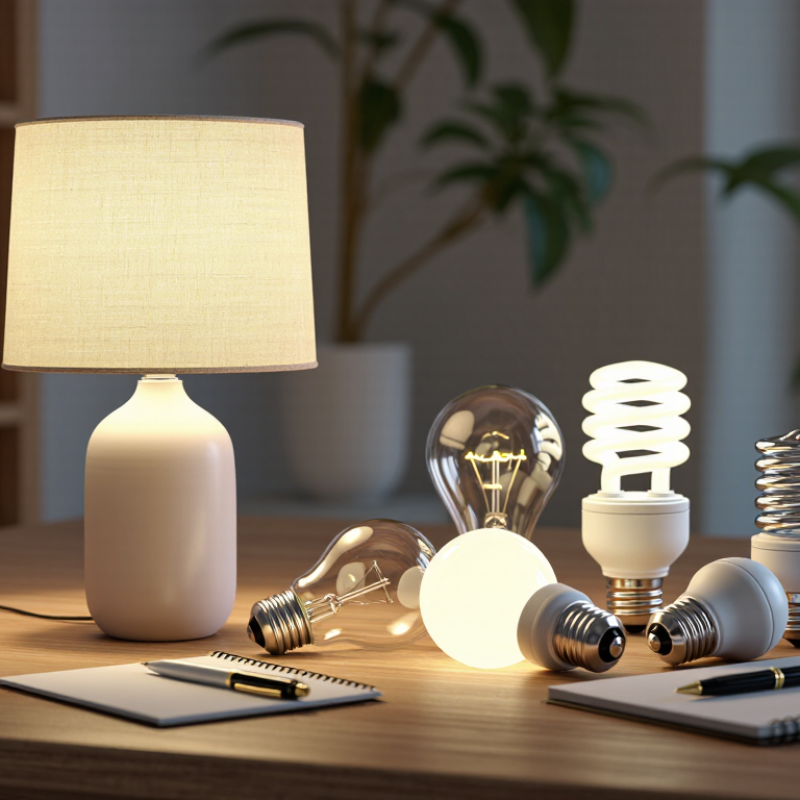
A table lamp bulb is the replaceable light source inside a table lamp. It converts electrical energy into visible light for reading, relaxing, or working. The bulb’s brightness is measured in lumens, while color temperature describes its appearance. Warm light feels soft and amber-like. Cooler light appears clearer and more energetic. In a bedroom, I usually prefer warm light because it reduces visual harshness at night.
Bulb shape affects both appearance and performance. A round bulb spreads light gently across a room. A tubular bulb can suit narrow shades and smaller fixtures. Globe shapes create a wider, decorative glow, while compact shapes may fit beneath tight shades. The shade should not press against the bulb. Heat needs room to escape. I once chose a bulb that technically fit, but its wide shape made the lampshade look unbalanced.
The base is the part that connects the bulb to the socket. Common types include screw bases and pin bases, but their sizes and designs differ. Check the socket label or the lamp’s instruction guide before buying. Never force an unfamiliar base into place. Also compare the bulb’s wattage with the lamp’s maximum rating. LEDs generally produce less heat and use less energy than older technologies, but their shape can still affect the final appearance. I still recheck compatibility, because “almost the same” is not reliable enough for electrical fittings.
A table lamp bulb is the replaceable light source fitted inside a lamp. Its performance depends mainly on the light source technology, bulb shape, brightness, color temperature, and base type.
Approximate wattage needed to produce about 450 lumens, a brightness level commonly associated with a traditional 40-watt incandescent bulb. Actual performance varies by bulb design.
LED bulbs use the least electricity for similar brightness and usually last longer. Incandescent and halogen bulbs create warm light but use more energy. CFL bulbs use less energy than incandescent bulbs but are less common today.
A19 bulbs are general-purpose choices for many table lamps. G-shaped bulbs are often selected for exposed fixtures or decorative shades. Check the lamp shade and available space before choosing a shape.
E26 and E27 screw bases are widely used for standard table lamps. E12 bases are smaller and common in compact decorative lamps. Always match the bulb base with the socket.
Compare lumens rather than watts when selecting brightness. Choose warm white light around 2700–3000K for relaxing spaces and neutral white light around 3500–4000K for reading or focused tasks.
A table lamp bulb combines a light source, base, and electrical rating. The base is often the deciding detail. “E” means Edison screw, while the number shows the approximate thread diameter in millimetres. E26 measures about 26 mm. E27 measures about 27 mm. They look almost identical, but they are not automatically interchangeable.
E26 is widely used in North America, usually with 120-volt fixtures. E27 is common in Europe and many 220–240-volt markets. The one-millimetre difference can affect contact pressure, fit, and safety. Always check the lamp label before installation. The U.S. Department of Energy states that LED bulbs use at least 75% less energy and can last up to 25 times longer than incandescent bulbs. That makes LEDs practical for table lamps, but electrical compatibility still matters. A bright bulb is not always the right bulb.
Tips: Check the socket marking first. Match the bulb’s voltage and base code. Then choose lumens, not watts, for brightness. A 450-lumen bulb suits a small bedside lamp, while 800 lumens may suit a reading table. Warm white light around 2700K feels softer. Confirm dimmer compatibility. Leave space around the bulb, especially under a fabric shade. I once treated E26 and E27 as identical, and the loose fit was noticeable. Small details deserve more attention than they usually receive.
A table lamp bulb is the replaceable light source inside a portable lamp, chosen to suit the room, shade, and task. For brightness, compare lumens, not watts. The U.S. Department of Energy explains that lumens measure visible light output, while watts measure electricity use. That distinction matters: two bulbs can use different amounts of power and still produce similar brightness.
For a familiar reference point, the Department of Energy’s consumer guidance equates about 800 lumens with the light output of a traditional 60-watt incandescent bulb. A reading lamp beside a chair may feel comfortable around that level, while a small bedside lamp might need less. The shade changes the result. A dark or thick shade can make the same bulb seem dimmer.
Check the lamp’s maximum-wattage label, then choose a bulb that fits its socket and shape. For example, a bulb with the right lumen rating may still look harsh if its color temperature is too cool. Energy Star’s lighting resources describe color temperature in kelvins; warmer light is generally suited to relaxing spaces. I would treat lumen numbers as a starting point, not a promise. Room colors, shade material, and personal preference all affect what feels bright enough. The numbers help, but they do not decide everything.
| Lighting Need | Recommended Brightness | Typical LED Power | Approximate Incandescent Equivalent | Recommended Color Temperature | Best Use in a Table Lamp | Selection Notes |
|---|---|---|---|---|---|---|
| Soft Accent Lighting | 150–300 lumens | 2–4 watts | 15–25 watts | 2200–2700 K | Bedside atmosphere, decorative lamps, and relaxing corners | Choose a lower-lumen bulb when the lamp is mainly decorative or when several light sources are already present. |
| General Ambient Lighting | 450–800 lumens | 5–9 watts | 40–60 watts | 2700–3000 K | Living rooms, bedrooms, entryways, and everyday table lamps | This is a practical range for comfortable room illumination without making the lamp feel harsh. |
| Reading and Writing | 800–1100 lumens | 8–12 watts | 60–75 watts | 3000–4000 K | Reading chairs, desks, study areas, and craft tables | Use a shade that directs light downward and position the lamp to reduce shadows and glare. |
| Detailed Task Lighting | 1100–1600 lumens | 12–16 watts | 75–100 watts | 3500–5000 K | Detailed artwork, model making, sewing, and precision tasks | Confirm that the lamp socket, shade, and dimmer are rated for the bulb’s heat, size, and electrical load. |
| Warm, Cozy Light | 450–800 lumens | 5–9 watts | 40–60 watts | 2200–2700 K | Bedrooms, hospitality spaces, and evening relaxation | Lower color temperatures appear more amber and are generally more relaxing at night. |
| Balanced Everyday Light | 800–1100 lumens | 8–12 watts | 60–75 watts | 3000–3500 K | Multi-purpose rooms and lamps used throughout the day | A useful compromise between warm appearance and clear visibility. |
| Daylight-Style Light | 800–1100 lumens | 8–12 watts | 60–75 watts | 4000–5000 K | Workspaces, visual tasks, and rooms with limited natural light | Higher color temperatures look cooler and may feel less suitable for relaxing evening use. |
Brightness is measured in lumens, while watts measure energy use. Actual output varies by bulb design, so check the bulb’s lumen rating first and then confirm the socket size, voltage, shape, dimmer compatibility, and maximum fixture wattage.
A table lamp bulb is a replaceable light source designed for focused, nearby illumination. For reading, bedside use, or desk work, color quality matters as much as brightness. Color temperature is measured in Kelvin, not lumens. Choose 2700–3000 K for warm white light. At 2700 K, the glow feels soft and candlelike. Near 3000 K, it appears slightly cleaner and more energetic. Both choices can make a room feel comfortable.
CRI describes how naturally a bulb shows colors. A bulb rated CRI 80 or higher works for ordinary reading and relaxation. Choose CRI 90 or above when you inspect clothing, artwork, food, or skin tones. I check the packaging carefully because some labels provide incomplete testing details. A high CRI rating helps, but it does not guarantee pleasing light in every room.
I once chose a very bright bulb with a low CRI. The white pages looked gray, and red objects seemed dull. That mistake taught me to judge light in the actual lamp. Place the bulb behind its shade and test a book, a wooden surface, and colored fabric. If colors look muddy, reconsider the bulb. Personal comfort also matters. Your eyes may prefer 2700 K, even when 3000 K appears clearer.
A table lamp bulb is a replaceable light source designed for focused, nearby illumination. Its best choice depends on brightness, socket size, color temperature, and energy use. Check lumens before watts. For example, a bulb producing about 800 lumens may replace a traditional 60-watt incandescent bulb. An LED usually needs only 8 to 10 watts for similar brightness.
The U.S. Department of Energy reports that LEDs use at least 75% less energy than incandescent lighting. The ENERGY STAR program states that qualified LEDs can use up to 90% less energy and last 15 to 25 times longer. These figures matter beside a reading chair. A 60-watt incandescent used three hours daily consumes about 65.7 kilowatt-hours yearly. A comparable 9-watt LED uses about 9.9 kilowatt-hours. That difference is roughly 56 kilowatt-hours each year, before local electricity rates are applied.
Look for a warm color temperature near 2700K for bedrooms or living rooms. Choose 3000K for clearer reading light. Dimming requires a bulb marked compatible with dimmer controls. I also check the lamp’s maximum wattage and ventilation, because a perfect bulb can still perform poorly in a cramped shade. The 90% claim can feel too neat. Actual savings change with usage, bulb brightness, electricity prices, and replacement habits. The U.S. Energy Information Administration remains useful for checking current residential electricity rates, rather than guessing from a national average.