SSI Traffic Solutions: Traffic Safety Products in USA and Canada
Traffic Safety Products in USA and Canada

The 10 Best Armature Shaft Manufacturers in 2026? That question deserves more than a polished supplier list. An armature shaft may look simple, but its performance depends on steel quality, heat treatment, concentricity, balancing, and machining discipline. A shaft with a visible burr can damage a bearing, increase vibration, and shorten motor life.
The market is becoming less forgiving. The International Energy Agency reported that global electric car sales exceeded 17 million in 2024, increasing demand for efficient traction motors and precision components. MarketsandMarkets has also projected strong growth in the global electric motor market, estimating expansion from approximately USD 143 billion in 2023 to more than USD 200 billion by 2028. These reports measure motors, not shafts directly. That distinction matters. Market data can support context, but it cannot prove a manufacturer’s capability.
Dr. Austin Hughes, author of Electric Motors and Drives, describes electric motors as “the workhorses of industry.” His observation explains why shaft reliability deserves close attention. The best manufacturers should show practical evidence, including material certificates, dimensional inspection records, dynamic balancing results, and repeatable production tolerances. Experience matters here.
Not every impressive factory is consistent.
This guide compares leading Armature Shaft manufacturers through engineering expertise, manufacturing capacity, quality systems, customization, delivery performance, and after-sales support. It also considers an uncomfortable point: supplier rankings are never completely objective. Different motor designs require different shaft geometries, surface finishes, and mechanical properties. A manufacturer suitable for small appliance motors may not fit high-speed industrial applications. The strongest choice is therefore not always the largest company, but the one that reliably matches your technical requirements.
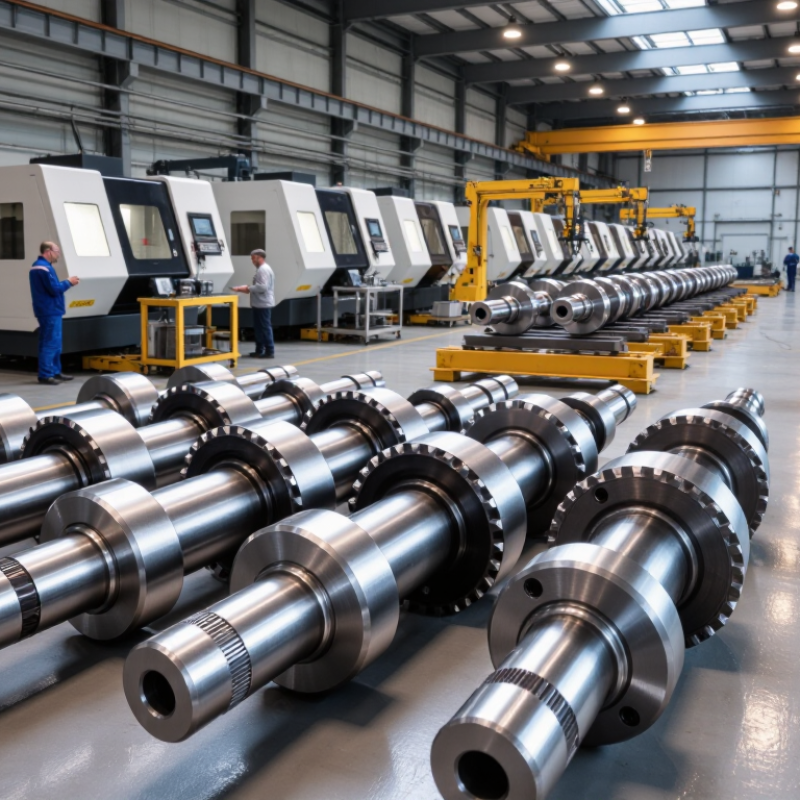
An armature shaft is the rotating core that transfers motor torque to the driven load. It must resist twisting, bending, vibration, and repeated heat cycles. Small defects can create serious problems. A slight runout may cause noise, bearing wear, or uneven brush contact. Material choice, shaft diameter, surface hardness, and balancing accuracy directly affect motor life.
Manufacturer selection matters because production consistency is rarely visible in one sample. Experienced buyers should review steel certificates, heat-treatment records, dimensional inspection reports, and dynamic balancing results. Ask how the manufacturer controls straightness after machining. Check whether tolerances are measured at several points, not only at the shaft ends. A reliable supplier also explains corrective procedures when parts fail inspection. Even experienced teams sometimes trust attractive samples too quickly. That mistake can become expensive during volume production.
Tips: Request a trial batch before approving full production. Test runout, hardness, balance, and fit under realistic operating conditions. Examine the packaging, too; corrosion or impact damage can begin during shipment. Keep specifications written and measurable. If a supplier avoids technical questions, reconsider the partnership. Temperature data is also useful, although it is often overlooked. A shaft that performs well at room temperature may behave differently after hours of continuous operation.
A high-quality armature shaft must maintain accurate rotational balance at its operating speed. The chart shows the calculated permissible residual unbalance for a 1 kg rotor assembly at balance quality grade G2.5, using the ISO 21940 calculation Uper = 9549 × G × m ÷ n. As speed increases, the allowable unbalance decreases, making precision machining, concentricity control, dynamic balancing, and inspection capability important criteria when selecting a manufacturer.
Technical basis: ISO 21940 balance-quality calculation. Values are calculated in g·mm for a 1 kg rotor assembly and are not company or brand performance data.
In 2026, evaluating an armature shaft manufacturer requires more than comparing unit prices. The IEA’s Energy Efficiency 2023 report estimates that electric motor systems consume over 40% of global electricity. Small shaft defects can become large maintenance costs across thousands of operating hours. Ask for material certificates, heat-treatment records, and measured runout data from actual production batches. A polished sample is not enough.
Technical review should focus on fit, fatigue, and repeatability. Check dimensional capability for journals, keyways, shoulders, and bearing seats. Request balancing results against the applicable ISO 21940 grade, plus surface-hardness and roughness readings. Independent metallurgical testing can verify carbon content and case depth when wear risk is high. The manufacturer should explain inspection frequency, gauge calibration, and nonconformance procedures. Vague answers are evidence.
Reliability also depends on evidence after shipment. Review fatigue results, corrosion protection, packaging controls, and traceability from heat number to final inspection. The U.S. Department of Energy’s motor-system guidance links alignment and maintenance with efficiency and service life. Ask how shaft tolerances support field alignment. I would not accept capability claims without raw data or a controlled trial. Even a strong audit can miss tool wear between inspections. Require corrective-action records, realistic pilot quantities, and clear replacement terms.
The ten best armature shaft manufacturers in 2026 should be judged by measurable performance, not advertising. The first profile is a precision forging specialist, valued for strong grain flow and consistent dimensions. A cold-drawing producer offers smooth surfaces and tight diameter control. Custom machining houses suit unusual motor designs and small production runs. High-volume automated plants deliver stable output, although their minimum orders may disappoint smaller buyers.
A micro-motor shaft expert focuses on miniature diameters, fine splines, and low vibration. Heavy-duty manufacturers serve industrial motors with thicker shafts and deeper keyways. Corrosion-resistant specialists use stainless alloys or protective coatings for humid environments. Integrated heat-treatment producers control hardness from one facility, reducing handling risks. Rapid-prototyping workshops help engineers test revised shafts quickly, but their prices can be higher. Export-focused manufacturers often provide stronger documentation, packaging, and shipment tracking. These profiles are practical rather than absolute. A supplier may excel in one field and struggle in another.
Tips: Request material certificates, dimensional reports, and runout readings before approval. Check shaft straightness at several points, not only at the ends. Ask how suppliers inspect keyways, journals, and surface hardness. A useful trial sample should run under realistic load for several hours. Do not trust a polished finish alone. It can hide poor geometry. My own preference is a transparent manufacturer with consistent records, even when its catalogue looks less impressive. Mistakes happen; vague answers are the bigger warning.
| Profile | Primary Manufacturing Focus | Typical Shaft Diameter | Typical Shaft Length | Common Materials | Manufacturing Processes | Typical Dimensional Tolerance | Surface Treatment Options | Primary Application Sectors | Quality & Compliance Indicators | Overall Capability Rating |
|---|---|---|---|---|---|---|---|---|---|---|
| Profile 01 | High-volume precision shafts for small electric motors | 2–20 mm | 20–250 mm | Carbon steel, stainless steel, alloy steel | Cold heading, centerless grinding, automatic turning, straightening | Typically ±0.01–0.03 mm on critical diameters | Zinc plating, black oxide, phosphate coating, oil protection | Automotive actuators, power tools, office equipment, small appliances | ISO 9001-based quality systems; in-process gauging and lot traceability | ★★★★★ |
| Profile 02 | Medium-size armature shafts with integrated features | 6–45 mm | 80–600 mm | 1045 steel, 4140 alloy steel, stainless steel | CNC turning, milling, keyway cutting, thread rolling, grinding | Typically ±0.015–0.05 mm | Induction hardening, nitriding, nickel plating, phosphate coating | Industrial motors, pumps, compressors, material-handling equipment | Dimensional inspection reports; hardness and runout verification | ★★★★★ |
| Profile 03 | Large-diameter rotor and armature shaft production | 25–120 mm | 300–1,500 mm | 4140 steel, 4340 steel, stainless steel, forged alloy steel | Forging, CNC roughing, heat treatment, finish turning, cylindrical grinding | Typically ±0.03–0.10 mm | Induction hardening, chrome plating, corrosion-resistant coatings | Heavy-duty motors, mining equipment, generators, industrial drives | Material certificates; ultrasonic testing and final runout inspection | ★★★★★ |
| Profile 04 | Compact shafts for high-speed and low-noise motors | 3–25 mm | 30–350 mm | Stainless steel, precision carbon steel, bearing steel | Swiss-type turning, centerless grinding, balancing, micro-polishing | Typically ±0.005–0.02 mm | Electropolishing, passivation, black oxide, fine polishing | Medical devices, robotics, instrumentation, cooling fans | Roundness, concentricity, balance and surface-finish inspection | ★★★★★ |
| Profile 05 | Custom shafts for fractional-horsepower motors | 2–30 mm | 25–400 mm | Low-carbon steel, stainless steel, brass and selected alloy steels | Automatic screw machining, knurling, slotting, tapping, grinding | Typically ±0.02–0.06 mm | Zinc plating, nickel plating, passivation, protective oiling | HVAC motors, pumps, appliances, consumer products | First-article inspection; sampling plans based on ISO 2859 principles | ★★★★☆ |
| Profile 06 | High-strength shafts for demanding duty cycles | 10–80 mm | 150–1,000 mm | 4140, 4340, 8620 and other carburizing alloy steels | Closed-die forging, CNC machining, carburizing, grinding | Typically ±0.02–0.08 mm | Carburizing, induction hardening, shot peening, phosphate coating | Traction motors, construction machinery, agricultural equipment | Hardness mapping; magnetic-particle testing and fatigue-oriented inspection | ★★★★★ |
| Profile 07 | Prototype and low-volume engineered armature shafts | 5–100 mm | 50–1,200 mm | Carbon steel, stainless steel, tool steel, aluminum alloys | 5-axis CNC machining, turning, broaching, keyway and spline machining | Typically ±0.02–0.10 mm, depending on geometry | Heat treatment, passivation, anodizing for aluminum components | R&D projects, automation, test systems, specialty machinery | Engineering review, inspection plans and material traceability | ★★★★☆ |
| Profile 08 | Corrosion-resistant shafts for harsh environments | 4–60 mm | 50–800 mm | 304 and 316 stainless steel, precipitation-hardening stainless steel | CNC turning, grinding, thread forming, passivation and polishing | Typically ±0.01–0.06 mm | Passivation, electropolishing, PVD coatings, fine surface finishing | Food processing, marine systems, chemical equipment, clean technology | Stainless material certification; surface-finish and corrosion-control checks | ★★★★☆ |
| Profile 09 | Automotive and mobility motor shafts | 5–50 mm | 70–700 mm | Micro-alloy steel, alloy steel, stainless steel | Cold forming, CNC machining, rolling, grinding, dynamic balancing | Typically ±0.01–0.05 mm | Induction hardening, zinc-nickel plating, phosphate coating | Electric power steering, vehicle actuators, pumps, e-mobility systems | Automotive process controls; PPAP-style documentation and traceability | ★★★★★ |
| Profile 10 | Integrated shaft assemblies with commutator and rotor interfaces | 3–40 mm | 30–500 mm | Low-carbon steel, alloy steel, stainless steel | Turning, pressing, knurling, balancing, assembly and electrical testing | Typically ±0.015–0.06 mm | Plating, black oxide, passivation and anti-corrosion oils | Starter motors, pumps, power tools, fans and household appliances | Assembly-line testing; balance, insulation-clearance and dimensional checks | ★★★★☆ |
Comparing Materials, Precision, Quality Control, and Customization
Choosing an armature shaft manufacturer starts with material selection. Hardened alloy steel suits high-load motors and repeated cycling. Stainless steel helps resist moisture and surface corrosion. Some applications need a softer core with a hardened outer layer. That balance can improve fatigue performance. Not every supplier explains this clearly.
Precision depends on more than a stated tolerance. Ask how shafts are ground, measured, and supported during machining. Experienced manufacturers use calibrated gauges, roundness checks, and inspection records. Key dimensions may include diameter, concentricity, straightness, and bearing-seat finish. A shaft can look flawless and still create vibration. Small errors matter.
Quality control should cover incoming material, heat treatment, machining, and final inspection. Request sample reports, traceability details, and evidence of process capability. Customization may involve keyways, splines, grooves, threads, or unusual lengths. Clear drawings reduce costly misunderstandings. Prototype support is valuable, but production consistency matters more.
I have seen specifications revised after testing exposed unexpected wear. That is not failure; it is useful feedback. However, manufacturers should document the correction and verify each affected batch. A lower quote may hide weaker inspection or limited engineering support. Compare measurable controls, not polished promises.
Price comparisons should begin with the drawing, not the unit quote. Shaft diameter, steel grade, heat treatment, balancing, and inspection depth can change costs sharply. The World Bank’s Commodity Markets Outlook has repeatedly shown steel price volatility, so fixed quotations need clear validity periods.
In practical purchasing, standard shafts may ship within three to six weeks. Custom splines, tight runout limits, or small batches often require eight to twelve weeks. Ask for tooling charges separately.
Certification is useful only when records support it. The ISO Survey 2023 recorded more than 1.2 million ISO 9001 certificates worldwide, but certification alone does not prove shaft quality.
Request material certificates, hardness results, dimensional reports, and traceability from billet to finished part. The IEA has reported that electric motors consume roughly 45% of global electricity. Small alignment errors can therefore create significant lifetime losses in rotating equipment. This detail deserves more attention than marketing language.
Support services often reveal manufacturing maturity. Strong suppliers provide drawing reviews, sample inspection, corrective-action reports, and replacement procedures. Confirm response times before approval.
A low price may hide weak packaging, unclear tolerances, or expensive field failures. My own purchasing experience suggests comparing landed cost over twelve months, not invoice price alone.
Still, lead-time estimates remain imperfect when steel availability changes. That uncertainty should appear in the contract.