SSI Traffic Solutions: Traffic Safety Products in USA and Canada
Traffic Safety Products in USA and Canada

China has become a major sourcing destination for construction cones used in highways, warehouses, airports, and public works. Global buyers now expect more than low prices. They need consistent dimensions, visible colors, stable rubber bases, and reliable delivery records.
Jeffrey F. Paniati, former Executive Director of the U.S. Federal Highway Administration, stated, “The MUTCD is the national standard for traffic control devices used on all public roads.” This principle matters when evaluating Chinese suppliers. A dependable manufacturer should understand applicable traffic-control requirements, testing procedures, labeling rules, and export documentation. Buyers should also verify whether cone colors remain visible under sunlight, rain, dust, and nighttime lighting. Small details matter. A poorly fitted base can tilt after passing vehicles disturb the roadway air.
The strongest suppliers usually provide production samples, material specifications, inspection reports, and photographs from factory quality checks. They should explain whether the cone uses PVC, PE, or another compound. They should also disclose base weight, reflective sleeve performance, temperature tolerance, and packaging methods. These details help buyers compare offers fairly instead of judging quotations alone. Still, no supplier is perfect. Samples may look better than mass production, and delivery promises can change during peak seasons. That is why experienced buyers request pre-shipment inspections and keep written approval records. China offers impressive manufacturing capacity, but responsible sourcing requires patience, evidence, and occasional doubt. A reliable supplier earns trust through repeatable performance, not attractive claims.
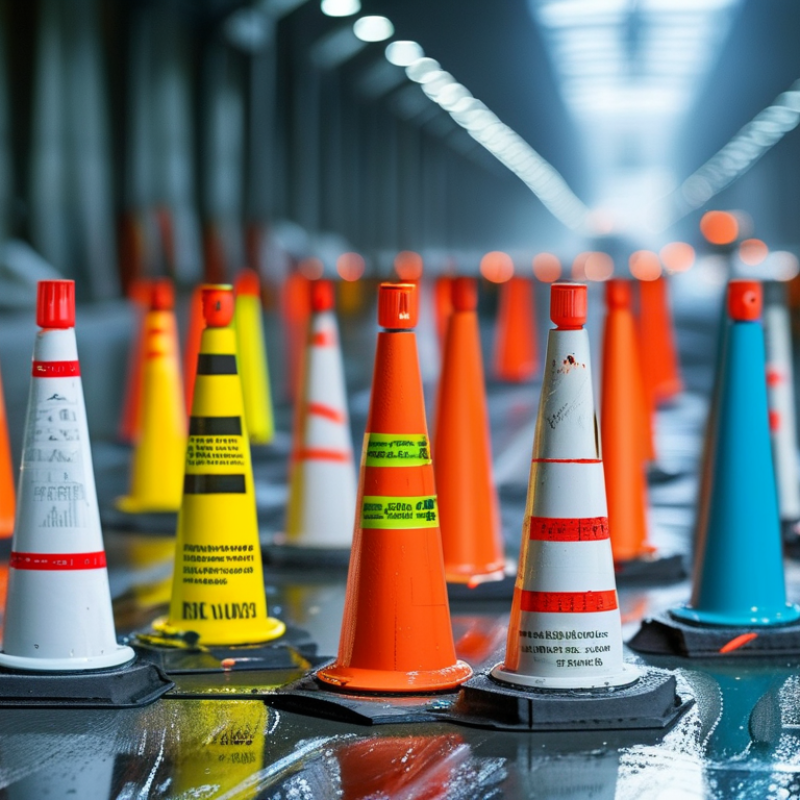
A reliable construction cone supplier in China proves performance before discussing price. The supplier should provide resin specifications, batch records, and independent test results. Virgin or carefully controlled recycled PVC affects flexibility, color stability, and cold-weather impact resistance. Cheap cones can become brittle after repeated loading or sunlight exposure. That failure is not theoretical. The World Health Organization’s Global Status Report on Road Safety 2023 records about 1.19 million annual road deaths worldwide, making visible temporary control equipment a serious purchasing concern.
Dimensional control matters on active sites. The U.S. Federal Highway Administration’s Manual on Uniform Traffic Control Devices requires traffic cones to meet defined height, color, and retroreflective treatment requirements. A dependable factory should verify these points with calipers, light-testing equipment, and documented inspections. It should also inspect the base for warping, because an unstable cone can tip in wind or beside moving vehicles. Ask for samples from different production batches, not one polished sample.
Export reliability requires more than a certificate. Check packing strength, carton counts, loading photographs, and response time for corrective actions. ISO 9001 certification can support process control, but it does not replace product testing. I would still question suppliers offering perfect claims without failure data. Real factories should explain rejected units and improvement records. That honesty is useful. Lead-time promises should also include mold maintenance, material shortages, and pre-shipment inspection windows.
Construction cones differ by height, base design, color, and reflective treatment. The FHWA Manual on Uniform Traffic Control Devices specifies cones of at least 28 inches for many roadway applications. Higher-speed facilities commonly require 36-inch cones with stronger visibility features. Short 18-inch cones suit private sites, indoor work, and low-speed areas. They are not universal substitutes.
Material choice affects field performance. Flexible PVC absorbs repeated impacts, while polyethylene can reduce weight and handling effort. A weighted rubber base improves stability near passing vehicles. The base should remain flat on uneven asphalt. ASTM D4956 classifications help buyers evaluate reflective sheeting by optical performance, durability, and intended use. Clear specifications matter more than attractive catalog photographs.
Visibility remains a measurable safety issue. FHWA’s Traffic Safety Facts reported 891 work-zone fatalities in the United States during 2022. Cone color alone cannot solve poor nighttime recognition. Use fluorescent orange bodies, broad reflective bands, and adequate spacing for the work speed. I have seen cones with excellent sheeting fail because their bases tipped in wind. A taller cone is not automatically safer. Buyers should request UV-aging data, cold-temperature flexibility, base dimensions, and test reports. Some supplier claims still deserve closer review.
For global buyers, evaluating Chinese construction cone suppliers starts with manufacturing discipline, not attractive catalog photos. Reliable factories define resin grades, cone dimensions, reflective bands, and color tolerance before production begins. Many facilities work under ISO 9001-based systems, while export orders may also reference GB/T, EN, or ASTM requirements. The exact standard should appear in the purchase specification. Otherwise, “compliant” can mean different things.
Quality control should follow the cone through each stage. Incoming inspections check resin certificates, pigment consistency, and recycled content where declared. During molding, operators monitor temperature, pressure, cycle time, and visible defects. Finished samples are measured for height, base stability, mass, flexibility, and reflective performance. Drop, wind, and low-temperature tests can reveal weaknesses that appearance alone hides. Batch records, inspection photos, and retained samples give buyers traceable evidence.
An experienced sourcing team also verifies calibration records and worker procedures during factory visits. It should compare pre-production samples with shipment samples, not rely on verbal assurances. Small differences matter. A slightly warped base may reduce stability on uneven roads. Yet no inspection system is flawless. Auditors can miss seasonal material changes or rushed loading practices. Buyers should review complaints, repeat-test failures, and corrective actions openly. That uncomfortable evidence often shows more than a polished factory tour.
| Evaluation Dimension | Commonly Specified Data | Manufacturing and Quality-Control Practice | Recommended Buyer Evidence |
|---|---|---|---|
| Applicable product standard | ASTM D4956 for retroreflective sheeting and EN 13422 for traffic-control devices are frequently referenced in international specifications. | Manufacturers normally map the requested market standard to product drawings, material specifications, inspection plans, and batch records. | A standard-specific declaration, product drawing, test report, and clearly defined scope of compliance. |
| Typical cone heights | Common commercial sizes include approximately 300 mm, 500 mm, 700 mm, and 900 mm. Exact height and base dimensions depend on the road-safety specification. | Injection-mold tooling is checked against approved drawings. First-piece inspection verifies height, base geometry, band position, and overall appearance. | Approved dimensional drawing, calibrated measuring records, and first-article inspection results. |
| Material selection | Flexible traffic cones are commonly produced from PVC, thermoplastic rubber, or similar impact-resistant polymers. Base weights may use recycled or virgin polymer blends. | Incoming resin inspection may include supplier certificates, color verification, contamination checks, and melt-flow or processing-data review where specified. | Material declaration, restricted-substance statement, resin batch traceability, and approved color sample. |
| Color consistency | High-visibility orange is widely specified for work-zone cones. Acceptable color tolerances should be agreed using a physical sample or an objective color measurement system. | Production teams use master color samples, controlled pigment dosing, and visual checks under consistent lighting; instrument readings may be used for larger programs. | Signed color approval sample, color inspection record, and batch photographs taken under controlled lighting. |
| Retroreflective bands | Band count, width, position, adhesion, and photometric performance are specified by the destination-market requirement. Reflectivity should be verified using the applicable test method. | Controls generally include band-width measurement, placement checks, adhesion inspection, surface cleanliness, and sampling of retroreflective performance. | Reflectivity test report, band-placement records, adhesive specification, and sample approval. |
| Base stability and recovery | Stability depends on base mass, footprint, center of gravity, flexibility, and the wind or traffic conditions defined by the buyer. No single universal stability value applies to every market. | Factories may perform tilt, deformation, compression, and recovery checks using an agreed internal or customer-specific procedure. | Documented test method, acceptance criteria, sample test video or report, and base-weight verification. |
| Cold, heat, and weather resistance | Outdoor-use requirements may include low-temperature flexibility, heat resistance, UV exposure, color retention, and resistance to cracking or embrittlement. | Qualification samples can be exposed to controlled temperature, UV, or aging conditions before visual, dimensional, and functional reinspection. | Environmental test conditions, exposure duration, before-and-after photographs, and post-test inspection results. |
| Dimensional and visual inspection | Key checks include height, base length and width, wall thickness where specified, band dimensions, flash, sink marks, warpage, surface contamination, and color defects. | Quality plans typically define sampling frequency, inspection tools, defect classifications, and disposition rules for nonconforming products. | Inspection plan, calibrated-tool list, defect-limit standard, and signed pre-shipment inspection report. |
| Traceability and batch control | Traceability should connect finished goods to production date, molding machine, material batch, operator or line, inspection results, and packing lot. | More mature facilities use batch coding, production records, retained samples, corrective-action logs, and controlled document revisions. | Sample batch label, production record template, retained-sample policy, and corrective-action procedure. |
| Packaging and export handling | Packaging should protect reflective bands and prevent deformation during stacking, container loading, moisture exposure, and long-distance transportation. | Export-oriented production commonly uses carton specifications, pallet plans, load photographs, carton-drop checks, and container-loading records. | Packaging specification, approved carton artwork, packing list, loading plan, and pre-shipment photographs. |
Choosing construction cone suppliers requires more than comparing catalog prices. Global buyers should examine material quality, production consistency, and communication habits. A reliable supplier can explain cone dimensions, reflective performance, base stability, and temperature resistance in clear terms. Ask for recent test reports, product samples, and batch records. Do not rely on polished photographs alone.
Factory verification adds practical confidence. Review equipment, quality checkpoints, storage conditions, and packaging methods through an audit or live video inspection. Confirm production capacity before placing a large order. A supplier may offer an attractive price but struggle with seasonal demand. That risk is easy to underestimate. Check export experience, delivery planning, payment terms, and responses to quality complaints. References from comparable buyers can reveal problems that documents hide.
Tips: Compare total landed cost, not unit price. Test samples on uneven pavement and in strong wind. Measure base weight and visibility at night. Request written specifications before negotiation. Keep a small trial order, even when the supplier appears experienced. I have found that fast replies do not always mean strong quality control. Suppliers should also explain corrective actions when a sample fails. Vague promises deserve careful review. A dependable partner provides traceable records, realistic lead times, and consistent answers across sales and production teams.
Exporting construction cones requires more than comparing unit prices. Global buyers should examine production experience, material consistency, and export documentation. A reliable supplier can explain cone weight, base stability, color durability, and temperature performance clearly. Request recent inspection records and sample products before discussing large volumes. Small details matter.
Customization usually includes height, reflective sleeves, base shape, color, packaging, and printed markings. Confirm every specification in a signed technical sheet. Ask whether the chosen plastic remains flexible in cold weather. Also check whether reflective materials meet the destination market’s visibility requirements. A sample may look excellent, yet perform poorly after outdoor exposure. That gap deserves attention.
International sourcing also depends on carton dimensions, container loading, lead time, and shipping terms. Buyers should calculate landed cost, not just the factory quotation. Clarify production tolerances, replacement procedures, and inspection responsibilities before payment. Independent pre-shipment checks can reduce unpleasant surprises. The cheapest quote is rarely the easiest order. I have seen sourcing plans fail because packaging was treated as an afterthought. Suppliers should provide clear answers, but buyers must also question their own assumptions. A practical trial order often reveals more than a polished sales presentation.
This chart presents commonly specified commercial traffic-cone dimensions in millimetres. Taller cones generally improve visibility for highways and large work zones, while wider bases can improve stability during outdoor use. Exact dimensions, reflective-band configurations, materials, packaging, tolerances, and compliance requirements should be confirmed with the supplier before international sourcing.