SSI Traffic Solutions: Traffic Safety Products in USA and Canada
Traffic Safety Products in USA and Canada

Choosing a reliable Dynamic Seal supplier affects equipment uptime, maintenance costs, and operational safety. A small leakage problem can quickly damage bearings, contaminate fluids, or stop a production line. Global buyers therefore need more than a long supplier list. They need evidence.
This guide introduces ten Dynamic Seal suppliers serving international markets. Each company is considered through practical criteria, including product range, material knowledge, manufacturing consistency, testing capability, and export experience. Attention also goes to application fit. Hydraulic cylinders, rotating shafts, pumps, mixers, and automotive systems require different sealing designs. A supplier experienced with one application may not perform equally well in another.
Details matter.
The selection also considers technical support, documentation, quality systems, customization, and response speed. Buyers should verify current certifications, production locations, lead times, and after-sales policies before placing orders. Supplier websites can present a polished picture, but real performance depends on batch control and field conditions. That point is easy to overlook. Material compatibility, pressure changes, temperature cycles, shaft finish, and installation practices can all influence service life.
No ranking can represent every market perfectly. Regional availability and pricing change frequently. Some information may also require direct confirmation from manufacturers. This guide is designed as a practical starting point, not a substitute for engineering validation. By comparing established capabilities with real purchasing considerations, global buyers can narrow their options and ask better technical questions. Reliable sourcing begins with evidence, but it also requires careful judgment.
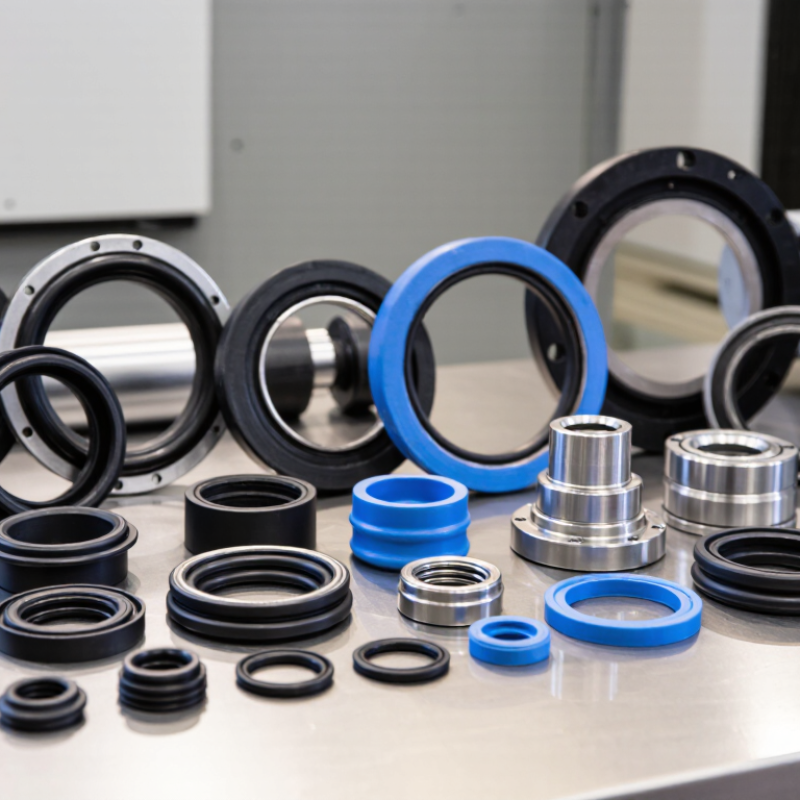
Dynamic seals prevent fluid or gas leakage between moving surfaces. Unlike static seals, they work while a shaft, rod, piston, or rotary face moves. Common materials include elastomers, polyurethane, and PTFE compounds. Each material handles different temperatures, pressures, speeds, and chemicals.
You will find dynamic seals in hydraulic cylinders, pumps, gearboxes, valves, compressors, and automotive systems. A hydraulic rod seal may face pressure above 300 bar, while a rotary seal must resist friction and heat near a spinning shaft. Small design errors matter. Incorrect hardness can cause wear, extrusion, or sudden leakage. A seal that performs well in laboratory testing may fail when dust, vibration, or poor lubrication appears in the field.
Tips: Share operating pressure, temperature, speed, fluid type, shaft finish, and movement details with potential suppliers. Ask for material data, dimensional tolerances, test methods, and batch traceability. Do not select a seal by size alone. That shortcut often creates expensive downtime. It is also wise to review installation tools and groove design, because even a suitable seal can be damaged during fitting. Suppliers with practical application support are usually more reliable than those offering only a large catalogue. Yet selection is not always obvious; real equipment conditions may change over time.
A reliable evaluation starts with the operating conditions, not a supplier’s catalog. Share shaft speed, pressure, temperature, motion type, and fluid compatibility. A seal for hydraulic oil may fail quickly in abrasive slurry. Material selection must match the real environment.
Ask suppliers for technical drawings, compound data, tolerance ranges, and application references. Check whether testing reflects your equipment’s cycle time and load. Useful evidence includes leakage measurements, wear results, dimensional inspection, and batch traceability. Data matters.
Review production controls carefully. Confirm incoming material checks, mold maintenance, inspection frequency, and change notification procedures. A supplier should explain how defects are contained and investigated. Request samples from a normal production batch, not only laboratory prototypes. Test it.
Delivery performance also deserves close attention. Compare tooling ownership, minimum order quantities, packaging, lead times, and spare-part support. Clear communication is often more valuable than a low quotation. Still, polished documentation can hide weak process discipline. That risk is easy to overlook.
A practical audit should include a factory visit or live video inspection. Observe storage conditions, cleanliness, measuring equipment, and operator training. Ask how previous field failures were handled. If answers remain vague, pause the evaluation. No supplier is perfect, and buyers should record unresolved concerns instead of smoothing them over.
Top 10 Dynamic Seal Suppliers for Global Buyers
The top ten dynamic seal suppliers compete through specialized capabilities, not catalog size alone. According to MarketsandMarkets’ 2024 Seals Market report, the global seals market may grow from about USD 13.7 billion in 2023 to USD 17.7 billion by 2028. That growth reflects demand for longer service life, cleaner production, and lower maintenance costs.
The strongest supplier groups cover ten practical capabilities. Hydraulic specialists support high-pressure cylinders and mobile equipment. Pneumatic experts focus on low-friction rod and piston seals. Rotary-seal producers handle shafts, pumps, and gearboxes. Mechanical-seal suppliers manage leakage control in rotating machinery. Automotive specialists develop compact, heat-resistant sealing systems. Aerospace suppliers provide traceable materials and strict process control. Food-grade manufacturers support hygienic equipment and approved compounds. Semiconductor-focused teams reduce particle risks in sensitive environments. Custom polymer converters produce engineered PTFE and polyurethane profiles. Global distributors add local inventory, testing, and technical support.
Material selection remains critical. Grand View Research reports that industrial sealing demand is expanding with machinery, energy, and process industries. However, market reports often simplify real operating conditions. A seal rated for 200°C may fail early under shaft misalignment, abrasive dust, or poor installation. That detail is easy to miss.
Buyers should request pressure-cycle data, temperature limits, compound certificates, dimensional inspection records, and failure-analysis examples. Supplier rankings can change quickly. A large production footprint does not always mean better field performance. Sometimes, the smaller engineering team responds faster.
Choosing among the top 10 dynamic seal suppliers requires more than comparing catalog prices. Quality begins with material traceability, dimensional control, and documented leakage testing. Ask for batch records, hardness data, and performance results at your working temperature and pressure. Lab samples help. Yet, one sample may not represent stable mass production. Confirm process capability, inspection frequency, and replacement support before approving a supplier.
Customization matters when shafts, grooves, or operating media differ from standard designs. Reliable suppliers should review drawings, recommend compounds, and explain tolerance limits. Small prototype orders can expose fit problems early, although tooling fees may raise initial costs. Certifications add confidence only when their scope matches your factory and target market. Check certificate numbers, issuing bodies, audit dates, and product-related test reports. Pricing deserves a total-cost review. Include tooling, minimum order quantities, freight, testing, downtime risk, and expected service life. Honestly, the cheapest quotation is sometimes the least economical choice. Still, premium pricing is not proof of superior performance.
Tips: Prepare one comparison sheet for all suppliers. Request identical samples and test conditions. Clarify warranty terms, lead times, and currency adjustments. Recheck every assumption. A missed temperature limit or vague certification can create expensive delays. Ask suppliers to explain their failures, not only their successes. That answer may reveal more than a polished sales presentation.
Comparing Product Quality, Customization, Certifications, and Pricing
This supplier-neutral technical benchmark compares typical continuous operating-temperature ranges for major dynamic-seal material families. The ranges are representative engineering values commonly associated with NBR, EPDM, FKM, PTFE, and polyurethane compounds; actual performance depends on compound formulation, pressure, speed, media compatibility, and seal design. ISO 3601, ISO 6194, ASTM D2000, and ISO 9001 are commonly referenced when evaluating quality and supplier capability.
Top 10 Dynamic Seal Suppliers for Global Buyers
Selecting a dynamic seal supplier starts with operating conditions, not a polished catalogue. Define pressure, shaft speed, temperature, media, motion type, and duty cycle. Include start-stop behavior and dry-running risk. These details often expose unsuitable materials early.
Market reports show why supplier discipline matters. MarketsandMarkets estimates the mechanical seals market will grow from about USD 4.8 billion in 2024 to USD 6.5 billion by 2029. Growth does not guarantee quality. Ask for compound specifications, batch traceability, dimensional inspection records, and validation data. For rotary applications, request evidence linked to ISO 6194. For O-rings, check relevant ISO 3601 tolerances. A supplier should explain friction, wear, extrusion resistance, and media compatibility with measurable data. Vague phrases are warning signs.
Audit the production process, not only the sample. Review mixing records, mold controls, surface-finish requirements, and nonconformance handling. Ask how accelerated life tests reflect your real equipment. Independent testing adds credibility, especially for high-cycle service. Verify capacity through lead-time records, emergency stock rules, and change-notification procedures. A low quotation may become expensive after leakage, downtime, and repeated installation work. Still, no supplier is perfect. Even strong reports can miss your actual fluid, temperature swings, or shaft misalignment. Run a pilot batch under field conditions. Document leakage rate, wear depth, installation time, and inspection results before approving regular supply.
An anonymized supplier comparison matrix for evaluating technical capability, quality systems, customization, documentation, and global supply support.
| Rank | Supplier Profile | Core Dynamic Seal Capability | Common Material Options | Typical Application Areas | Technical Information to Request | Quality and Compliance Evidence | Global-Buyer Service Indicators | Best Fit | Evaluation Score |
|---|---|---|---|---|---|---|---|---|---|
| 1 | Supplier Profile 01 | Hydraulic and pneumatic rod seals, piston seals, wipers, guide rings, and rotary shaft seals. | NBR FKM PU PTFE POM | Mobile hydraulics, industrial cylinders, agricultural equipment, and general machinery. | Pressure, speed, temperature, media compatibility, groove dimensions, extrusion-gap limits, and friction data. | ISO 9001 certificate, material certificates, inspection records, dimensional reports, and batch traceability. | Multilingual technical support, export packaging, drawing review, sample approval, and repeat-order control. | Buyers requiring a broad standard product range with engineering support. | 9.4 / 10 |
| 2 | Supplier Profile 02 | High-performance PTFE seals, spring-energized seals, rotary seals, and low-friction sealing systems. | PTFE PEEK FKM FFKM | Chemical processing, semiconductor equipment, vacuum systems, and high-temperature machinery. | Chemical-resistance charts, permeation data, vacuum performance, temperature range, and energizer selection. | ISO 9001, cleanliness procedures, material declarations, RoHS or REACH documentation where applicable. | Small-batch production, controlled packaging, application engineering, and custom profile development. | Applications demanding chemical resistance, low friction, or challenging temperature conditions. | 9.2 / 10 |
| 3 | Supplier Profile 03 | Hydraulic seals for heavy-duty cylinders, including rod seals, piston seals, buffer seals, and wipers. | PU NBR HNBR PTFE | Construction equipment, mining machinery, presses, material handling, and high-load hydraulics. | Dynamic pressure, reciprocating speed, side-load conditions, surface finish, hardness, and installation method. | ISO 9001, hardness testing, tensile testing, dimensional inspection, and production batch records. | Custom tooling, technical drawings, rapid sample production, and support for demanding operating conditions. | Heavy-duty hydraulic equipment exposed to shock loads, contamination, or high pressure. | 9.0 / 10 |
| 4 | Supplier Profile 04 | Rotary shaft seals, V-rings, cassette seals, and bearing protection seals for rotating equipment. | NBR FKM ACM PTFE | Gearboxes, electric motors, pumps, compressors, agricultural machinery, and drive systems. | Shaft speed, shaft hardness, runout, eccentricity, lubricant type, dust or water exposure, and lip design. | ISO 9001, material identification, lip inspection, leakage testing, and dimensional control plans. | Standard interchangeability, packaging protection, technical catalogues, and regional distribution support. | OEM and maintenance buyers seeking reliable sealing for rotating shafts. | 8.8 / 10 |
| 5 | Supplier Profile 05 | Pneumatic seals, compact rod seals, piston seals, buffer seals, and low-friction guide elements. | PU NBR TPU PTFE | Factory automation, pneumatic cylinders, packaging machinery, robotics, and assembly equipment. | Air pressure, cycling frequency, speed, lubrication condition, leakage rate, and low-temperature performance. | ISO 9001, dimensional inspection, material declarations, cleanliness controls, and sample test reports. | Online sizing tools, quick sample dispatch, standard-stock availability, and application recommendations. | Buyers prioritizing low friction, long cycle life, and fast availability for pneumatic systems. | 8.6 / 10 |
| 6 | Supplier Profile 06 | Custom molded elastomer seals, bonded seals, diaphragms, and complex-profile dynamic sealing components. | EPDM NBR FKM Silicone | Water systems, appliances, automotive subsystems, industrial valves, and fluid-control equipment. | Fluid compatibility, compression set, tensile properties, mold-flow considerations, tolerances, and aging data. | ISO 9001, PPAP-style documentation where required, material certificates, and process-control records. | Tooling design, prototype molding, color or compound control, and engineering change management. | Projects involving non-standard geometries, integrated components, or medium-to-high production volumes. | 8.4 / 10 |
| 7 | Supplier Profile 07 | Food, beverage, pharmaceutical, and hygienic-process seals for pumps, valves, mixers, and actuators. | EPDM PTFE FKM Silicone | Food processing, beverage filling, sanitary pumps, pharmaceutical equipment, and clean utilities. | Cleaning and sterilization conditions, temperature, media compatibility, surface finish, and hygienic design. | FDA or EU food-contact declarations where applicable, USP-related documentation when required, ISO 9001, and traceability. | Lot identification, controlled packaging, clean handling, documentation support, and export compliance assistance. | Regulated industries requiring documented materials and controlled contamination risk. | 8.3 / 10 |
| 8 | Supplier Profile 08 | Large-diameter seals, split seals, custom rotary seals, and repair-oriented sealing solutions. | NBR FKM PTFE PU | Wind equipment, steel processing, marine systems, large gearboxes, and industrial repair operations. | Diameter, shaft runout, installation access, operating speed, lubricant, contamination, and split-joint design. | ISO 9001, dimensional reports, compound certificates, repair instructions, and nonconformance procedures. | Reverse engineering, emergency production, field measurement support, and low-volume customization. | Maintenance buyers needing replacement seals for large or difficult-to-access equipment. | 8.1 / 10 |
| 9 | Supplier Profile 09 | Standard metric and inch-size seals, O-rings, backup rings, wipers, and replacement sealing kits. | NBR EPDM FKM PU | General industrial maintenance, pumps, valves, cylinders, compressors, and replacement parts distribution. | Size standard, material grade, hardness, pressure rating, temperature range, and compatibility with service media. | ISO 9001, certificate of conformity, material declarations, inspection reports, and lot traceability. | Broad inventory, small minimum order quantities, distributor support, and consolidated international shipping. | Buyers seeking standard products, short replenishment times, and economical maintenance supply. | 7.9 / 10 |
| 10 | Supplier Profile 10 | Electrically conductive, anti-static, low-temperature, and specialized dynamic sealing components. | Conductive FKM PTFE HNBR Specialty PU | Electronics manufacturing, energy equipment, vacuum systems, aerospace-related machinery, and special-purpose automation. | Electrical resistance, outgassing, vacuum level, temperature cycling, chemical exposure, and friction behavior. | ISO 9001, material traceability, test-method details, controlled-process records, and customer-specific documentation. | Engineering consultation, prototype quantities, application testing, and export documentation support. | Specialized projects where ordinary elastomer seals do not meet performance requirements. | 7.7 / 10 |
Selection note: Material temperature limits, pressure ratings, chemical compatibility, and service life depend on the exact compound, seal geometry, surface finish, installation conditions, and operating medium. Buyers should confirm current technical data, certificates, testing methods, lead times, and applicable regional compliance requirements before placing an order.