SSI Traffic Solutions: Traffic Safety Products in USA and Canada
Traffic Safety Products in USA and Canada

In 2026, choosing Medical Roll Paper is less about buying a familiar brand and more about matching the roll to the device and its clinical task. A faint ECG grid, a smeared ultrasound image, or a paper jam during fetal monitoring can disrupt a routine workflow. Small details matter.
This guide introduces common types used in clinics and diagnostic rooms: ECG recording paper, ultrasound thermal paper, fetal monitor paper, and chart-recorder rolls. It also covers medical video-printer paper and other device-specific formats where relevant. These products differ in dimensions, grids or coatings, printing methods, and compatibility. A roll that looks right on the shelf may still feed poorly or produce low-contrast output. Fit matters.
Reliable selection starts with the equipment manual and the exact printer or monitor model, not a broad “medical grade” label. Check roll width, core size, winding direction, surface treatment, and any required calibration marks. For thermal media, storage conditions matter because heat, light, and friction can affect legibility. Keep a sample beside the device and review the print under normal room lighting. This is practical, not glamorous. Yet it can save time.
The sections ahead compare typical uses, checks to make before ordering, and trade-offs worth considering in 2026. Formats vary by manufacturer, so confirm specifications before replacing a roll. Even experienced buyers can miss one dimension. That deserves a second look.
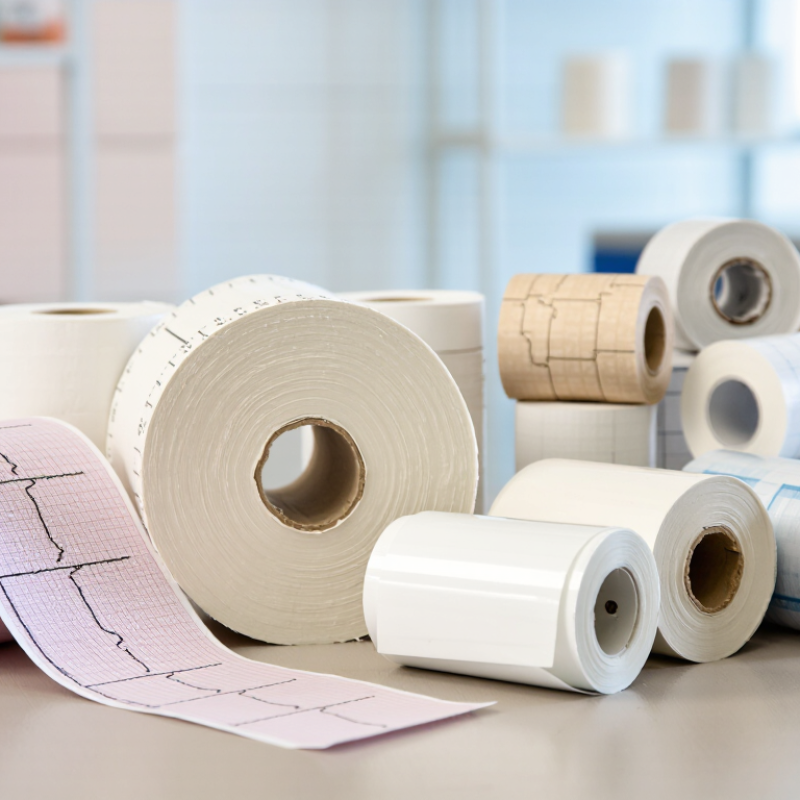
Medical roll paper is a continuous sheet wound around a core, supplied in different widths, lengths, and surface finishes. In healthcare settings, it helps provide a clean contact surface or a record medium. Common examples include examination-table paper, thermal recording paper, and paper used in some diagnostic devices. The right type depends on the equipment and the task.
On an examination table, staff pull out a fresh section between patients and tear it at the perforation. It gives patients a disposable surface for brief contact. It is not a substitute for cleaning the table. Small details matter: a roll that is too narrow may leave the surface exposed, while a poor fit can slip during use. Simple, but not foolproof.
Thermal roll paper is designed to react to heat from compatible printers, producing text or waveforms without ink. Other medical devices may require specially sized or coated paper, so staff should check the device instructions before loading a roll. Storage matters, too. Heat, moisture, and strong light can affect some thermal prints. A roll can look ordinary, yet its coating and dimensions determine whether it works reliably. Even careful selection cannot prevent every recording or handling problem.
Medical roll papers differ by fiber, surface finish, and moisture resistance. Plain creped tissue is light, absorbent, and easy to tear, making it practical for routine examination-table changes. Virgin pulp often feels smoother and more consistent; recycled-fiber grades can vary more in shade and texture. Neither feel alone proves suitability. Check the manufacturer’s stated basis weight, roll width, and wet-strength performance against the clinic’s needs.
Laminated paper adds a thin polyethylene layer beneath the tissue. It helps resist fluids, though the surface may feel less breathable and can crinkle under a patient’s movement. Spunbond nonwoven rolls are tougher and less prone to linting, but usually cost more and may feel warmer against skin. Small details matter: a roll that tears cleanly at the perforation saves time, while one that bunches can expose the table edge. I would not assume thicker means safer.
WHO’s 2022 Global Report on Infection Prevention and Control estimates that 7% of acute-care patients in high-income countries acquire at least one healthcare-associated infection; the estimate is 15% in low- and middle-income countries. That context supports reliable cleaning and turnover, not treating table paper as a sterile barrier. It is only one layer in practice. Check for fluid-resistant claims, tear behavior, and fit with the table before choosing a grade.
In 2026, medical roll paper generally falls into three practical groups: sterilization-reel paper, examination-table paper, and diagnostic chart paper. Sterilization reels pair medical-grade paper with a clear film, allowing staff to inspect instruments before opening the pack. Exam-table rolls provide a disposable surface between patients. Thermal ECG and ultrasound rolls preserve traces for review; their coatings must match the device and printing method.
Material choice matters, but paper alone does not prevent infection. The CDC estimates that about one in 31 hospital patients has at least one healthcare-associated infection on any given day. The WHO’s 2022 Global Report on Infection Prevention and Control reports roughly seven affected patients per 100 in high-income countries and 15 per 100 in low- and middle-income countries. These figures describe infection burden, not paper performance. ISO 11607 offers a useful reference for sterile-barrier packaging materials and systems.
For purchasing, check the intended sterilization process, roll width, seal compatibility, and instructions for use. A reel that seals poorly can compromise a package; a table roll that tears easily wastes time during room turnover. Diagnostic paper needs consistent feed and legible marks, especially when records are reviewed later. That neat ranking is imperfect: clinics have different workflows, and “medical paper” is not one interchangeable product. A quick trial on the actual sealer or printer can reveal problems specifications miss.
| Paper type | Common use | Typical format or characteristics | Selection considerations |
|---|---|---|---|
| ECG thermal recording paper | Recording electrocardiogram waveforms and measurements. | Thermal-sensitive paper, often printed with a grid; supplied in rolls or folded packs. Common widths include approximately 50 mm and 80 mm, depending on the recorder. | Match the recorder’s specified width, roll or pack format, grid scale, and loading direction. |
| Fetal monitor (CTG) paper | Printing fetal heart-rate and uterine-activity traces during cardiotocography. | Usually thermal paper with a time-and-scale grid; available as rolls or Z-fold packs in device-specific widths. | Confirm compatibility with the monitor and the required chart scale; the paper format can vary by model. |
| Ultrasound thermal paper | Printing ultrasound images and examination records on compatible thermal printers. | Thermal-coated paper supplied in formats that may include rolls; some ultrasound printers instead use sheets or other media. | Check printer compatibility, media dimensions, image density, and the manufacturer’s recommended paper specification. |
| Medical chart and continuous-feed paper | Printing patient charts, labels, reports, or other clinical records on compatible printers. | May be plain or preprinted paper, supplied as continuous rolls or fanfold forms; printer requirements determine the format. | Choose the correct paper weight, feed format, and dimensions for the printer and intended record workflow. |
| Examination table paper | Providing a disposable surface covering for examination couches and tables. | Typically plain or embossed paper on a roll, with widths and roll lengths varying by supplier and dispenser. | Select a roll width that covers the table and a compatible core size; replace between patients according to facility procedures. |
| Sterilization indicator and packaging paper | Supporting sterilization-packaging workflows; indicator markings can help show exposure to specified process conditions. | May be supplied as paper rolls or as part of packaging materials, with process-specific indicator inks or markings. | Use packaging and indicators validated for the intended sterilization method. A chemical indicator does not, by itself, prove sterility. |
Note: Dimensions and media formats vary by equipment and supplier. Verify the device manual and intended clinical use before purchasing.
What Are the Top Medical Roll Paper Types in 2026?
Common Uses Across Healthcare Settings
Medical roll paper serves different jobs, and the right type depends on the equipment and setting. In clinics, creped or poly-backed examination-table paper covers treatment beds between patients. It offers a clean barrier and tears off quickly. It does not replace surface cleaning. CDC’s National Ambulatory Medical Care Survey reported about one billion physician office visits in 2019, illustrating the high turnover many practices manage. In imaging and cardiac care, compatible thermal rolls record ultrasound images, ECG tracings, or fetal monitoring data. These papers are not interchangeable: incorrect dimensions or coating can affect printing and readability.
Hospitals and outpatient centers also use paper rolls for procedure tables and select monitoring devices. The World Health Organization’s 2022 report estimates that, in acute-care hospitals, about 7 in 100 patients in high-income countries acquire at least one healthcare-associated infection. That figure is not a measure of paper’s effect; it underscores why staff should follow established cleaning and infection-prevention procedures. A paper cover can be useful, but it is easy to overestimate what it protects.
Tips: Check roll width, core size, and device compatibility before ordering. Store thermal paper away from heat and light, and keep table paper dry. Replace torn covers promptly. Small details matter. Recheck local protocols, too; a convenient roll is not a substitute for careful practice.
What Are the Top Medical Roll Paper Types in 2026?
Selecting medical roll paper starts with its intended use, not its appearance. Exam-table paper provides a disposable surface for routine patient visits. Choose a width that covers the table without excessive overhang, and check whether the sheet tears cleanly at the dispenser. Small details matter. A roll that bunches or slips can slow room turnover.
For diagnostic equipment, match the roll to the device. ECG and ultrasound systems may require specific thermal paper dimensions and compatible coatings; confirm these in the equipment manual. Dental and treatment settings may use lightweight rolls for barriers or patient comfort, while sterilization processes require purpose-made packaging paper, not ordinary exam-table stock. These categories are not interchangeable. I still find product descriptions less helpful than a clear device specification.
Before ordering, compare roll width, length, core size, perforation, and storage needs. Paper exposed to heat or moisture may not perform as expected, especially when print clarity matters. Ask staff to test a sample in the actual dispenser or machine. Check the finished print, tearing, and fit. A sample test takes time, but changing a full shipment takes more. Follow the device instructions and your facility’s procedures when selecting materials for clinical use.
Compare commonly encountered roll widths to help narrow your choice for a specific device or use.
ECG formats vary by recorder; ultrasound and fetal-monitor printers commonly use 110 mm paper. Examination-table rolls are wider, with 457, 508, 559, and 610 mm among common options. Always confirm width, roll length, core size, and paper type against the device or table specifications.