SSI Traffic Solutions: Traffic Safety Products in USA and Canada
Traffic Safety Products in USA and Canada

A Metal Sandwich Panel Roof is more than two metal sheets around an insulating core. It is a working roof assembly, with seams, fasteners, flashings, and drainage paths that must perform together. On a cold morning, a poorly detailed joint can invite condensation; during heavy rain, a blocked gutter can expose weaknesses quickly. Small details matter.
Building scientist John Straube’s work offers a useful reminder, paraphrased here rather than quoted verbatim: “A roof performs as a system, not as a panel alone.” That perspective shapes this overview of the Top 10 Metal Sandwich Panel Roof Suppliers Worldwide. The comparison considers panel construction, insulation choices, available profiles, technical documentation, project experience, and support for installation. Supplier capabilities can vary by market, so a strong global reputation does not guarantee the right local fit.
Buyers should check more than headline thermal values. Ask how panel joints are tested, what coatings suit the site, and whether replacement parts are readily available. Look closely. A neat product brochure cannot show every site condition. This guide is a starting point, not a substitute for project-specific review. Some supplier information is difficult to compare evenly, and rankings can never capture every installer’s experience. That is worth questioning. A careful shortlist should connect published specifications with verified project details, clear warranty terms, and direct technical answers. Those checks make the differences between suppliers more concrete—and help readers judge which system may suit their building, climate, and construction schedule.
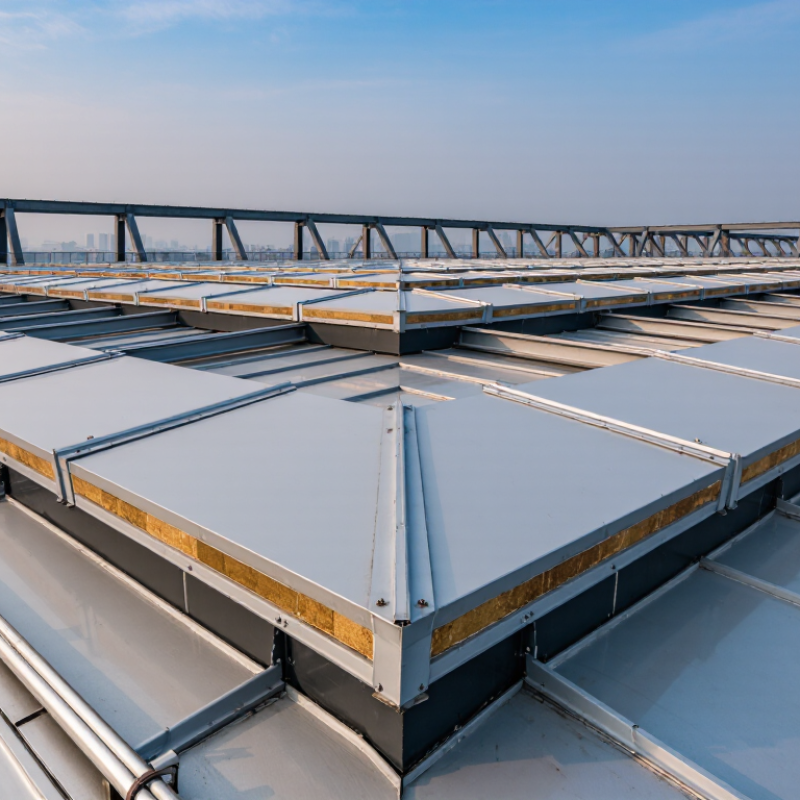
Metal sandwich roof panels are factory-made assemblies with two metal facings bonded to an insulating core. Common cores include polyisocyanurate, polyurethane, and mineral wool. Their profiles and interlocking joints help shed rain while limiting heat transfer. During installation, crews align the panels, secure them to structural supports, and seal ridges, eaves, and penetrations. Small details matter. Poorly fitted closures or misplaced fasteners can invite leaks and create thermal bridges.
UNEP and GlobalABC’s 2023 Global Status Report for Buildings and Construction estimates that buildings used 34% of global energy demand in 2022. The report also attributes 37% of energy- and process-related carbon dioxide emissions to the buildings and construction sector. Those figures make roof insulation a practical design concern, not a cosmetic upgrade. Insulated metal roofs suit warehouses, factories, cold-storage facilities, and large sports buildings, where broad spans and controlled indoor temperatures are common.
Panel selection depends on clear-span requirements, wind uplift, drainage, fire performance, and the building’s moisture conditions. Cold-storage roofs need careful attention to vapor control and sealed joints; condensation can develop where details are overlooked. Mineral-wool cores may suit projects with stricter fire-performance needs, while other cores can offer different thermal properties. No panel solves every problem. Installation quality, climate, and maintenance still matter.
When evaluating worldwide metal sandwich panel roof suppliers, compare technical capability before comparing price. Ask for panel core type, metal thickness, coating specification, and declared thermal performance. Request test reports that identify the tested panel configuration, not just a general product range. Details matter.
Roof conditions vary sharply between coastal air, heavy snow, strong sun, and frequent temperature swings. Check whether the supplier can explain suitable panel spans, fastening patterns, and joint details for your project. Ask how cut edges and penetrations should be protected from moisture. A polished brochure cannot answer every site question. That is easy to overlook.
Review production consistency, quality-control records, delivery planning, and after-sales support. For international shipments, clarify packaging, lead times, replacement-part availability, and who handles technical questions across time zones. Request references for projects with similar roof geometry or climate, then ask what problems arose after installation. Warranty language also deserves careful reading: coverage may depend on maintenance, installation methods, and approved accessories. No checklist catches everything. A supplier’s willingness to discuss limitations can be more revealing than confident claims.
Regional demand for metal roofing panels reflects climate, construction activity, and local building practices. Grand View Research estimated the global metal roofing market at about US$20.4 billion in 2023, with projected annual compound growth of 4.3% from 2024 to 2030. The estimate covers metal roofing broadly, not sandwich roof panels alone. That distinction matters.
North America represented the largest regional market in the report, supported by established metal-roofing use and replacement demand. In colder areas, buyers often weigh snow loads, corrosion resistance, and insulation performance together. Asia-Pacific was identified as the fastest-growing region, where urban construction and industrial facilities support demand. Growth is not uniform, though; local access to steel, installation skills, and project budgets can change purchasing decisions sharply.
European demand is shaped by renovation needs and energy-performance requirements, while hot, humid markets place greater emphasis on heat control and moisture protection. For suppliers, regional fit is practical: a panel that performs well on a warehouse roof may not suit a coastal site without suitable coatings and detailing. Buyers should compare core thickness, metal gauge, joint design, and tested thermal performance—not just headline price. Market estimates also hide differences between product categories, so regional forecasts deserve a careful reading.
The integrated manufacturer controls coil coating, core bonding, and panel cutting under one roof. Its strength is consistent production; buyers should still request bond-strength and fire-test records. A regional roll-former often offers shorter delivery routes and custom lengths. Check how it handles replacement orders. Details matter.
A supplier focused on cold climates may offer thicker cores and tightly sealed joints. A high-wind specialist pays close attention to fastener patterns and edge details. The agricultural-sector supplier prioritizes corrosion-resistant finishes and washable surfaces. An industrial supplier may provide long-span panels for warehouses, but transport limits can affect practical panel length. The export-oriented supplier is experienced with protective packing and container loading. Yet shipping damage remains possible.
A design-led supplier supports architects with color samples, profiles, and installation drawings. A budget-focused producer competes on standard panel sizes, though fewer options may be available. A service-centered supplier provides site guidance and troubleshooting; response times deserve checking before purchase. A technically documented supplier can share panel data, coating specifications, and installation manuals. Paperwork is useful, not proof by itself. Compare the evidence, warranty terms, and local project references before deciding.
Comparing worldwide metal sandwich panel roof suppliers means looking beyond panel thickness. A 2024 Global Status Report for Buildings and Construction, published by UNEP and GlobalABC, estimates that buildings account for 32% of global energy demand. That makes insulation performance worth checking, but published U-values need context: core type, panel thickness, joints, and test conditions all matter. Small details matter.
Ask suppliers for tested assembly data, not just a product brochure. Compare steel thickness, coating, fire performance, wind-uplift resistance, and available spans. Certifications also differ. ISO 9001 covers a manufacturer’s quality-management system; it does not certify every roof panel. EN 14509 applies to factory-made insulated metal-faced panels in relevant European markets, while FM 4471 and UL 580 address roof-system performance under defined tests. Check that the documentation matches the proposed assembly and destination market.
Service can separate otherwise similar bids. Useful support includes project-specific load tables, flashing details, condensation guidance, installation training, and replacement-panel availability. Ask who answers technical questions after delivery. I would also compare warranty exclusions carefully; headline terms can hide limits on finish, coastal exposure, or installation. No comparison table catches every site condition, and supplier data may not be directly comparable. A written clarification can prevent an expensive assumption.
Typical thermal conductivity ranges for common sandwich-panel insulation cores. Lower values indicate better insulation per unit thickness.
These are indicative material ranges, not ratings of individual suppliers. Actual performance depends on the specific product and test method. When comparing suppliers, check product data sheets, applicable certifications (such as EN 14509 or ISO 9001), fire-performance documentation, warranties, and technical support.