SSI Traffic Solutions: Traffic Safety Products in USA and Canada
Traffic Safety Products in USA and Canada

Choosing the best delineator cones begins with the road, not the product catalog. A quiet parking entrance needs different protection than a busy highway shoulder. Traffic speed, vehicle movement, weather, visibility, and installation time all influence the decision.
Work-zone safety researcher Dr. Jerry Ullman offers a useful reminder: “A device works only when drivers can see it and understand it.” That principle makes visibility the starting point. Bright colors help during daylight, while reflective collars support recognition after sunset. A wide rubber base can resist wind and passing turbulence. Flexible materials may recover after contact, reducing replacement costs and scattered debris.
Good delineator cones should also match the working environment. Check their height, base weight, reflective performance, temperature resistance, and storage requirements. A cone that performs well indoors may become unstable on an exposed bridge. A lightweight option may be convenient, yet disappointing during strong winds. Small details matter.
No single cone wins every site.
This guide compares practical features, including durability, portability, visibility, and long-term value. It also considers how crews actually use these products. Can workers carry them safely? Can drivers identify them quickly? Do the bases remain stable on uneven pavement?
The choice is not always obvious. Buyers sometimes focus on price and overlook maintenance or replacement frequency. That is understandable, but incomplete. Reliable selection requires site assessment, manufacturer information, and realistic field expectations. The recommendations ahead aim to support informed decisions, while acknowledging that conditions can change. A careful buyer may still revise the choice after observing real traffic, rain, glare, or repeated handling.
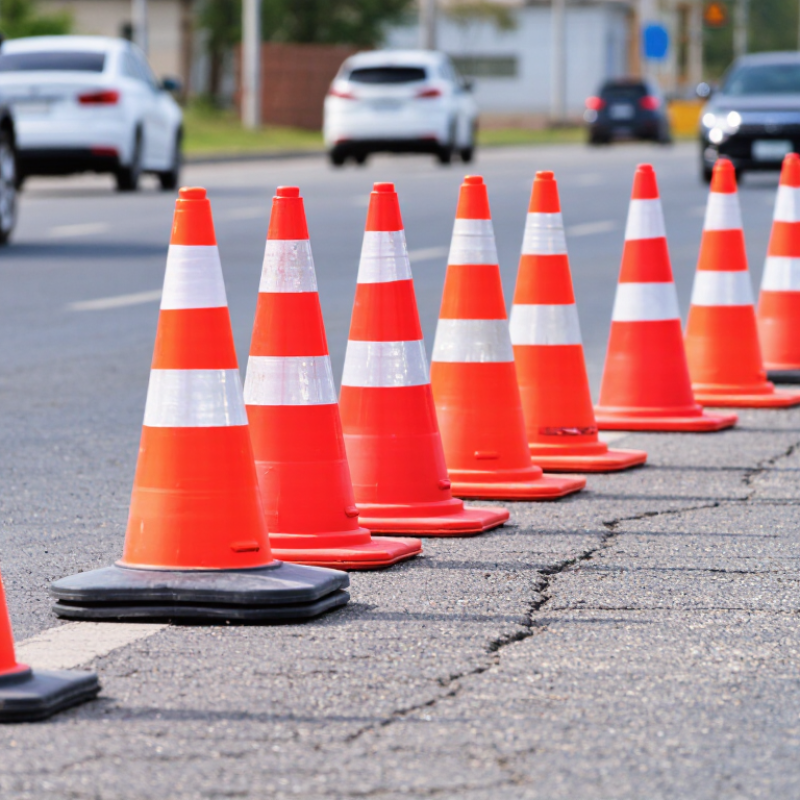
Choosing the right delineator cone starts with understanding its type and working environment. Standard traffic cones suit temporary lane guidance, parking control, and small maintenance areas. Their bright color improves daytime visibility. Reflective collars help drivers notice them at night or in rain. Choose a wide, weighted base when wind, vehicle movement, or uneven pavement is expected.
Flexible cones are useful where occasional contact may occur. They can bend without cracking and usually return to shape. Collapsible cones work well for emergency kits, patrol vehicles, and quick indoor setups. However, their lighter construction may reduce stability outdoors. Tall cones provide better visibility near moving traffic, while shorter models are practical for warehouses, queues, and restricted walkways. Do not assume taller is always safer.
Material also matters. PVC often offers flexibility and impact resistance. Recycled materials may reduce environmental impact, but quality can vary between products. Check the cone’s height, base weight, reflective area, and temperature range. Local roadwork requirements should also be reviewed before use. A cone that looks sturdy may still slide on wet concrete.
Real conditions often expose poor choices. A narrow base can tip beside a bus route. A faded reflective band can disappear under weak headlights. Inspect cones regularly for cracks, dirt, fading, and loose collars. Replace damaged units promptly. I have seen teams choose by price alone, then buy twice after the first storm. A small field test can reveal more than a product description.
Traffic conditions should guide every cone decision. A quiet parking area may need lightweight cones with a stable base. Busy roads require taller, heavier cones that resist passing vehicles and strong wind. I have found that a cone standing firmly on uneven pavement is safer than a brighter cone that keeps falling.
Visibility changes throughout the day. For night work, choose wide reflective bands that return light from headlights. In rain, dirt and water can reduce reflection, so inspect the bands before each use. Bright colors help during daylight, but color alone is not enough. Poorly placed cones can disappear behind parked vehicles or road curves. Check driver sightlines from a distance.
Safety requirements also depend on vehicle speed, worker exposure, and available space. Follow local road authority guidance for cone height, spacing, and reflective performance. Keep damaged or faded cones out of active areas. I once overlooked a cracked base during a quick inspection. It seemed minor, but the cone shifted under wind. That mistake changed my checklist: I now examine bases, bands, stability, and placement separately.
A simple field test helps. Set a cone on the actual surface and view it from approaching headlights. If it blends into shadows, the selection needs reconsideration.
How to Choose the Best Delineator Cones for Your Needs?
Cone size should match the distance and speed of approaching traffic. Small cones suit indoor work, parking areas, and slow vehicle movement. Taller cones provide better visibility on roads, entrances, and open work zones. Measure the viewing distance before buying. A cone that looks large nearby may disappear at dusk. I once chose compact cones for a wide driveway, and drivers noticed them too late. That mistake changed how I assess placement.
Material affects stability, flexibility, and service life. Flexible PVC or rubber can survive light impacts without sharp breakage. Heavier bases resist wind, but they may become difficult to carry. Inspect the cone’s collar, base connection, and surface after repeated handling. Reflective bands should remain bright, evenly attached, and visible from different angles. Wider bands usually help at night, though dirt can reduce their performance.
Tips: Test one cone in daylight, rain, and low light before ordering many. View it from a driver’s position. Check whether the color remains clear against concrete, grass, or dark pavement. Consider adding lights only when the site genuinely needs stronger night visibility. Too many features can increase cost without improving safety. Recheck the cones after storms, cleaning, and frequent relocation. Small defects matter.
Cone height should match the visibility and traffic conditions of the work area. The chart shows commonly used height configurations for different applications; local traffic regulations should always take priority.
Choose taller cones for faster traffic, longer sight distances, poor weather, or locations where vehicles may obstruct visibility.
Flexible PVC or rubber-based cones are commonly used because they can recover after impact. Select a weighted base for windy or high-traffic areas.
Use high-visibility reflective bands for night work, low-light conditions, and roads with moving vehicles. Check local requirements for band width and placement.
Typical specification ranges shown for general selection guidance, not legal minimums. Always follow the applicable road-work standard and site risk assessment.
Choosing delineator cones requires more than checking height and color. Stability matters when trucks create strong air movement or rain softens the roadside. A broad, weighted base reduces tipping, but it can slow deployment. I once chose heavy bases for a short repair area and lost valuable setup time. That decision was safe, but not efficient.
Portability becomes critical for mobile crews. Handles, stackable shapes, and moderate weight reduce lifting strain. The U.S. Bureau of Labor Statistics reported 1,069 fatal work injuries involving transportation and material-moving occupations in 2022. Handling equipment carefully still matters. For longer projects, durability should guide the purchase. Look for flexible polymer construction, reinforced edges, and bases that resist cracking after repeated impacts. Cheap plastic can become brittle quickly.
Weather resistance deserves practical testing. Sunlight, freezing temperatures, oil, and standing water can change cone performance. ASTM D4956 helps assess retroreflective sheeting, although it does not measure the entire cone body. The FHWA reported 891 work-zone fatalities in 2022, showing why visibility cannot be treated as decoration. Check reflective bands at dusk, not only indoors. They should remain bright after dust and rain. The Manual on Uniform Traffic Control Devices also emphasizes maintaining traffic-control devices in usable condition. One weakness remains: manufacturers rarely publish complete aging data. Ask for temperature, ultraviolet, and impact-test results before buying.
How to Choose the Best Delineator Cones for Your Needs?
Standards should guide the purchase, not just the price tag. In the United States, the Federal Highway Administration’s 2023 Manual on Uniform Traffic Control Devices sets expectations for cone visibility, color, placement, and retroreflective treatment. The FHWA reported 891 work-zone fatalities in 2022. That figure makes nighttime visibility a practical safety concern, not a specification detail.
Check the cone’s height, base stability, rebound performance, and temperature resistance. Then inspect the accessories. A reflective collar, warning light, connecting chain, or weighted base may improve control around moving traffic. However, every added part needs inspection. Damaged collars can create false confidence. I have seen teams replace cheap cones repeatedly after wind and vehicle turbulence. The purchase price looked low. The replacement record did not.
Tips: Compare total ownership cost over three years. Include purchase price, transport, cleaning, storage space, replacement rates, and labor. The FHWA’s work-zone safety guidance supports consistent device use and regular inspection. Keep a simple log with dates, damaged parts, and weather conditions. Standards can narrow the options, but field evidence should make the final decision. A better choice may still fail when stored poorly. That part is easy to overlook.
| Use Case | Recommended Cone Configuration | Typical Height | Standards and Checks | Useful Accessories | Indicative Purchase Cost | Expected Service Life | Estimated Annualized Cost |
|---|---|---|---|---|---|---|---|
| Indoor maintenance and warehouse aisles | Lightweight PVC or flexible polymer cone with a stable base; reflective material is optional where vehicles operate indoors. | 450–700 mm 18–28 in |
Check workplace visibility rules, flame or chemical exposure requirements, base stability, and color contrast. Traffic-road standards may not apply to private indoor areas. | Cone bars, warning chains, floor signs, storage rack | $4–$12 | 2–5 years | $1–$6 |
| Urban, low-speed road work | High-visibility traffic cone with a broad weighted base and at least one continuous retroreflective band where required by the road authority. | 700 mm or higher 28 in or higher |
Confirm the applicable edition of the local traffic-control manual. In the United States, the MUTCD commonly specifies a minimum 28-inch cone for many roadway applications, with additional requirements for retroreflective bands and placement. | Cone bars, warning lights, sandbags, cone carriers | $10–$25 | 2–4 years | $3–$13 |
| High-speed road or motorway work zone | Heavy-duty, UV-resistant cone with a wide base, high daytime contrast, and high-performance retroreflective bands suitable for nighttime traffic. | 900–1000 mm 36–40 in |
Verify road authority approval, minimum height, band width, retroreflective performance, wind stability, and spacing requirements. EN 13422 may be relevant in markets using European traffic-control products; local rules remain controlling. | Flashing lamps, cone bars, ballast rings, transport dolly | $20–$55 | 3–6 years | $4–$18 |
| Windy, exposed, or temporary outdoor sites | Flexible cone body with a heavy recycled-rubber or high-density base; select a base weight appropriate to the site’s wind exposure. | 700–1000 mm 28–40 in |
Check overturning resistance, base dimensions, material temperature range, UV resistance, and compatibility with local temporary-traffic standards. | Ballast rings, sandbags, reflective collars, anchor-compatible bases | $18–$60 | 3–7 years | $3–$20 |
| Nighttime visibility and emergency response | Cone with clean, undamaged retroreflective bands and compatibility with approved warning lamps; avoid relying on color alone. | 700–1000 mm 28–40 in |
Inspect retroreflective performance, band adhesion, lamp mounting, battery safety, and the applicable nighttime traffic-control requirements. | Warning lamps, cone toppers, reflective tape, replacement batteries | $18–$70 | 2–5 years | $5–$35 |
| Frequent deployment and collection | Stackable cone with a reinforced base, consistent dimensions, and a storage design that minimizes vehicle and warehouse space. | 700–1000 mm 28–40 in |
Evaluate stack height, nesting clearance, lifting points, abrasion resistance, cleaning needs, and replacement-part availability. | Cone cart, carrying handles, inventory labels, cleaning station | $12–$45 | 3–6 years | $2–$15 |