SSI Traffic Solutions: Traffic Safety Products in USA and Canada
Traffic Safety Products in USA and Canada

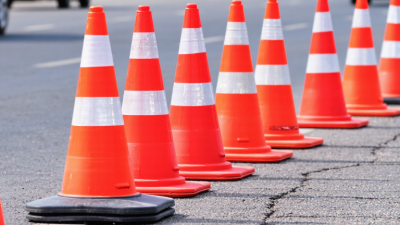
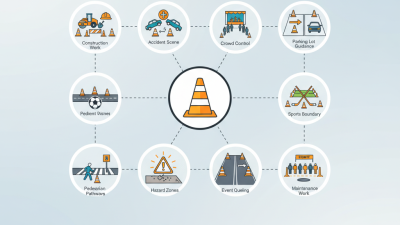
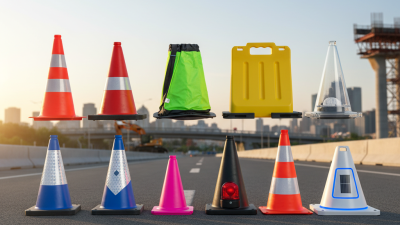
Construction cones are familiar on roads, sidewalks, parking areas, and building sites. Their purpose is practical: they make temporary hazards and changing routes easier to see. A line of cones can guide vehicles around a utility crew, keep pedestrians away from wet concrete, or mark the edge of an excavation. They are simple. Their bright color stands out against pavement, while reflective bands can improve visibility in low light.
Cones also help organize space without creating a permanent barrier. Workers can move them as a task progresses, adjusting a work zone when equipment or people need more room. Their shape is stable enough for many everyday uses, yet light enough for quick repositioning. That matters. A well-placed row gives people a clearer path and helps reduce unexpected movement near active work.
Still, a cone is only a warning device. It cannot stop a vehicle, explain every hazard, or make a poorly planned work area safe. A row may look obvious from one direction but be hard to notice around a bend or in heavy rain. Placement, spacing, lighting, and regular checks all affect how useful construction cones are. The right setup depends on the site, the activity, and applicable safety guidance. Understanding why cones are used means looking beyond their color: they communicate change, guide movement, and support safer work when used thoughtfully.
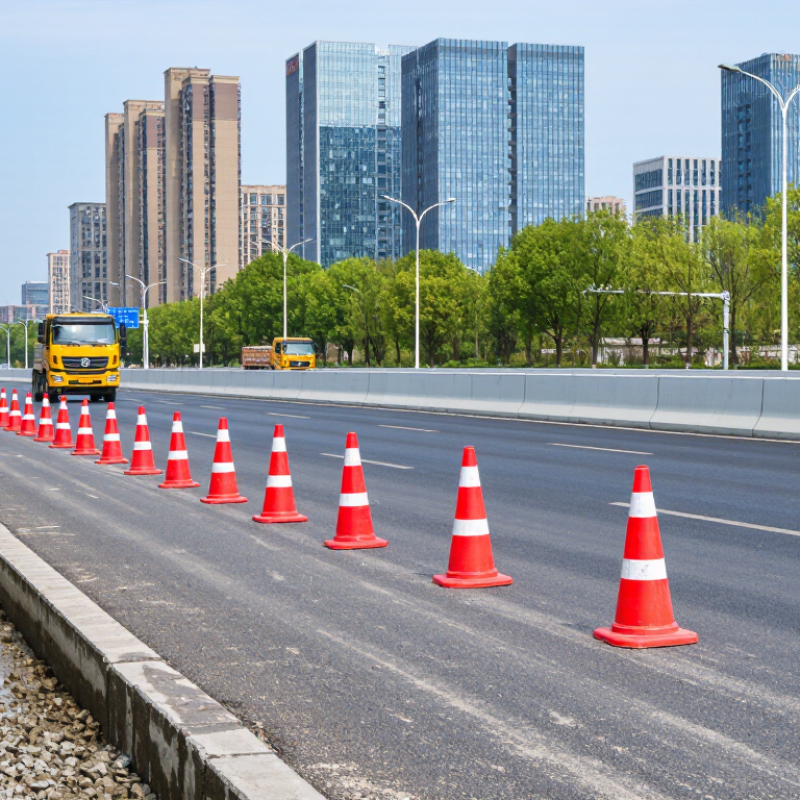
Construction cones are portable, brightly colored markers that show drivers, cyclists, and pedestrians where work changes the usual route. Their shape makes them easy to spot, move, and store. Reflective bands can improve visibility at night, though weather, lighting, and placement still matter. In a temporary work zone, cones may taper traffic away from a lane, outline a closed area, or guide people around an open trench. They mark a boundary. They are not barriers. A cone will not stop a vehicle, so it should not be treated as physical protection.
Tips: Set cones on stable ground and space them to create a clear path, not a confusing slalom. Give approaching road users enough time to react, and keep signs consistent with the layout. Check the line after wind, passing vehicles, or equipment moves it. Small changes matter. Follow the project plan and applicable local work-zone guidance, since spacing needs vary with speed, road shape, and site conditions.
Cones work best as part of a planned setup, alongside signs, barriers, or trained traffic control when needed. Keep pedestrian routes clear near sidewalks, driveways, and crossings. Dust, rain, glare, and parked trucks can hide even a bright cone. Crews may also place cones too close to the work, leaving little warning. Step back and view the setup from an approaching driver's perspective. A tidy line is not always a clear one.
Construction cones are easier to notice when their color stands apart from the surroundings. Orange contrasts with gray pavement, dark soil, and many roadside backgrounds. Drivers can recognize it quickly, even while watching traffic or following a temporary route. On a worksite, that brief visual cue can help people spot a changed lane, a trench edge, or equipment near the road.
Color has limits. Rain, dust, shadows, and low light can weaken the contrast, so cone placement and height matter too. Where site specifications set an 18-inch minimum, that height keeps the cone visible above many small obstacles and makes it easier to notice from a vehicle. It is not a guarantee of visibility at every distance or in every setting. A cone partly hidden behind a parked truck still gives little warning. Clear spacing helps. Workers should also check that cones remain upright and unobstructed, especially after wind or passing traffic moves them. These small checks can be easy to overlook. They make the warning more dependable.
A 28-inch cone is easier to spot above a car hood, roadside grass, or a line of parked vehicles. The MUTCD’s channelizing-device guidance specifies taller cones for freeway and expressway settings, and calls for cones used at night to be retroreflectorized or lighted. The exact setup should follow the road authority’s current requirements. Visibility is the point. A driver approaching a lane closure needs to see the taper early enough to respond, not discover it beside the bumper.
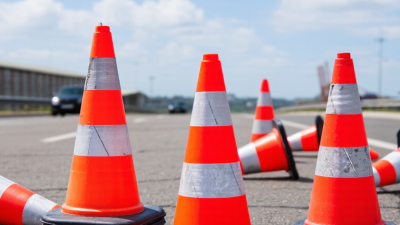
Retroreflective bands return headlight beams toward drivers, making the cone’s shape clearer in darkness and rain. Keep bands clean, firmly attached, and unobstructed; mud can turn a bright orange cone into a dull shape. FHWA’s Work Zone Facts and Statistics, using NHTSA data, reports 891 work-zone fatalities in 2022. That figure cannot be attributed to cone height alone, but it shows why conspicuous channelization matters. Still, a taller cone is no cure-all: glare, curves, heavy traffic, and poor spacing can weaken its message. I would check the approach from a driver’s viewpoint, especially after dusk. Small details matter.
| Use or Feature | When It Is Used | How It Helps | Practical Guidance |
|---|---|---|---|
| Channelizing traffic | Temporary lane shifts, lane closures, road work, and utility work. | Creates a visible path that guides drivers, cyclists, and pedestrians away from hazards or closed areas. | Arrange cones in a clear, continuous pattern that gives road users enough distance to recognize and follow the temporary route. |
| Separating work areas | When workers, equipment, or materials need to be separated from moving traffic. | Makes the edge of a work zone easier to recognize and helps discourage accidental entry. | Cones provide visual guidance, not physical protection. Use an appropriate barrier when the risk requires a stronger protective device. |
| Short-duration work | Mobile or brief operations, such as inspections, maintenance, or utility tasks. | They are lightweight and can be placed, moved, and removed as the work location changes. | Use a traffic-control layout suited to the roadway, traffic conditions, work activity, and applicable rules. |
| 28-inch cones | On higher-speed roads and other locations where greater visibility is needed. In the United States, the MUTCD specifies a minimum 28-inch height for cones used on freeways and other high-speed highways. | The additional height makes the cone more conspicuous, including when viewed over or around nearby vehicles. | Check the current MUTCD edition and local or state requirements; they determine the applicable height and placement for a particular site. |
| Retroreflective bands | At night, in low-light conditions, or wherever required for the roadway and work-zone setup. | Reflects light from vehicle headlamps back toward drivers, improving the cone’s visibility after dark. | For cones 28 inches or taller, MUTCD provisions describe a 6-inch-wide white band near the top and an additional 4-inch-wide white band below it. Confirm current requirements before use. |
| Stable placement | Where wind, passing vehicles, or uneven pavement could shift or topple cones. | Keeps the traffic-control pattern in place and reduces the chance of cones becoming roadway hazards. | Choose a stable base and inspect the line regularly. Replace or reposition damaged, displaced, or poorly visible cones. |
| Color and contrast | For temporary traffic control in daylight and other conditions where a distinct visual warning is needed. | The bright orange color contrasts with typical roadway surroundings and signals a temporary change or hazard. | Use traffic-control devices that meet the color, condition, and visibility requirements applicable to the work location. |
Note: Requirements vary by jurisdiction and roadway. The MUTCD applies in the United States; always consult the current applicable edition, state or local supplements, and the project’s approved traffic-control plan.
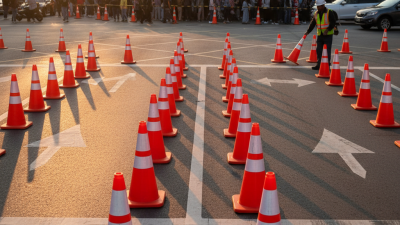
Construction cones do more than mark a work zone. Their spacing creates a visual path that tells drivers where the open lane goes. A steady line of cones helps people anticipate a lane shift instead of swerving at the last moment. That gap matters.
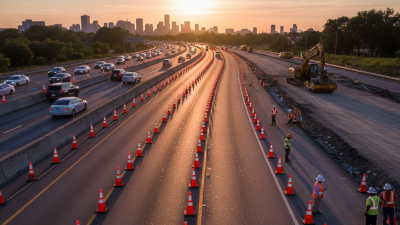
At the start of a closure, cones are often arranged in a gradual taper, guiding traffic away from workers and equipment. The pattern should be visible well before the work area, with spacing suited to road speed, curves, visibility, and the approved traffic-control plan. There is no single spacing rule for every street. A quiet neighborhood road and a fast, multilane route need different layouts.
Too close can confuse. Too far apart can make the boundary look optional, especially when drivers see a broad gap near a parked truck or a fresh strip of pavement. Reflective bands help at dusk, but they cannot fix a poorly placed line. On wet pavement, headlights may glare, and cones can be harder to judge. Crews should inspect the pattern from a driver’s approach and adjust it when conditions change. Even careful setups are not perfect; a sign, curve, or queue can alter what drivers notice first. That practical check is easy to overlook.
Construction cones do more than mark hazards; they help drivers see the intended path through a work zone. Their bright color and reflective bands draw attention to lane shifts, closed shoulders, and equipment entrances. But a cone alone cannot explain what comes next. MUTCD traffic-control devices work together. Signs warn drivers in advance, while cones guide them through a transition and past the work area.
A typical setup pairs warning signs with a cone taper. Barricades or other channelizing devices may provide stronger separation where the traffic-control plan calls for it. An arrow board can reinforce a lane-closure message, but it does not replace required signs or proper channelization. Placement and spacing depend on road speed, geometry, visibility, and the site plan. Small gaps matter. A layout that looks clear to a crew may feel confusing from behind the wheel.
Tips: Walk the approach from a driver’s viewpoint. Check that signs appear before the taper, cones remain upright, and reflective bands are visible at dusk. Recheck after traffic or weather shifts the setup.
How cones work with other MUTCD traffic-control devices
Minimum cone height by speed environment: MUTCD guidance specifies at least 18 inches for roadways with speed limits of 45 mph or less, and at least 28 inches for roadways with speed limits of 50 mph or more. Cones channelize traffic; signs provide advance warning, while arrow boards can direct drivers through lane closures or shifts.