SSI Traffic Solutions: Traffic Safety Products in USA and Canada
Traffic Safety Products in USA and Canada

Choosing a reliable traffic warehouse supplier requires more than comparing storage prices. It requires evidence, operational discipline, and a clear understanding of what happens after delivery.
Gwynne Richards, a respected warehouse management author, offers a useful reminder: “Warehouse management is not just about storing goods; it is about managing the flow of goods.” That principle matters in a traffic warehouse, where cones, barriers, signs, lights, and protective equipment must remain identifiable and ready for dispatch.
Look closely at the facility. Are traffic signs stored on clean, stable racks? Are fragile warning lights protected from impact? Can staff scan each carton from receiving to loading? These small details expose larger systems.
Ask for documented inventory procedures, delivery records, insurance details, and quality certifications. A dependable supplier should explain its warehouse management system without hiding behind vague promises. It should also demonstrate stock accuracy through cycle counts, barcode controls, and regular reconciliation.
Visit the site if possible. Watch a loading process. Check whether aisles are clear, pallets are labeled, and emergency equipment is accessible. Safety should be visible, not merely written in a policy.
References matter. Speak with customers who experienced peak-season demand, damaged goods, or urgent replacements. Their answers may reveal more than polished sales presentations.
The cheapest quotation can become expensive after delays, missing cartons, or incorrect quantities. Still, no checklist is perfect. Supplier performance can change, and occasional mistakes are possible. That is why contracts should define service levels, reporting duties, inspection rights, and corrective actions.
A reliable traffic warehouse partner does not promise perfection. It provides traceable processes, honest communication, and measurable improvement.
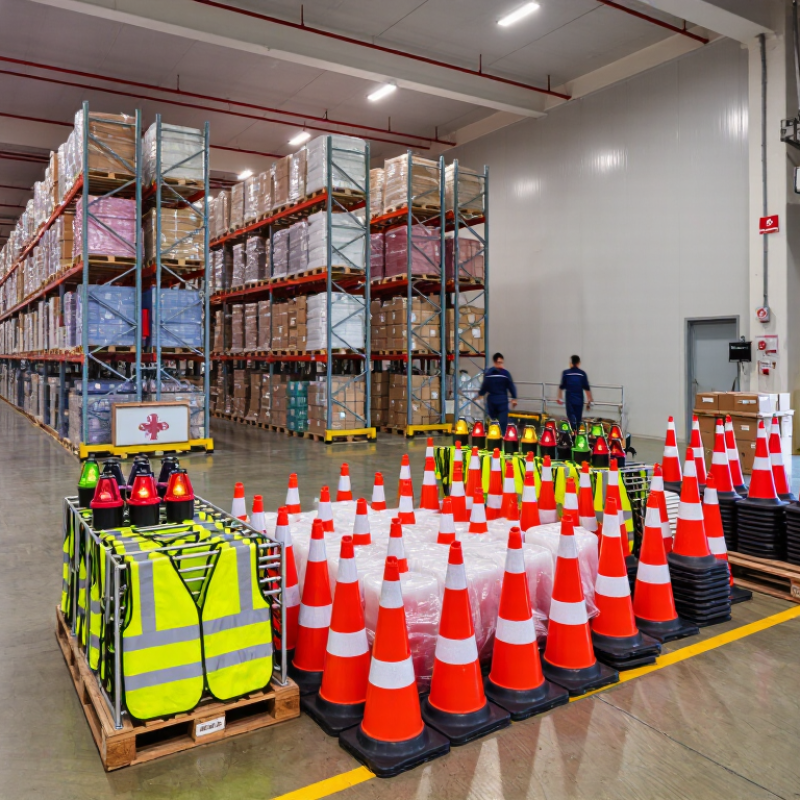
A traffic warehouse supplier does more than rent floor space. It connects inbound shipments, inventory control, order preparation, and outbound transport. Its systems should show when each pallet arrived, where it sits, and who handled it. That visibility supports accurate promises to customers and faster responses when delays occur. A responsible supplier also protects lawful goods through controlled access, clear documentation, and trained staff. Details matter.
When evaluating a supplier, ask how it receives freight, checks quantities, manages damaged cartons, and updates inventory. A practical site visit can reveal more than a sales presentation. Look for labeled aisles, clean loading areas, working scanners, and visible safety procedures. Staff should verify quantities against shipping documents before storage. They also need a clear process for urgent changes and delivery exceptions. Security controls, insurance, and documented emergency procedures deserve equal attention. A polished presentation means little without records.
Reliable performance depends on measurable service data. Request receiving accuracy, inventory variance, order turnaround, damage rates, and claim-handling records. References from similar operations can expose gaps that sales material hides. Small gaps matter. No warehouse performs perfectly. One missed scan may create a chain of corrections across several orders. The right supplier reports the error, investigates its cause, and changes the process. That candor often matters more than a flawless first impression.
Identifying your traffic storage and handling requirements starts with measurable flow, not a supplier’s sales presentation. Record daily receipts, dispatches, average dwell time, peak-hour volume, SKU dimensions, weights, and stacking limits. The 2024 Parcel Shipping Index reported 161.8 billion parcels worldwide in 2023, showing why seasonal surges can quickly overwhelm an undersized facility. Build a three-month demand profile, then test a realistic peak week. Do not plan around average traffic alone.
MHI’s 2024 Annual Industry Report surveyed more than 1,000 supply-chain professionals. It identified workforce shortages as a major operational concern for many respondents. Your warehouse should therefore reduce unnecessary lifting, walking, and manual counting. Check whether the supplier offers barcode scanning, clear pedestrian routes, loading-bay controls, and trained equipment operators. Ask for measurable service levels, including inventory accuracy, receiving time, order cut-off performance, and damage rates. Request recent performance records, not broad promises.
Small details often reveal operational maturity. Measure door height, turning space, floor strength, lighting, drainage, and emergency access. Confirm how fragile, oversized, or time-sensitive goods are separated. A perfect forecast is unrealistic. My practical preference is to specify 20–30% flexible capacity, then review it quarterly. That buffer may appear expensive, but congestion costs more. One overlooked issue remains: a warehouse can have excellent storage density and still fail during a two-hour dispatch rush.
A reliable traffic warehouse supplier should show more than a polished quotation. Ask how long the team has handled traffic cones, barriers, signs, and related safety equipment. Experienced staff can explain material grades, reflective performance, storage limits, and seasonal demand. Request specific examples from similar orders, including problems and corrective actions. Vague success stories deserve caution.
Inspect facilities when possible, either in person or through a live video tour. Look for labeled zones, dry storage, batch records, and safe loading procedures. Products should be protected from sunlight, moisture, crushing, and uncontrolled temperature changes. A strong warehouse also counts incoming and outgoing stock accurately. Small errors matter. Ask to see inspection samples, packaging standards, traceability records, and procedures for damaged goods. Photos alone can mislead.
Service capability becomes visible after the purchase order. Confirm response times, stock updates, delivery coordination, and document accuracy before signing an agreement. A capable supplier assigns a clear contact and escalates shortages quickly. They should discuss realistic lead times instead of promising every date. That honesty builds trust. Still, no supplier gets everything right. During evaluation, record one weakness and ask how it will be improved. This test reveals more than a confident presentation.
Suggested evaluation weighting for comparing supplier experience, facilities, and service capabilities
A reliable traffic warehouse supplier should be evaluated across multiple practical dimensions. Facilities and safety controls receive the highest weighting because storage capacity, equipment condition, traffic management, and operational safety directly affect continuity and risk. Supplier experience, service responsiveness, quality systems, and delivery performance should also be verified through documented records, site inspections, and customer references.
Choosing a reliable traffic warehouse supplier requires more than comparing unit prices. Quality records should show product testing, batch traceability, and replacement procedures. For barriers, cones, signs, and lighting equipment, ask whether designs follow applicable national standards and impact-testing requirements.
The FHWA reported 891 work-zone deaths in the United States during 2022. That figure makes weak quality control a serious commercial risk, not a minor defect.
Pricing needs a landed-cost view. Compare product price, packaging, freight, insurance, inspection, storage, and possible replacement costs. The World Bank’s 2023 Logistics Performance Index stresses reliability, shipment timeliness, and tracking—not freight price alone.
Request a sample shipment with carton dimensions, gross weight, and delivery records. A low quotation can become expensive when pallets arrive damaged or late. Small details matter.
Contract terms deserve equal attention. Specify material grades, tolerances, inspection rights, delivery windows, warranty periods, and remedies for nonconforming goods.
ISO’s 2023 Survey recorded more than 1.2 million ISO 9001 certificates worldwide, but certification alone does not prove daily performance. Check recent audit summaries and customer references.
I would also use milestone payments tied to inspection and dispatch. It is safer, though not perfect. Suppliers may still miss a deadline, so include written escalation steps, clear change-control rules, and a realistic termination clause.
A reliable traffic warehouse supplier should welcome scrutiny, not merely present polished promises. Ask for a recent independent audit covering inventory accuracy, access controls, dispatch records, and worker safety. Request the audit date, scope, and unresolved findings. A certificate proves little. During a site visit, inspect barcode scans, shelf labels, camera coverage, and temperature logs where relevant. Notice how staff answer difficult questions. Honest explanations often reveal more than perfect paperwork.
References provide operational evidence. Speak with two current customers, preferably with similar order volumes and delivery regions. Ask about stock discrepancies, response times, damaged cartons, and invoice corrections. Request examples, not praise. One useful question is, “What went wrong, and how was it fixed?” Suppliers may offer only their happiest contacts. Record that limitation. Also check whether each reference matches the service described in the quotation.
A trial order tests reality at low risk. Send a small, mixed shipment with clear labels and one unusual packing instruction. Measure receiving time, picking accuracy, packaging quality, tracking updates, and discrepancy resolution. Keep your own count and photographs. Do not rely only on the supplier’s dashboard. Minor delays can expose weak handoffs between warehouse and carrier teams. Still, one trial cannot predict every peak-season problem. Repeat it during a busier period, if possible, and document what changed.
| Verification Dimension | What to Verify | Reliable Evidence | Suggested Benchmark | Trial-Order Measurement | Weight |
|---|---|---|---|---|---|
| Legal and Operating Status | Confirm that the warehouse operator is legally registered and authorized to provide storage, fulfillment, or transport-related services. | Current registration record, operating permits, insurance certificate, and contract entity matching the quotation. | All required documents valid and verifiable | No legal-document discrepancy during onboarding | 10% |
| Facility Audit | Assess security, cleanliness, fire protection, access control, racking condition, loading areas, and segregation of goods. | On-site audit report, dated photographs, corrective-action log, and documented emergency procedures. | No critical findings; corrective actions closed by agreed dates | Zero safety or security incident during the trial | 20% |
| Inventory Control | Review barcode usage, location control, cycle counting, stock adjustment approval, and system-to-physical reconciliation. | Inventory-control procedure, sample count records, system screenshots, and discrepancy investigation records. | Inventory accuracy target of at least 99% | Physical count versus system quantity at trial close | 20% |
| Order Accuracy | Check picking, packing, labeling, documentation, and shipment-release controls. | Order-level accuracy reports, quality checks, exception logs, and sample packing records. | At least 98% accurate orders during the trial | Correct SKU, quantity, label, and shipping document for each order | 15% |
| On-Time Dispatch | Verify the supplier's ability to receive orders, process them within the agreed cut-off, and hand them over on time. | Time-stamped order records, dispatch scans, carrier handover records, and service-level reports. | At least 95% dispatched within the agreed service window | Dispatch time compared with the contractual cut-off | 15% |
| Damage and Loss Prevention | Evaluate packaging standards, handling procedures, CCTV coverage, claims processing, and responsibility for loss or damage. | Damage-rate history, incident reports, insurance details, packaging specifications, and claims-response records. | Damage or loss rate not exceeding 1% of trial units | Count damaged, missing, or improperly packed units | 10% |
| Customer References | Speak with comparable customers about service consistency, issue resolution, billing accuracy, and contract compliance. | At least three independently contacted references with similar product, volume, or delivery requirements. | Positive feedback from at least 2 of 3 references | Compare reference claims with observed trial performance | 5% |
| Communication and Escalation | Test response speed, ownership of problems, reporting quality, and escalation routes. | Named account contact, escalation matrix, sample KPI report, and documented business-continuity plan. | Acknowledgement within 1 business day for standard issues | Measure response time for test inquiries and exceptions | 5% |
| Total Evaluation Weight | 100% | ||||