SSI Traffic Solutions: Traffic Safety Products in USA and Canada
Traffic Safety Products in USA and Canada

Road safety depends on clear guidance, visible warnings, and equipment suited to the road. A driver approaching a work zone needs enough time to notice a sign and slow down. A worker beside moving traffic needs a visible boundary and a predictable route. Small details matter. A cone hidden by a parked truck may be missed. A sign placed too close to a lane change may arrive too late.
Traffic control equipment helps road users understand what is happening and where they should go. Its effectiveness depends on placement, condition, visibility, and the surrounding environment. Rain can blur reflective surfaces. Night glare can make some signals harder to read. These conditions are easy to underestimate. Equipment should be selected and positioned according to site needs and relevant local guidance, with trained personnel checking that it remains visible and stable.
This guide introduces ten common types of traffic control equipment and explains how each supports safer roads. The selection ranges from signs and cones to barriers, signals, and visibility aids. Each has a specific role; none can solve every hazard. Some direct vehicles, while others separate people from moving traffic. Choosing well means considering speed, road width, sight lines, weather, and how conditions may change during the work. Inspect equipment regularly, and replace damaged or faded items. There is no perfect setup. Even a well-planned arrangement can need adjustment when traffic patterns shift. The aim is practical: make instructions easier to see, understand, and follow.
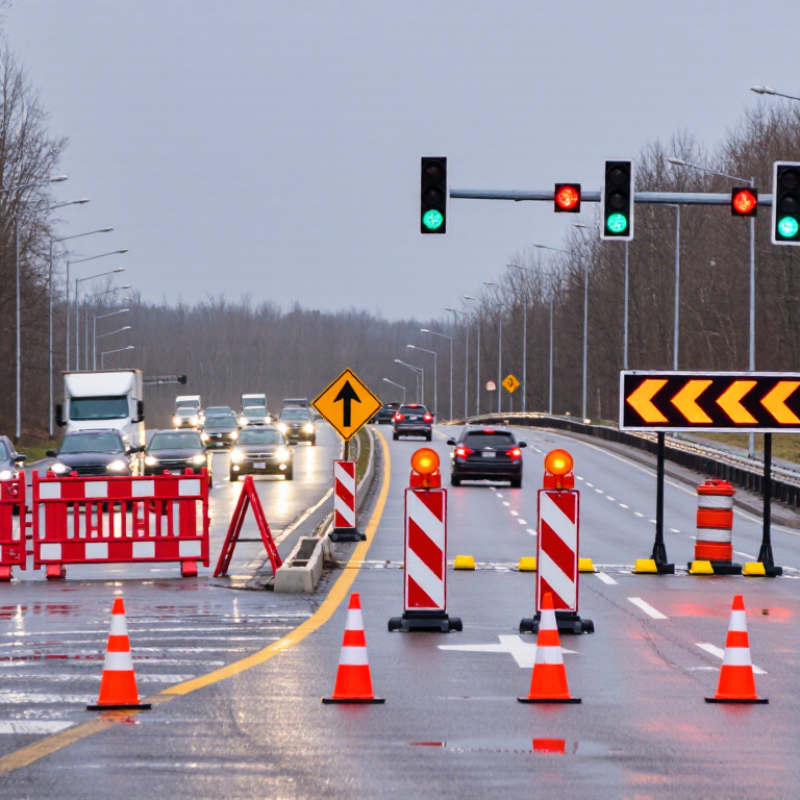
Traffic control equipment includes signs, signals, cones, barriers, and pavement markers that guide people through changing road conditions. It shows drivers where to slow, stop, merge, or keep clear, while helping pedestrians and cyclists identify a safe route. The best setup is easy to understand at a glance. A reflective sign placed before a lane shift gives drivers time to ease off the accelerator instead of braking sharply at the last moment. Small details matter.
Equipment improves safety by making movement more predictable. Cones can create a visible taper around a closed lane, while barriers provide firmer separation near workers or excavations. Temporary signals can manage alternating traffic on a narrow road. Warning lights help draw attention when visibility is poor. These devices cannot prevent every collision, but they can reduce confusion and create space around hazards. Placement matters too: signs need enough advance distance, and equipment should not block other warnings.
Conditions change. Rain can dull markings, headlights can obscure poorly aimed lights, and a displaced cone may point drivers toward the wrong path. Crews need to inspect layouts, replace damaged items, and adjust devices as queues move. A quiet rural shoulder and a crowded city crossing require different cues. Even a well-planned layout can feel awkward on site, so observations from workers and road users should inform adjustments.
Traffic control equipment is easiest to understand by the job it performs, not by its shape. Signs and signals manage priority, stopping, and movement at intersections. Speed displays and warning signs alert drivers to changing conditions, such as a work zone or sharp bend. They communicate early.
Channeling equipment guides vehicles and pedestrians along a defined path. Cones, delineators, and temporary barriers separate work areas from moving traffic, while pedestrian barriers protect walkways near crews. Lighting and reflective surfaces improve visibility at dusk or in rain. Some devices serve several functions: a barrier can redirect traffic and provide physical separation. Placement matters. A tidy row of cones may be hard to see behind parked vehicles, especially from a bicycle. Check sightlines from different approaches, not just from the setup point.
Tips: Match equipment to the hazard, road speed, and visibility. Keep signs readable and pedestrian routes clear. Inspect devices after wind or heavy rain. Small gaps matter. If drivers hesitate or weave, reconsider the layout; field conditions rarely match a perfect diagram.
Top 10 Types of Traffic Control Equipment for Safer Roads
In 2022, the National Highway Traffic Safety Administration recorded 42,514 U.S. traffic deaths. The Federal Highway Administration reported 891 work-zone fatalities that year. These figures show why clear, well-maintained traffic control matters. Ten common types include regulatory and warning signs, cones, drums, barricades, barriers, delineators, arrow boards, temporary signals, pavement markings, and pedestrian channelizers.
Each device guides road users differently. Signs communicate rules or hazards; cones and drums create visible boundaries around work areas. Barricades and barriers separate traffic from crews, while delineators mark curves or narrow lanes. Arrow boards direct drivers through lane closures. Temporary signals manage alternating traffic, and pavement markings provide guidance after dark or in poor weather. Pedestrian channelizers help define safer walking routes. Placement matters. A sign hidden behind a truck is not much help.
Tips: Check visibility from a driver’s approach, not just from the work area. Keep devices clean, upright, and spaced consistently. Replace faded markings and damaged equipment promptly. No setup is perfect; changing weather and traffic can expose gaps, so crews should reassess the layout during the shift.
Road conditions should guide equipment choice, not habit. On a straight, dry urban street, cones or channelizing drums can steer drivers around a short repair. Reflective signs help when dusk, glare, or parked vehicles reduce visibility. Visibility changes fast. Near a curve or hill crest, drivers have less time to react. Place advance warning signs far enough ahead, and use an arrow board when traffic must merge.
Rain can obscure pavement markings and weaken soft shoulders. Choose stable devices that remain upright, and check them after strong gusts or passing heavy vehicles. On narrow roads, compact barricades may preserve space for cyclists and pedestrians. A wide work area may need more substantial barriers to separate workers from moving traffic. At night, reflective surfaces matter; in bright daylight, contrast and placement still matter. No device fixes a poorly positioned warning sign.
For longer work zones or faster roads, combine signs, delineators, and barriers according to the site’s layout and sight distance. A speed-feedback display may help where drivers approach too quickly, but it cannot replace clear lane guidance. Field crews should walk or drive the route from the motorist’s viewpoint before opening it. Small blind spots can be easy to miss. The setup may still need adjustment once queues form or weather shifts.
Installing traffic control equipment starts with the approved traffic control plan, not the first cone. Crews assess sight distance, road speed, pedestrian routes, and likely weather before placing signs, channelizing devices, or temporary signals. The FHWA’s 11th Edition of the Manual on Uniform Traffic Control Devices (2023) sets standards for temporary traffic control, including device visibility and placement. Follow the plan and local requirements; a sign hidden behind a parked vehicle is no help. Small shifts matter.
Inspection continues after installation. Check that signs remain upright, cones have not moved, barriers are intact, and signal lenses are visible from approaching lanes. Repeat checks after high winds, heavy rain, or changes in the work area, and record defects and repairs. At night, look at equipment from a driver’s approach, not just beside it. FHWA’s 2022 work-zone statistics report 891 people killed in work-zone crashes, underscoring why clear, dependable setups matter. A useful maintenance log notes the time, location, fault, and corrective action. Crews can miss things. Build in another look.
Typical routine inspection intervals for common road-safety equipment. Installation and maintenance requirements vary by location, conditions, and applicable standards.
Inspect temporary devices before each use or shift, and check permanent equipment regularly for damage, visibility, alignment, and proper operation. Follow local requirements and manufacturer guidance.