SSI Traffic Solutions: Traffic Safety Products in USA and Canada
Traffic Safety Products in USA and Canada

A delineator post with base is a vertical traffic-guidance device designed to improve visibility and define road edges. Unlike a permanently embedded post, it stands on a separate base, often made from rubber, recycled polymer, or molded plastic. This arrangement supports temporary installations, work zones, parking areas, private roads, and changing traffic layouts.
Roadside-safety engineer Dr. Dean L. Sicking has stated, “A forgiving roadside reduces the consequences of human error.” That principle explains why a delineator post with base should be visible, stable, and suitably flexible. Its bright body and reflective bands can catch headlights at night. Its weighted base helps resist wind, vehicle wash, and accidental contact. Small details matter. A loose base does not.
In practice, performance depends on more than the post itself. Surface condition, base weight, reflector height, spacing, and local visibility all influence effectiveness. On wet pavement, a poorly positioned base may slide. On uneven ground, it may lean and create confusion. Some products look durable but degrade under strong sunlight or repeated impacts. That is an easy detail to overlook.
This article explains the structure, common materials, practical applications, installation considerations, and limitations of a delineator post with base. It also questions a common assumption: heavier is not always better. The correct choice depends on location, traffic exposure, maintenance plans, and applicable road-safety guidance.
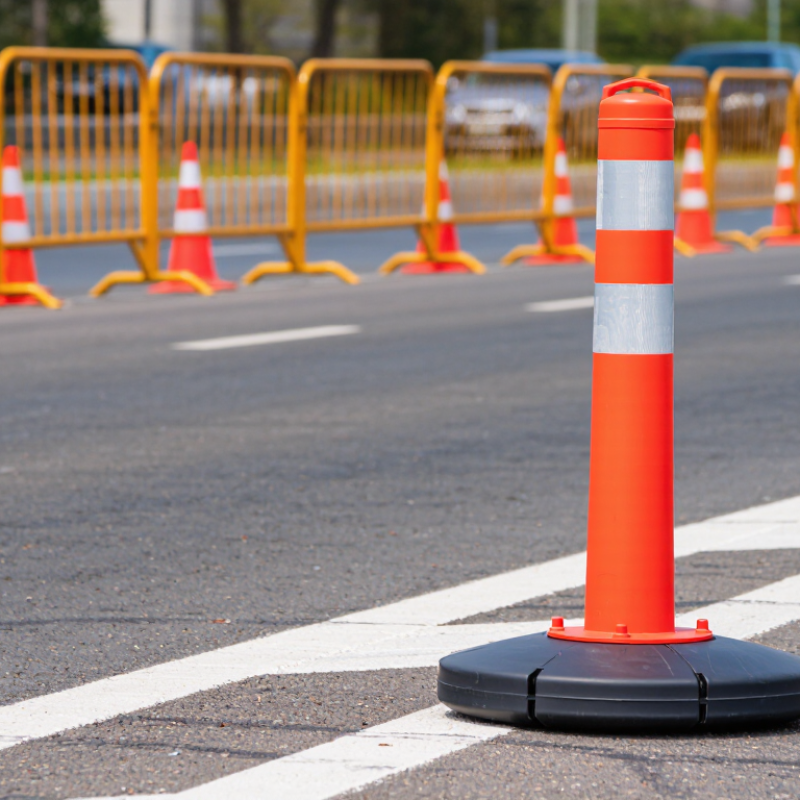
A delineator post with base is a visible marker paired with a weighted or broad support that helps it stand upright. The post guides drivers and pedestrians around edges, work areas, parking lanes, or temporary route changes. Its bright surface and reflective bands can improve visibility when headlights strike them. The base keeps the post in position without requiring a permanent installation, though its stability depends on the surface and conditions.
The basic function is simple: make boundaries and changes in direction easier to see. A row of posts can outline a curve or separate moving traffic from a restricted area. They are not physical barriers, so they cannot stop a vehicle. Choose a height and reflective pattern suited to the viewing distance, and check that each base sits flat. A tilted post can confuse people instead of guiding them.
Tips: Inspect posts after strong wind, rain, or nearby vehicle movement. Clear dirt from reflective bands, and replace cracked bases or damaged posts. Small details matter. In practice, spacing can be harder to judge than expected; test the layout from an approaching driver’s viewpoint before relying on it.
A delineator post with base is a visible roadside marker designed to guide drivers and separate traffic areas. Its main components include the upright post, reflective bands, mounting points, and a stabilizing base. The post is often made from flexible plastic or treated metal. Reflective surfaces catch headlights at night. The base may use rubber, recycled polymer, steel, or a weighted composite material.
The base supports the post in several practical ways. Its wider footprint spreads pressure across the pavement. Added weight helps resist wind and minor vehicle turbulence. Friction between the base and ground also reduces unwanted movement. Some bases include bolt holes for fixed installation. Others remain portable for temporary lane changes, work zones, or event access routes. A well-designed connection prevents the post from twisting after repeated contact.
Small details matter. The base should sit flat, without gravel trapped underneath. Uneven ground can reduce stability. Drainage openings may prevent water from collecting around fasteners. In field inspections, I would check cracked edges, loose bolts, faded reflectors, and leaning posts. A marker can look acceptable but still shift under pressure. That is easy to miss. Local road authority requirements should guide spacing, height, reflectivity, and anchoring methods. Real installations are rarely perfect, so regular inspection remains necessary, especially after storms, heavy traffic, or pavement repairs.
What Is a Delineator Post with Base?
A delineator post with base is a visible roadside or site marker attached to a weighted or mountable foot. The base helps it stand on pavement, parking areas, or work-zone surfaces. Its usefulness depends on placement, visibility, and how well the base suits the ground. A post that wobbles in wind is not doing much.
Common Materials, Shapes, and Reflective Features
Posts are often made from flexible plastic, such as polyethylene or polyurethane. These materials can bend after a light impact, though cold weather and repeated stress may affect their performance. Bases are commonly rubber or molded plastic, with enough weight to resist tipping. Some bases have square corners; others use rounded edges that are easier to handle. Not all sites need the heaviest option.
Shapes vary from slim, cylindrical posts to wider profiles with flat faces. A narrow post takes up less space, while a broader face can carry more reflective area. Reflective bands or sheeting help drivers notice the post when headlights strike it at night. Their color, placement, and condition matter. Dirt, scratches, and faded material can reduce visibility, so periodic checks are sensible. It is easy to assume a bright post stays easy to see. It doesn’t always.
| Post Type | Common Material | Typical Shape | Base or Mounting Method | Typical Height Range | Reflective Features | Common Applications | Key Performance Notes |
|---|---|---|---|---|---|---|---|
| Flexible Traffic Delineator | UV-stabilized polyethylene or thermoplastic polyurethane | Round or rectangular tubular post with a tapered profile | Weighted rubber base, recycled rubber base, or bolt-down base | 750–1,200 mm | Reflective collars, bands, or vertical panels; available in white, yellow, or orange retroreflective materials | Lane separationWork zonesParking areas | Designed to bend or rebound after light vehicle contact. The base should remain stable under wind and routine impact. |
| Post with Weighted Base | High-density polyethylene post with rubber or recycled composite base | Vertical cylindrical or square-section post | Freestanding base with a low center of gravity | 900–1,000 mm | One or more circumferential reflective bands positioned near the upper section | Temporary barriersEvent trafficPedestrian guidance | Portable and reusable. Base weight and footprint affect resistance to tipping and displacement. |
| Rigid Roadside Delineator | High-impact plastic, fiberglass-reinforced polymer, or galvanized steel | Flat rectangular blade or narrow rectangular post | Driven stake, ground sleeve, or buried installation | 1,000–1,500 mm above ground | Raised retroreflective panels on one or both sides for vehicle approach visibility | Road edgesCurvesDrainage areas | Provides a fixed visual reference. Installation depth and soil conditions influence stability. |
| Spring-Back Delineator | Flexible polyurethane, elastomer, or impact-resistant plastic | Slender round or rectangular post with a flexible lower section | Anchor plate, spring mechanism, or bolt-down base | 750–1,200 mm | High-visibility reflective tape or molded reflective panels | Traffic islandsRoad separatorsAccess control | Returns toward its original position after impact. Performance depends on material flexibility and anchor design. |
| Cone-Top Delineator | Flexible PVC or polyethylene | Conical or tapered post, often with a broad base | Integrated weighted base or detachable rubber base | 450–1,000 mm | Reflective bands around the upper cone or post body | Short-term worksParking controlHazard marking | Easy to transport and deploy. Shorter versions may be less visible in heavy traffic or tall vegetation. |
| Solar-Enhanced Delineator | UV-resistant plastic or aluminum housing with a polymer post | Rectangular or cylindrical post with an integrated light module | Weighted base, ground anchor, or bolt-down plate | 750–1,500 mm | Retroreflective bands plus solar-powered flashing or steady LED light | Nighttime hazardsConstruction zonesRemote locations | Improves conspicuity in darkness. Light output depends on battery condition, solar exposure, and operating mode. |
| Water-Filled Base Delineator | High-density polyethylene post and hollow rotational-molded base | Round or rectangular post mounted on a broad, low-profile base | Base filled with water or another approved ballast; drained for transport | 900–1,200 mm | Wide reflective bands or reflective rectangular panels | Temporary roadworksBridge maintenanceVehicle channels | Light when empty and heavier when filled. Freezing conditions may require suitable ballast or drainage procedures. |
| Barrier-Mounted Delineator | Polycarbonate, ABS plastic, aluminum, or flexible polymer | Compact vertical tab, blade, or rectangular marker | Clamp, bracket, adhesive pad, or mechanical fastener attached to a barrier | 250–900 mm above the mounting surface | Reflective sheeting, prismatic panels, or directional reflectors | Concrete barriersGuardrailsTemporary fencing | Saves space and provides consistent delineation where freestanding posts are unsuitable. Mounting must not obstruct barrier function. |
| Flexible Bollard-Style Delineator | Polyurethane, rubber, or flexible PVC | Thick cylindrical or square bollard profile | Surface-mounted base plate, embedded socket, or removable anchor | 900–1,200 mm | Reflective tape, inset reflectors, or full-height reflective strips | DrivewaysPedestrian zonesProperty edges | Offers stronger visual and physical separation than a narrow post. Base and anchor selection should match expected impact loads. |
What Is a Delineator Post with Base?
Typical Applications in Traffic and Site Safety Management
A delineator post with base is a highly visible vertical marker fixed to a weighted or anchoring base. It guides people and vehicles without creating a rigid wall. Most models use flexible plastic, reflective bands, and a broad rubber or recycled base. The base helps the post remain upright during routine contact, light wind, and minor movement around a work area.
On roads, crews use these posts to separate traffic lanes, mark temporary bends, and highlight narrowed shoulders. Reflective surfaces become especially useful at dusk, in rain, or near poorly lit junctions. Placement matters more than many teams expect. Posts set too close together can confuse drivers, while wide gaps may fail to show the intended path. A trained supervisor should check visibility from the driver’s approach, not only from the installation point.
They also support site safety management around loading zones, pedestrian routes, parking areas, and temporary excavations. At a warehouse entrance, bright posts can keep forklifts away from a walking lane. At a public event, they can guide queues and protect emergency access routes. They are not crash barriers. A strong vehicle impact can move or break them. Bases may also slide on wet floors or uneven paving, which is an easy detail to overlook. Regular inspections should look for cracked posts, loose reflective strips, unstable bases, and blocked sightlines. Local traffic rules and site risk assessments should guide spacing and use.
Delineator posts with weighted or detachable bases are used to guide traffic, separate people from vehicles, and improve visibility around temporary or permanent hazards. The chart shows common applications and representative post heights frequently used in traffic and site safety management.
Typical heights vary by local regulations, roadway design, visibility requirements, and site conditions. Always confirm the final specification with the applicable traffic-control standard.
A delineator post with a base is a flexible marker used to guide traffic or highlight hazards. The post provides visibility, while its base helps keep it upright and may allow relocation. Details vary by design, so check the product specifications before choosing one.
Installation starts with the surface. On pavement, remove loose grit and place the base on a clean, level area. For a weighted or surface-mounted base, follow the supplied fixing instructions and check that the post stands vertically. Keep it clear of drains, doorways, and vehicle paths. A small tilt can make a marker less noticeable. It is easy to miss during a rushed installation.
Choose a post height, color, and reflective area suited to its setting and viewing distance. Wind, passing vehicles, and frequent handling can affect stability, so consider base weight and attachment type. After installation, gently test the post for movement. Inspect it regularly for cracks, loose fixings, dirt, and faded reflective surfaces. Clean with mild soap and water; harsh solvents may damage some finishes. Replace parts that no longer remain stable or visible. In practice, the right inspection interval depends on site exposure, and that judgment should be reviewed after storms or near misses.