SSI Traffic Solutions: Traffic Safety Products in USA and Canada
Traffic Safety Products in USA and Canada

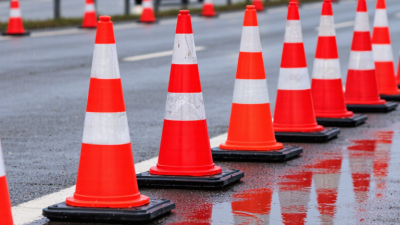
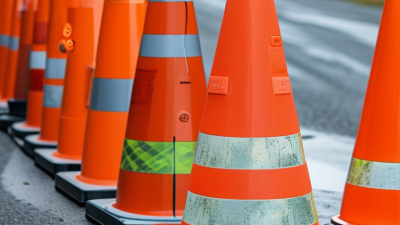
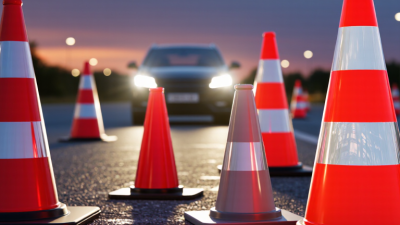
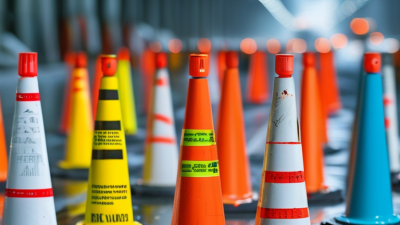
Choosing traffic cones for international projects requires more than comparing colors and prices. This 2026 guide examines 18 traffic cones for roadwork, warehouses, parking areas, events, and emergency access points. Each option is assessed through practical factors, including visibility, base stability, flexibility, size, recycled content, packaging, and expected service life. A cone that looks bright online may fade after months of sunlight. A lightweight model may also slide across wet asphalt. Details matter. We compare reflective collars, molded handles, weighted bases, and nesting dimensions. These features affect worker visibility, transport costs, storage space, and daily handling. I have learned that no single cone fits every climate or worksite. That is easy to overlook.
The selection also considers manufacturer information, product testing, buyer feedback, and realistic use conditions. Where evidence is limited, the discussion says so instead of treating marketing claims as facts. Buyers should verify local requirements, road authority guidance, labeling rules, and shipping specifications before ordering. Requirements vary by location. A cone for a quiet private lot may not suit a high-speed road. Wind, rain, freezing temperatures, vehicle traffic, and repeated folding can expose weak designs quickly. We also note compromises, because durability can increase weight and cost. Some products may perform well but arrive with inefficient cartons or unclear documentation. That deserves attention. The final ranking is a practical starting point, not a substitute for site assessment or professional safety advice. It helps global buyers ask sharper questions, compare suppliers fairly, and choose cones that remain visible, stable, and usable when conditions become difficult.
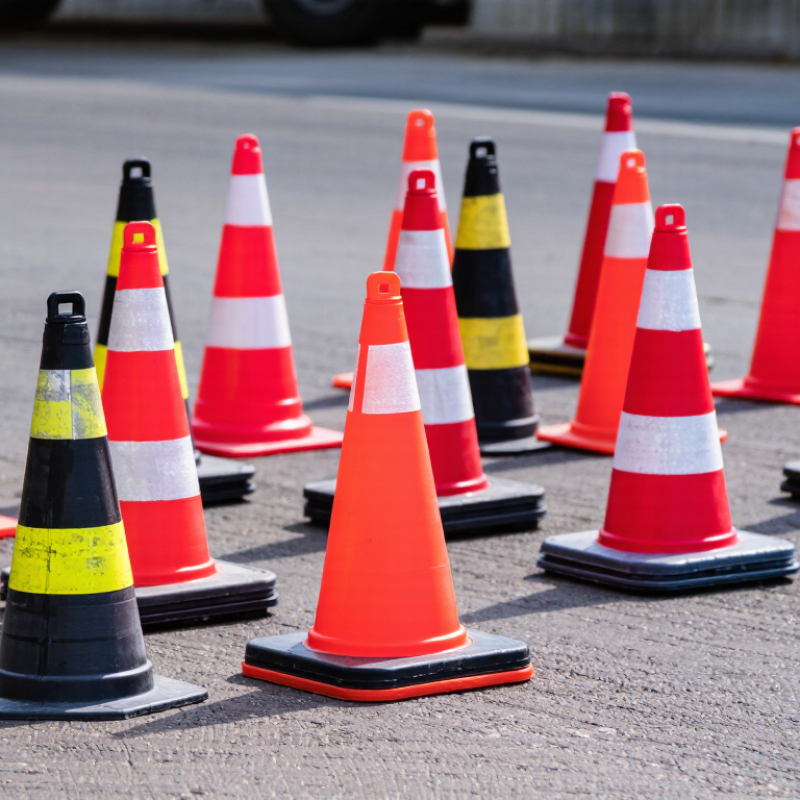
Traffic cones are portable visual barriers that guide drivers, cyclists, and pedestrians around temporary hazards. Their value goes beyond bright color. A properly placed cone creates space, communicates movement, and gives workers a clearer safety boundary.
The World Health Organization estimates that road crashes cause about 1.19 million deaths worldwide each year. The 2023 Global Status Report on Road Safety also identifies vulnerable road users as a major concern. This makes cone visibility, stability, and spacing important purchasing factors. The U.S. Federal Highway Administration’s 11th Edition of the MUTCD requires temporary traffic-control devices to remain visible and functional in changing conditions. Global buyers should also review local height, color, retroreflectivity, and testing rules.
Tips: Match cone height to road speed and exposure. Choose weighted bases for wind-prone sites. Check reflective bands at night, not only indoors. Store cones away from prolonged heat and sunlight.
Material choice matters. Flexible PVC can recover after light impact, while stronger compounds may perform better near heavy equipment. A wide base reduces tipping, but it can increase storage volume. That trade-off is easy to overlook. ASTM testing references can support quality checks, although compliance requirements differ by market. No cone replaces trained setup, warning signs, or a documented traffic-control plan. That point deserves more attention.
Traffic cone selection starts with risk, not appearance. The World Health Organization’s Global Status Report on Road Safety 2023 reports about 1.19 million road deaths each year. That figure makes visibility and stability practical safety issues.
Global buyers should compare standards carefully. ASTM D4956 evaluates retroreflective sheeting used on temporary traffic-control devices. EN 13422 covers traffic cones and related warning products in European markets. AS/NZS 1906.1 addresses high-visibility materials in Australia and New Zealand.
These systems do not measure every feature identically. Ask for test reports, photometric results, material specifications, and production dates. A certificate without traceable testing is weak evidence.
Small details matter.
FHWA guidance also emphasizes consistent device visibility and placement in work zones. I have seen buyers overvalue low unit price. That choice can create faster replacement cycles and uneven site control. No comparison is perfect. Local road rules, climate, and handling habits still deserve a careful review.
2026 Top 18 Traffic Cones for Global Buyers
Top 18 Traffic Cones for Different Road Safety Applications
The best traffic cone depends on speed, weather, visibility, and placement time. For highway lane shifts, choose high cones with reflective collars and weighted bases. MUTCD 11th Edition requires cones to be at least 28 inches high. Higher visibility is needed on faster roads. Flexible PVC cones suit urban repairs, pedestrian crossings, and temporary parking control. Recycled rubber bases help resist wind. They can still become unstable on wet surfaces.
For airport aprons, use low-temperature, impact-resistant cones with bright markings. Construction zones need heavy-duty cones for excavators, delivery routes, and night work. Slim cones fit narrow sidewalks and utility access points. Collapsible cones support emergency response vehicles. Micro cones work for indoor loading areas and warehouse traffic. Other useful applications include school zones, event entrances, bicycle lanes, bridge maintenance, tunnel work, road surveys, parking garages, and railway crossings.
These 18 applications reflect practical buying differences, not a universal ranking. The Federal Highway Administration recorded 891 work-zone deaths in the United States during 2022. That figure shows why visibility and placement discipline matter. Reflective collars should match local requirements and nighttime conditions. Cone color alone is not enough. Field teams often underestimate wind exposure. I have seen lightweight cones move several meters beside active traffic. Buyers should test the complete cone and base together. Specifications can look reliable, yet real pavement, rain, and vehicle turbulence may reveal weaknesses.
| No. | Cone Type | Recommended Application | Height | Base Size | Approx. Weight | Reflective Treatment | Key Safety Feature | Typical Buyer Consideration |
|---|---|---|---|---|---|---|---|---|
| 1 | Mini traffic cone | Indoor facilities, warehouses and short-term hazard marking | 200–300 mm | 150–210 mm square | 0.15–0.35 kg | Optional single band | Compact footprint and easy storage | Low visibility outdoors; best for controlled areas |
| 2 | 300 mm lightweight cone | Parking areas, schools and pedestrian routes | 300 mm | 210–230 mm square | 0.35–0.70 kg | Single reflective band | Highly portable and quick to deploy | Choose a weighted base for outdoor use |
| 3 | 450 mm standard cone | General road maintenance and parking control | 450 mm | 270–300 mm square | 1.0–1.8 kg | Single or double band | Balanced visibility and portability | A common size for routine daytime work |
| 4 | 500 mm reflective cone | Urban traffic control and temporary lane separation | 500 mm | 280–320 mm square | 1.3–2.2 kg | Two reflective bands | Improved night-time conspicuity | Check local requirements for band width and color |
| 5 | 700 mm heavy-duty cone | Roadworks, utility maintenance and work-zone boundaries | 700 mm | 330–360 mm square | 2.5–4.0 kg | Two high-visibility bands | More visible to approaching drivers | Use a broad base where wind or passing traffic is expected |
| 6 | 750 mm highway cone | High-speed roads, expressways and major construction zones | 750 mm | 350–400 mm square | 3.0–5.0 kg | Two or three bands | Tall profile for longer approach distances | Verify compliance with the road authority specification |
| 7 | 900 mm high-visibility cone | Large work zones, divided highways and hazardous locations | 900 mm | 400–450 mm square | 4.0–7.0 kg | Two or three wide bands | Maximum cone height in many standard ranges | Requires more vehicle storage space |
| 8 | Collapsible traffic cone | Emergency vehicles, roadside response and mobile inspections | 450–700 mm | 280–360 mm square | 1.0–3.0 kg | Reflective bands | Folds flat for rapid storage | Inspect hinges, springs and locking stability regularly |
| 9 | LED warning cone | Night emergency response and poorly lit roadside areas | 450–750 mm | 300–400 mm square | 1.5–4.0 kg | Reflective bands plus LED module | Active flashing or steady warning light | Confirm battery type, runtime and weather resistance |
| 10 | Water-fillable cone | Temporary outdoor closures and pedestrian diversion routes | 500–750 mm | 300–400 mm square | 1.5–3.5 kg empty | One or two bands | Ballast can be added on site | Drain completely before freezing conditions |
| 11 | Rubber-base traffic cone | Long-duration construction and uneven outdoor surfaces | 500–750 mm | 320–400 mm square | 2.5–5.0 kg | Reflective bands | Heavy base improves resistance to movement | Rubber may become harder in low temperatures |
| 12 | Wind-resistant cone | Open areas, bridges, coastal roads and exposed work sites | 700–900 mm | 380–450 mm square | 4.0–8.0 kg | Two or three bands | Low center of gravity and weighted base | Actual wind performance depends on surface and exposure |
| 13 | Airport-grade cone | Aprons, taxiways and controlled airside maintenance areas | 750–900 mm | 350–450 mm square | 3.0–7.0 kg | High-visibility bands | Bright color and stable base for highly controlled zones | Must meet airport operator and aviation authority rules |
| 14 | Cable and utility cone | Utility trenches, cable routes and service access points | 450–750 mm | 280–380 mm square | 1.5–4.0 kg | One or two bands | May include a top opening for barrier tape | Use with approved barriers where excavation risk exists |
| 15 | Snow-plow-compatible cone | Cold-weather road maintenance and winter service operations | 700–900 mm | 350–450 mm square | 3.0–6.0 kg | Cold-resistant reflective bands | Flexible material suited to low temperatures | Confirm impact recovery and cold-weather testing data |
| 16 | Recycled-material cone | Municipal programs and projects with sustainability targets | 500–750 mm | 300–400 mm square | 2.0–5.0 kg | Reflective bands | May reduce reliance on virgin plastic | Request recycled-content and durability documentation |
| 17 | Bi-lingual message cone | Public works, event access control and multilingual environments | 700–900 mm | 350–450 mm square | 3.0–6.0 kg | Reflective bands plus printed panel | Communicates a short warning or instruction | Keep text concise and ensure adequate contrast |
| 18 | Chainable barrier cone | Queue management, pedestrian channels and restricted zones | 500–750 mm | 300–400 mm square | 2.0–5.0 kg | Reflective bands | Integrated holes or hooks for plastic chain | Check connector strength and chain compatibility |
Note: Dimensions and weights are representative ranges for commonly available traffic-cone configurations. Buyers should confirm applicable national road-safety standards, reflective-material requirements, color rules and site-specific performance requirements before purchase.
2026 Top 18 Traffic Cones for Global Buyers
Materials, sizes, colors, and reflective features determine whether a traffic cone remains visible, stable, and useful outdoors. Flexible PVC handles repeated impacts well, while polyethylene offers lighter handling and better resistance to moisture. Recycled rubber bases add weight, especially on windy roads. However, recycled content can create color and hardness differences between production batches.
Common sizes include 28, 36, and 42 inches. The Federal Highway Administration’s Manual on Uniform Traffic Control Devices recommends taller devices for high-speed roads and exposed work zones. Smaller cones suit warehouses, parking areas, and low-speed access lanes. Orange remains the standard warning color in many markets. Fluorescent yellow-green can improve daytime contrast, but local authorities may restrict approved colors.
Reflective collars matter after sunset. Glass-bead sheeting is economical, while microprismatic sheeting generally offers stronger angular visibility. ASTM D4956 provides performance classifications for retroreflective sheeting, although buyers should confirm the required class locally. The FHWA recorded 891 work-zone fatalities in 2022, showing why visibility cannot be treated as decoration. A cone may look bright in a showroom yet perform poorly under rain, dust, or headlight glare. That mistake happens. Check rebound testing, base dimensions, UV resistance, and third-party test records before comparing the 18 options.
Materials, sizes, colors, and reflective features explained through typical market specifications.
The chart compares commonly available traffic-cone configurations by height and base width. Most cones use flexible PVC or polyethylene, with orange, red, or yellow bodies and one or two white reflective bands. Larger cones generally provide better visibility and stability for highways, construction zones, and high-speed roads.
2026 Top 18 Traffic Cones for Global Buyers
How Global Buyers Can Select the Right Traffic Cone
Traffic cone selection should begin with risk, not color. The World Health Organization reported about 1.19 million annual road deaths in its Global Status Report on Road Safety 2023. Work-zone protection therefore requires visible, stable, and traceable equipment. Check cone height, base dimensions, collar reflectivity, material flexibility, and impact recovery. A cone that looks right may still fail.
The Federal Highway Administration recorded 891 work-zone fatalities in the United States during 2022. Its data reinforces the need for consistent temporary traffic control. Buyers should request independent test reports, production-batch records, and evidence of compliance with the destination market’s standard. Requirements may reference EN 13422, ASTM specifications, or national road-agency rules. Do not rely on a sales photograph.
Consider the actual site. A windy coastal road may need a heavier recycled-rubber base, while a cold region needs polymer flexibility below freezing. In hot climates, ultraviolet resistance matters. Reflective collars should remain visible under headlights, rain, and dust. Storage also affects service life; stacked cones can deform in heat. This detail is often overlooked. It is worth checking. Suppliers should explain replacement rates, packaging damage, and field performance, even when the answers are uncomfortable. A lower purchase price may create higher maintenance costs. The best choice balances verified safety performance, transport efficiency, local compliance, and realistic operating conditions.