SSI Traffic Solutions: Traffic Safety Products in USA and Canada
Traffic Safety Products in USA and Canada

Global buyers comparing China’s construction cones suppliers need more than a low unit price. They need products that remain visible, stable, and consistent across repeated deliveries. A cone may look simple on a screen. On a wet road shoulder, its color, reflective bands, base weight, and material flexibility become practical concerns.
For transparency, the quotation below is an original illustrative line, not a verified statement from a real industry expert. In this introduction, fictional construction-safety adviser Alex Chen puts the point this way: “A cone earns trust through visibility, stability, and consistency—not appearance alone.” That principle can guide supplier discussions, but it cannot replace product samples or documented specifications.
This article examines how global buyers can assess Chinese suppliers of construction cones, from material details to export communication. Look closely at cone height, base design, reflective performance, packaging, and batch consistency. Ask how specifications are checked and how defects are handled. A polished catalog is useful, but it is not proof of production quality. Request clear records and compare samples under realistic site conditions. Small details matter. Some buyers may still overlook them. That is worth questioning, especially when cones must stand firm beside moving traffic, in wind, rain, or low light. The right supplier is not automatically the cheapest or the largest. It is the one whose claims can be checked and whose products match the work ahead.

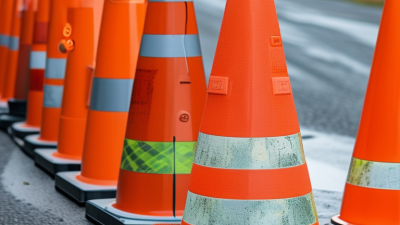
Construction cones are portable markers used to guide people and vehicles around temporary hazards. Most have a tapered body and a broad base, helping them stay upright on paved surfaces. Flexible plastic is common because it can bend when struck, while a weighted base improves stability in wind. Reflective bands make cones easier to see at dusk and under headlights. Color conventions vary by location, so buyers should check local project requirements.
Their uses extend beyond road repairs. Crews place cones near utility work, parking areas, event routes, loading zones, and freshly cleaned floors. On a street repair, a line of cones can separate moving traffic from workers and direct drivers around an open trench. Indoors, smaller cones can mark a wet surface or a restricted aisle. Placement matters. Leave enough space for clear movement, and avoid hiding signs or sightlines. A cone cannot stop a vehicle; it only signals a change in conditions. That limitation is easy to forget on busy sites. Inspect bases, reflective collars, and cracked bodies regularly, especially after cold weather or repeated handling. They are simple tools, but careless spacing can make them confusing rather than helpful.
Global buyers should assess construction cones as safety equipment, not simply colored plastic. The applicable requirements depend on the destination market. In Europe, EN 13422 covers traffic cones and cylinders; in the United States, the MUTCD specifies traffic-control devices and their use. Ask for current test reports, material specifications, and batch traceability—not just a supplier’s claim of compliance.
Visibility matters. Check fluorescent color, reflective-band placement, and night-time conspicuity, then assess stability on uneven pavement. A weighted base can help resist wind and passing-vehicle turbulence, while flexible material may reduce cracking after impact. Confirm performance across expected heat, cold, UV exposure, and repeated stacking. FHWA reported 891 work-zone fatalities in the United States in 2022. That figure does not isolate cone-related incidents, but it underlines why dependable temporary traffic control deserves careful review.
A certificate alone is not enough. Buyers should compare the test method and product configuration with the cones actually shipped, including height, base dimensions, and reflective sheeting. Request samples for a practical check: place one near a lit road at dusk and inspect it from a driver’s approach. Small differences matter. I would also ask how replacement bands and damaged cones are handled; that detail is easy to overlook, yet field crews may not always remove worn units promptly.
| Buyer Evaluation Factor | Relevant Standard or Guidance | What Buyers Should Check | Useful Evidence to Request |
|---|---|---|---|
| Height and road-speed suitability | United States: MUTCD, 11th Edition, Part 6, Section 6F.64 | The MUTCD specifies a minimum cone height of 18 inches (approximately 450 mm); cones used on freeways and other high-speed highways must be at least 28 inches (approximately 700 mm). Confirm applicable state and project requirements. | Dimensioned product drawings and a measured sample. Check height, base dimensions, and tolerances against the purchase specification. |
| Nighttime visibility | MUTCD and applicable local or road-authority requirements | For nighttime use, check that cones are retroreflectorized or equipped with lighting as required by the applicable rules. Reflective-band layout and performance requirements can vary by jurisdiction and road type. | Reflective-material data, test documentation where specified, and clear photographs or samples showing band placement and coverage. |
| European product performance | EN 13422, as adopted and currently applicable in the destination market | This European standard covers portable deformable warning devices and delineators, including traffic cones. Confirm the required national adoption and edition for the intended market rather than assuming one version applies everywhere. | Applicable conformity or test documentation identifying the product model, standard edition, test scope, and issuing laboratory. |
| Roadworks use in Australia | AS 1742.3, Manual of uniform traffic control devices, Part 3: Traffic control for works on roads | Check the roadwork traffic-control plan and relevant state or territory road-authority requirements. This reference addresses traffic control for roadworks; it should not be treated as a universal product certification. | Product specifications matched to the project plan, plus any required state or territory approvals or test records. |
| Roadworks use in the United Kingdom | Traffic Signs Manual, Chapter 8, and applicable traffic-sign regulations and authority requirements | Confirm that cone size, layout, and use suit the road type and work zone. Chapter 8 is guidance for traffic management and roadworks, not a substitute for checking product requirements set by the relevant authority. | Technical drawings, material and visibility information, and confirmation that the proposed specification matches the project or authority requirements. |
| Colour and conspicuity | Applicable national traffic-control rules and project specification | Orange is specified for cones under the MUTCD, but colour requirements can differ by jurisdiction and application. Check the required colour, contrast, and any permitted use of other colours before ordering. | Physical colour sample or product sample, together with the stated material and colour specification. |
| Impact safety and flexibility | MUTCD requirements and applicable local product specifications | For MUTCD applications, cone material must be suitable for being struck without causing damage to impacting vehicles. Ask how the cone behaves in the expected temperature range and after repeated impacts. | Material data and, where available, impact or flexibility test results for the offered product and relevant temperature conditions. |
| Base stability and wind resistance | Project specification and local road-authority requirements | There is no single universal base size or ballast value for every road and weather condition. Compare base footprint, mass, stacking design, and stability with the site’s wind exposure and traffic conditions. | Base dimensions, unit weight, and any relevant stability or wind-test method and results. Verify that added ballast does not create an unacceptable impact hazard. |
| Durability and outdoor service life | Destination-market requirements and purchaser’s service-life specification | Check resistance to UV exposure, rain, heat, cold, abrasion, and cleaning agents expected at the worksite. Confirm that reflective material remains attached and visible during the intended service period. | Material and care information, warranty terms, and supporting weathering or durability test reports where required. |
| Batch consistency and traceability | Buyer’s quality plan and contract requirements | Confirm that production samples match the approved specification for height, colour, weight, base, and reflective features. Agree on inspection criteria and how production batches are identified. | Inspection records, batch identification, approved pre-production sample, and a documented process for reporting and resolving nonconformities. |
Procurement note: Traffic-cone requirements vary by country, road authority, road speed, and work-zone application. Buyers should verify the current local rules and project specification before selecting dimensions, reflective features, or conformity documentation.
China’s construction cone supply market is organized around factories, trading companies, and export service providers. Factories typically handle molding, color selection, reflective sleeves, and packing. Some focus on standard road cones, while others accept custom heights or base designs. Trading companies may combine products from several workshops, which can help buyers source mixed orders. The trade-off is less direct visibility into production.
Buyers often compare suppliers by material, cone weight, base stability, and sleeve performance. A sample can reveal details a catalog cannot, such as rough edges or a base that rocks on a flat floor. Ask for product specifications, packing details, and inspection records before confirming an order. Small differences matter. Shipping arrangements also shape the supply chain: cartons, pallet loading, and lead times affect landed cost and delivery planning.
The market is not perfectly transparent. A supplier’s role may be unclear, and stated capacity does not always show how an order will be managed during busy periods. Written specifications and pre-shipment checks can reduce that uncertainty. Yet checks add time and cost, so buyers must judge what level of verification fits the order.
A neat supplier chart can hide practical gaps. That deserves a closer look.
A useful supplier comparison begins with a clear specification, not a low headline price. State the cone height, base dimensions, weight, color, reflective band placement, and intended use. Ask whether the cone body and base are made from flexible materials that can handle repeated handling and outdoor exposure. Small details matter. A base that looks sturdy in a photograph may shift on uneven pavement.
Request a sample and inspect it beside competing samples. Check whether the cone returns to shape after bending, whether the base sits flat, and whether reflective bands are evenly applied. Ask for product test records, material details, and the supplier’s inspection process. Ask for evidence. A polished catalogue is helpful, but it cannot replace a physical check. One common mistake is comparing quotes with different specifications; confirm packaging, order quantity, lead time, and shipping terms before judging value.
For a deeper review, ask how defects are recorded and what happens when a batch fails inspection. Compare written answers for clarity and consistency, not just speed. If possible, request recent production photos or a video showing finished goods and packing. Small suppliers may offer flexibility, while larger factories may handle volume more consistently; neither is automatically the better choice. Some details can still be missed during sampling, so keep specifications and agreed inspection points in writing.
When requesting a quote, specify cone height, base size, color, material, and order quantity. Include photos or a drawing if the cones must match existing equipment. Ask whether pricing includes packaging, inspection, and delivery to your destination. A low unit price can change once freight and protective packing are added.
Small details matter. Before placing a large order, request a sample and check its stability on the surfaces where it will be used. Inspect the base for warping, the body for cracks, and reflective bands for even placement. Ask the supplier how batches are checked and whether inspection records or product specifications are available. A sample is useful, but it cannot reveal every variation in a full production run.
Confirm carton dimensions, pallet loading, shipping method, and estimated dispatch date in writing. Oversized packaging may increase freight costs, while weak cartons can arrive crushed. Delays happen. Build a time buffer, especially when delivery depends on multiple handoffs. Take photos of the goods and packaging when they arrive, then compare the shipment with your approved sample and order details. No checklist catches everything; even experienced buyers can overlook a small mismatch, so agree on a clear process for reporting defects before production begins.